Clinical Knowledge › Internal medicine › Gastroenterology and hepatology › Diseases of the liver
Alcohol-related liver disease and alcohol-related hepatitis
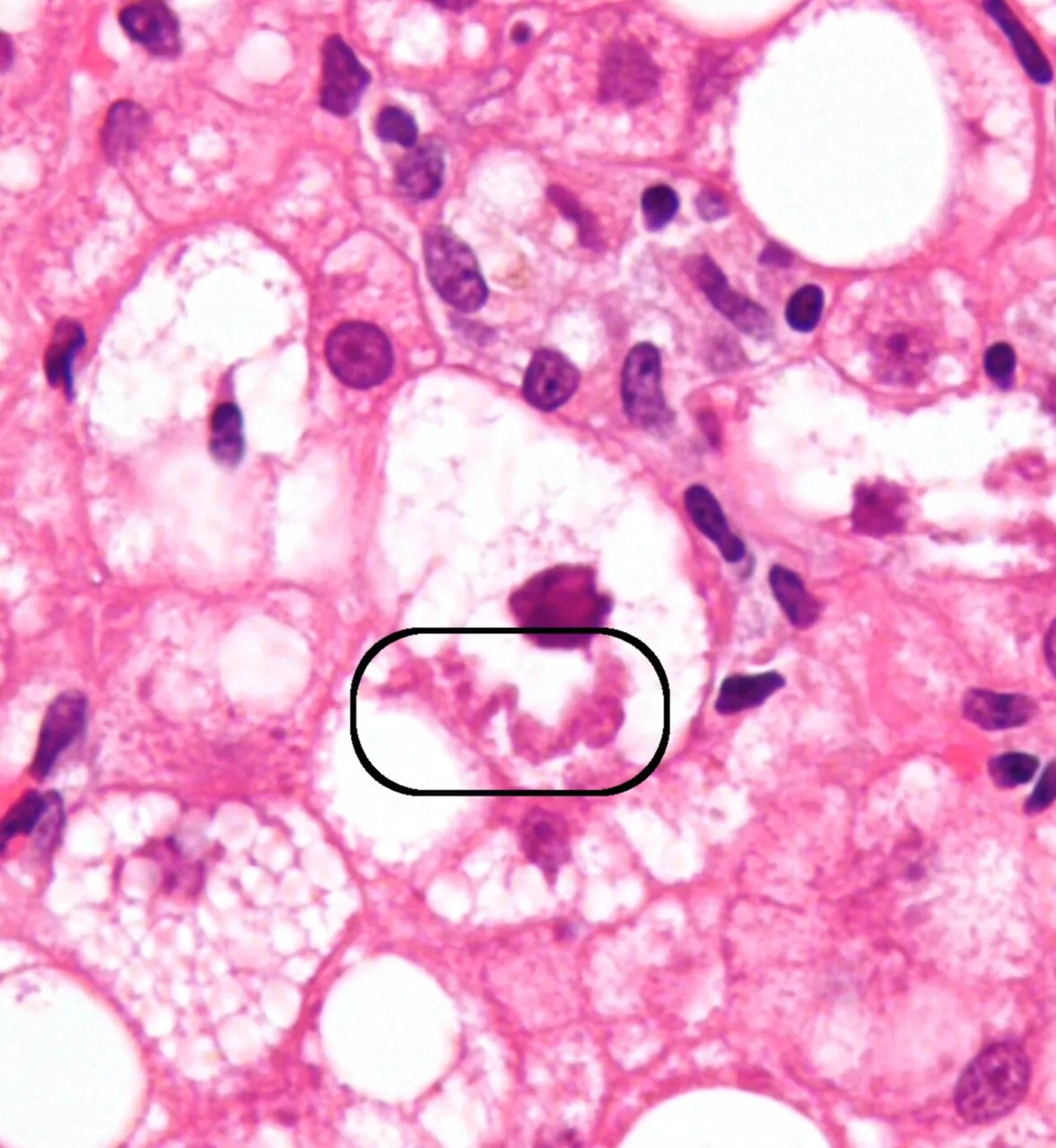
Alcohol-related liver disease (ARLD) is a spectrum from steatosis, present in most heavy drinkers, through steatohepatitis and progressive fibrosis to cirrhosis and hepatocellular carcinoma. It is the leading cause of cirrhosis deaths in Europe and a major one worldwide, and risk rises with dose, binge pattern, female sex, obesity, PNPLA3 variants and coexisting viral hepatitis. Ethanol metabolism by alcohol dehydrogenase and CYP2E1 generates acetaldehyde, NADH excess and oxidative stress, while gut-derived endotoxin activates Kupffer cells. Most patients are silent until decompensation, so detection relies on asking about alcohol (AUDIT), liver tests (AST:ALT above 2, raised GGT, macrocytosis) and non-invasive fibrosis tests. Alcohol-related hepatitis is an acute inflammatory syndrome with recent-onset jaundice in a heavy drinker; severity is judged by the MELD score or Maddrey discriminant function. Severe cases may receive prednisolone with response checked by the Lille score at day 7, alongside nutrition, infection screening and thiamine. Abstinence is the single most important treatment at every stage, supported by treatment of alcohol use disorder; early liver transplantation is an option for carefully selected patients.
Patient case, mechanism, investigations, management, flashcards and exam-style questions.Open the lesson →
Key facts
- Spectrum: steatosis (reversible) → steatohepatitis → fibrosis → cirrhosis → HCC
- AST:ALT ratio above 2 with AST rarely above 400 U/L, raised GGT and MCV suggest alcohol as the cause
- Alcohol-related hepatitis: jaundice within 8 weeks in someone drinking heavily for over 6 months, bilirubin above 50 µmol/L (3 mg/dL), AST above 50 but below 400 U/L
- Severity: MELD above 20 or Maddrey discriminant function 32 or more indicates severe disease with high 90-day mortality
- Prednisolone 40 mg daily for 28 days may be used in severe disease once infection and bleeding are controlled; stop if Lille score at day 7 is above 0.45
- Pentoxifylline is not recommended; STOPAH showed no mortality benefit
- Abstinence improves survival at every stage; treat alcohol use disorder with psychosocial support and drugs such as acamprosate or baclofen
- Give thiamine before glucose to prevent Wernicke encephalopathy
Differential diagnosis
| Condition | Clues | Key test |
|---|---|---|
| Decompensated alcohol-related cirrhosis without hepatitis | Chronic course, small liver, no recent change in drinking | Imaging, history, absence of fever and leukocytosis |
| Sepsis or spontaneous bacterial peritonitis | Fever, leukocytosis and jaundice can mimic hepatitis | Blood and urine cultures, diagnostic paracentesis |
| Drug-induced liver injury (including paracetamol) | Paracetamol use while drinking; AST in thousands | Paracetamol level, drug history |
| Acute viral hepatitis | ALT above 1000 U/L | Viral serology (HAV, HBV, HCV, HEV) |
| Biliary obstruction or cholangitis | Fever, right upper quadrant pain, dilated ducts | Ultrasound, MRCP |
| MASLD or MetALD | Metabolic risk factors with lower alcohol intake | Alcohol quantification, metabolic profile |
| Ischaemic hepatitis | Hypotension, AST in thousands | Clinical context, rapid fall in enzymes |
Exam pearls
Guideline
ACG Clinical Guideline: Alcohol-associated liver disease (2024); EASL Clinical Practice Guidelines: Management of alcohol-related liver disease (2018); AASLD practice guidance on alcohol-associated liver disease (2019)
References
- European Association for the Study of the Liver. EASL Clinical Practice Guidelines: Management of alcohol-related liver disease. J Hepatol 2018.
- Jophlin LL, Singal AK, Bataller R, et al.. ACG Clinical Guideline: Alcohol-associated liver disease. Am J Gastroenterol 2024.
- Crabb DW, Im GY, Szabo G, Mellinger JL, Lucey MR.. Diagnosis and treatment of alcohol-associated liver diseases: 2019 practice guidance from the American Association for the Study of Liver Diseases. Hepatology 2020.
- Thursz MR, Richardson P, Allison M, et al.. Prednisolone or pentoxifylline for alcoholic hepatitis. N Engl J Med 2015.
- Louvet A, Naveau S, Abdelnour M, et al.. The Lille model: a new tool for therapeutic strategy in patients with severe alcoholic hepatitis treated with steroids. Hepatology 2007.
- Nguyen-Khac E, Thevenot T, Piquet MA, et al.. Glucocorticoids plus N-acetylcysteine in severe alcoholic hepatitis. N Engl J Med 2011.
Related topics
By Dr Khalid Seidi (B.Sc., M.D.) · MedEd World Clinical Knowledge library. Original teaching content checked against current guidelines (November 2026); confirm the latest local guidance before clinical use. Not a substitute for clinical judgement.