Clinical Knowledge › Internal medicine › Gastroenterology and hepatology › Diseases of the liver
Autoimmune hepatitis
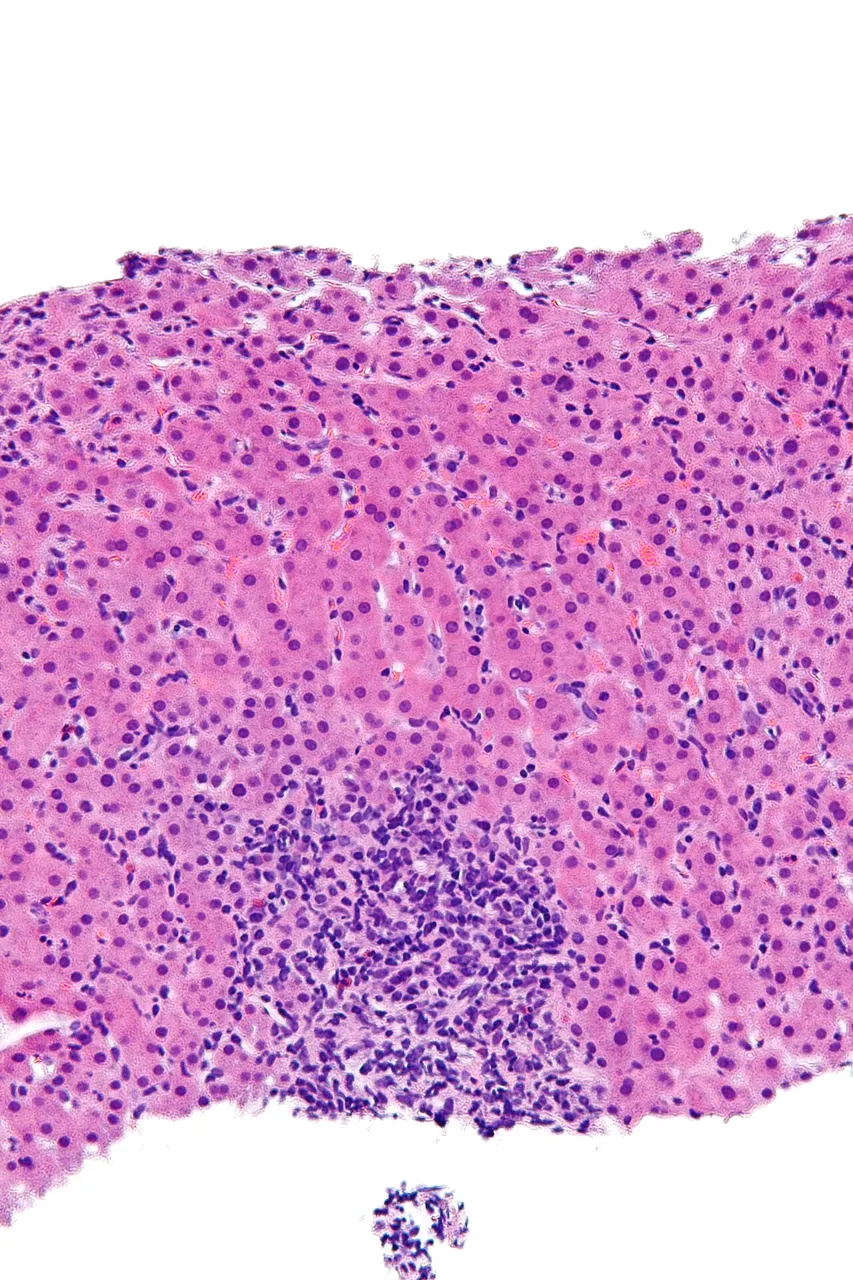
Autoimmune hepatitis (AIH) is a chronic, immune-mediated inflammation of the liver in genetically predisposed people, usually triggered by an unknown environmental factor such as a drug or virus. It affects women about three to four times more often than men and can present at any age, from acute hepatitis or even acute liver failure to an incidental rise in transaminases or established cirrhosis. The hallmarks are a hepatocellular pattern of liver tests, raised immunoglobulin G, circulating autoantibodies (ANA and anti-smooth muscle in type 1; anti-LKM1 or anti-LC1 in type 2) and interface hepatitis rich in plasma cells on biopsy. Diagnosis needs the exclusion of viral, drug, metabolic and alcohol-related causes; the simplified international criteria help. Treatment induces remission with prednisolone and maintains it with azathioprine, and EASL 2025 accepts mycophenolate as an equal first-line partner. The goal is complete biochemical response (normal transaminases and IgG). Most patients need long-term therapy, and untreated severe disease is often fatal.
Patient case, mechanism, investigations, management, flashcards and exam-style questions.Open the lesson →
Key facts
- AIH is a chronic hepatitis with female predominance, raised IgG, autoantibodies and interface hepatitis on biopsy
- Type 1 (ANA and/or anti-smooth muscle antibody) is commonest; type 2 (anti-LKM1, anti-LC1) mainly affects children
- Anti-SLA/LP is the most specific autoantibody and marks more severe, relapsing disease
- Liver biopsy is needed for diagnosis: interface hepatitis, lymphoplasmacytic infiltrate, emperipolesis and rosettes
- Exclude viral hepatitis, Wilson disease, drug-induced liver injury and alcohol before labelling AIH
- Induction is prednisolone with azathioprine (check TPMT) or mycophenolate mofetil; EASL 2025 no longer endorses budesonide as standard first-line
- Aim for complete biochemical response: normal ALT/AST and IgG, ideally within 6 months and certainly by 12 months
- Relapse after withdrawal is common; most patients need lifelong maintenance and cirrhotic patients need HCC surveillance
Differential diagnosis
| Condition | Clues | Key test |
|---|---|---|
| Drug-induced liver injury with autoimmune features | Recent nitrofurantoin, minocycline, statin, anti-TNF or checkpoint inhibitor; resolves after withdrawal | Drug history, RUCAM/RECAM, no relapse after steroid withdrawal |
| Acute or chronic viral hepatitis (A, B, C, E) | Risk exposures, travel; autoantibodies usually absent or low titre | HAV IgM, HBsAg and anti-HBc IgM, HCV RNA, HEV IgM/RNA |
| Wilson disease | Young patient, neuropsychiatric features, haemolysis, low ALP | Caeruloplasmin, 24-hour urinary copper, slit-lamp exam |
| Primary biliary cholangitis (or AIH–PBC variant) | Middle-aged woman, itch, cholestatic pattern | AMA or PBC-specific ANA (sp100, gp210), ALP, biopsy |
| Primary sclerosing cholangitis (AIH–PSC variant) | Young adult with ulcerative colitis, cholestatic tests | MRCP showing stricturing and beading |
| Metabolic dysfunction-associated steatotic liver disease | Obesity, diabetes, low-titre ANA common, normal IgG | Ultrasound, FIB-4, elastography, biopsy if doubt |
| Alcohol-related hepatitis | Heavy drinking, AST:ALT above 2, neutrophilia | Alcohol history, PEth, biopsy if doubt |
Exam pearls
Guideline
EASL Clinical Practice Guidelines on the management of autoimmune hepatitis (2025) and AASLD practice guidance on autoimmune hepatitis (2019)
References
- European Association for the Study of the Liver (EASL). EASL Clinical Practice Guidelines on the management of autoimmune hepatitis. J Hepatol 2025.
- Mack CL, Adams D, Assis DN, et al.. Diagnosis and management of autoimmune hepatitis in adults and children: 2019 practice guidance and guidelines from the American Association for the Study of Liver Diseases. Hepatology 2020.
- Hennes EM, Zeniya M, Czaja AJ, et al.. Simplified criteria for the diagnosis of autoimmune hepatitis. Hepatology 2008.
- Manns MP, Lohse AW, Vergani D.. Autoimmune hepatitis – update 2015. J Hepatol 2015.
- Mieli-Vergani G, Vergani D, Czaja AJ, et al.. Autoimmune hepatitis. Nat Rev Dis Primers 2018.
- Lohse AW, Sebode M, Jørgensen MH, et al.. Second-line and third-line therapy for autoimmune hepatitis: a position statement from the European Reference Network on Hepatological Diseases and the International Autoimmune Hepatitis Group. J Hepatol 2020.
Related topics
By Dr Khalid Seidi (B.Sc., M.D.) · MedEd World Clinical Knowledge library. Original teaching content checked against current guidelines (November 2026); confirm the latest local guidance before clinical use. Not a substitute for clinical judgement.