Clinical Knowledge › Internal medicine › Gastroenterology and hepatology › Diseases of the liver
Hereditary haemochromatosis
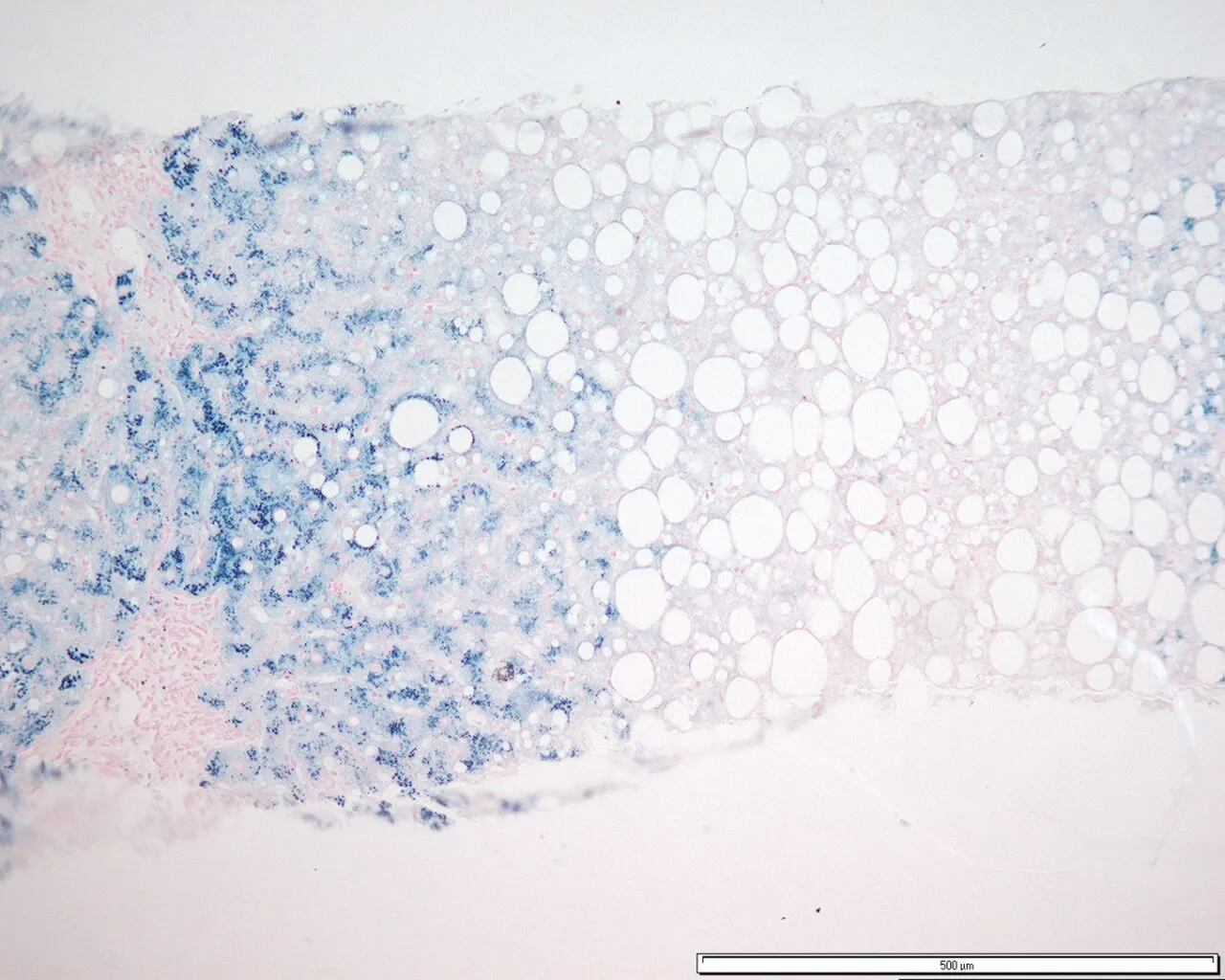
Hereditary haemochromatosis is an inherited disorder of iron regulation in which inappropriately low hepcidin allows excessive intestinal iron absorption and progressive iron deposition in the liver, pancreas, heart, joints, pituitary and skin. Over 80–90% of cases in people of Northern European ancestry are homozygous for the HFE C282Y variant, an autosomal recessive genotype carried by about 1 in 150–200 people, but penetrance is low and many never develop disease. The earliest laboratory sign is a raised transferrin saturation (above 45%), followed by a rising ferritin. Symptoms are non-specific (fatigue, arthralgia of the second and third metacarpophalangeal joints, erectile dysfunction) and the late classic picture of cirrhosis, diabetes and skin pigmentation is now uncommon. Diagnosis combines iron studies with HFE genotyping, MRI for liver iron and fibrosis assessment when ferritin is high. Weekly venesection to a ferritin around 50 µg/L, then maintenance, prevents organ damage and gives normal life expectancy if started before cirrhosis.
Patient case, mechanism, investigations, management, flashcards and exam-style questions.Open the lesson →
Key facts
- Commonest genetic disorder in people of Northern European descent: HFE C282Y homozygosity, autosomal recessive
- Low hepcidin increases ferroportin activity, so the gut absorbs and macrophages release too much iron
- Transferrin saturation above 45% is the earliest and most sensitive screening abnormality; ferritin reflects the size of iron stores
- Penetrance is low: biochemical iron overload is common but clinical disease affects a minority, mainly men
- Ferritin above 1000 µg/L with raised transaminases or low platelets signals risk of advanced fibrosis or cirrhosis
- Treatment is venesection of about 450–500 mL weekly to ferritin around 50 µg/L, then maintenance with ferritin 50–100 µg/L
- Arthropathy and established cirrhosis do not reverse with venesection; fatigue, skin pigmentation and liver tests usually improve
- Screen first-degree relatives with iron studies and HFE genotyping; HCC surveillance is needed if cirrhosis is present
Differential diagnosis
| Condition | Clues | Key test |
|---|---|---|
| Dysmetabolic iron overload (MASLD, metabolic syndrome) | High ferritin with normal transferrin saturation; obesity, diabetes | Transferrin saturation, ultrasound, MRI liver iron (mild) |
| Alcohol-related liver disease | Raised ferritin and GGT, AST:ALT above 2, heavy drinking | Alcohol history, abstinence trial, PEth |
| Inflammation, infection or malignancy | Ferritin is an acute-phase reactant; TSAT often low | CRP, clinical context |
| Transfusional or anaemia-related iron overload | Thalassaemia, sickle cell disease, myelodysplasia, repeated transfusion | Transfusion history, FBC, haemoglobin electrophoresis |
| Non-HFE haemochromatosis (juvenile, TFR2, ferroportin disease) | Young age, severe cardiac or endocrine disease, or high ferritin with low TSAT (ferroportin disease) | Extended gene panel, MRI iron pattern |
| Porphyria cutanea tarda | Blistering skin on sun-exposed hands, often with HFE variants or HCV | Urine and plasma porphyrins |
Exam pearls
Guideline
EASL Clinical Practice Guidelines on haemochromatosis (2022) and ACG Clinical Guideline: Hereditary Hemochromatosis (2019)
References
- European Association for the Study of the Liver (EASL). EASL Clinical Practice Guidelines on haemochromatosis. J Hepatol 2022.
- Kowdley KV, Brown KE, Ahn J, Sundaram V.. ACG Clinical Guideline: Hereditary Hemochromatosis. Am J Gastroenterol 2019.
- Fitzsimons EJ, Cullis JO, Thomas DW, Tsochatzis E, Griffiths WJH.. Diagnosis and therapy of genetic haemochromatosis (review and 2017 update). Br J Haematol 2018.
- Feder JN, Gnirke A, Thomas W, et al.. A novel MHC class I-like gene is mutated in patients with hereditary haemochromatosis. Nat Genet 1996.
- Allen KJ, Gurrin LC, Constantine CC, et al.. Iron-overload-related disease in HFE hereditary hemochromatosis. N Engl J Med 2008.
- Pilling LC, Tamosauskaite J, Jones G, et al.. Common conditions associated with hereditary haemochromatosis genetic variants: cohort study in UK Biobank. BMJ 2019.
Related topics
By Dr Khalid Seidi (B.Sc., M.D.) · MedEd World Clinical Knowledge library. Original teaching content checked against current guidelines (November 2026); confirm the latest local guidance before clinical use. Not a substitute for clinical judgement.