Clinical Knowledge › Internal medicine › Infectious diseases › Relevant pharmacology
Aminoglycosides
Aminoglycosides (gentamicin, tobramycin, amikacin, streptomycin, neomycin and the newer plazomicin) are rapidly bactericidal antibiotics that bind the 16S rRNA of the 30S ribosomal subunit and cause mRNA misreading. Uptake needs oxygen-dependent transport, so they have no anaerobic activity, and they penetrate abscesses, CSF and bronchial secretions poorly. Killing is concentration dependent with a long post-antibiotic effect, which supports extended-interval (once-daily) dosing of gentamicin 5–7 mg/kg with level monitoring. Their main role is short courses for serious Gram-negative sepsis, especially urinary, synergy with cell wall agents in some endocarditis, Pseudomonas in cystic fibrosis, plague, tularaemia and mycobacterial infections. Toxicity is the price: proximal tubular injury (usually reversible), irreversible cochlear and vestibular damage, and neuromuscular blockade. Risk rises with longer courses, high troughs, older age, kidney impairment and co-nephrotoxins. Carriers of the mitochondrial m.1555A>G variant can become deaf after a single dose.
Patient case, mechanism, investigations, management, flashcards and exam-style questions.Open the lesson →
Key facts
- Bind 16S rRNA of the 30S subunit, causing misreading and blocked initiation; bactericidal and concentration dependent with a post-antibiotic effect
- No anaerobic activity: uptake requires oxygen-dependent active transport, which also fails in acidic abscesses
- Extended-interval dosing: gentamicin 5–7 mg/kg once daily (teaching dose; check local formulary), dose by ideal or adjusted body weight, interval by level and renal function
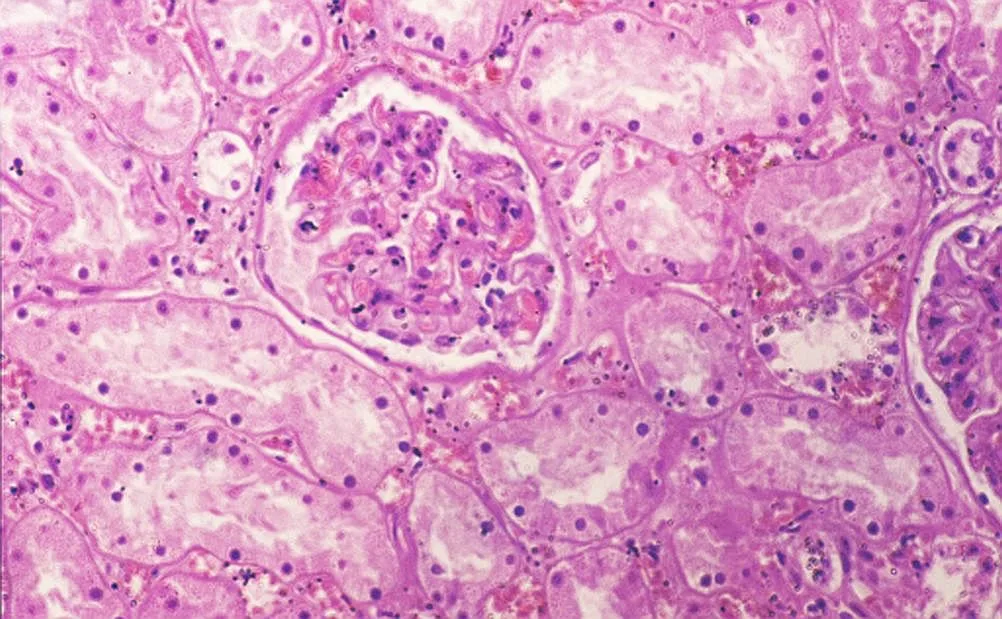
- Nephrotoxicity is non-oliguric proximal tubular injury appearing after about 5–7 days, with hypomagnesaemia and hypokalaemia; usually reversible
- Ototoxicity (cochlear and vestibular) is often irreversible; gentamicin and streptomycin are more vestibulotoxic, amikacin more cochleotoxic
- Mitochondrial MT-RNR1 m.1555A>G variant predisposes to profound deafness after even one dose; rapid neonatal genotyping is now available
- Synergy with beta-lactams or glycopeptides relies on cell wall damage increasing aminoglycoside entry (for example enterococcal endocarditis)
- Main resistance: aminoglycoside-modifying enzymes; 16S rRNA methyltransferases (often with NDM carbapenemases) cause pan-aminoglycoside resistance
Differential diagnosis
| Condition | Clues | Key test |
|---|---|---|
| Aminoglycoside acute tubular injury | Slow creatinine rise after 5–7 days, non-oliguric, low magnesium | Serial creatinine, urinalysis (granular casts), magnesium |
| Prerenal AKI from sepsis | Early creatinine rise with hypotension, oliguria, low urine sodium | Volume assessment, urine sodium, response to fluids |
| Contrast-associated AKI | Creatinine rise 24–72 hours after iodinated contrast | Timing relative to contrast |
| Vestibular toxicity | Oscillopsia and unsteadiness in the dark, hearing often normal | Head impulse test, vestibular testing |
| Benign paroxysmal positional vertigo | Brief vertigo triggered by head position | Dix–Hallpike manoeuvre |
| Age-related hearing loss | Gradual bilateral high-frequency loss without drug exposure | Pure-tone audiometry and history |
| Myasthenic weakness unmasked | Ptosis, weakness after gentamicin in myasthenia or with neuromuscular blockers | Clinical; ice-pack test; acetylcholine receptor antibodies |
Exam pearls
Guideline
IDSA 2024 Guidance on antimicrobial-resistant Gram-negative infections, ESC 2023 infective endocarditis guideline and Surviving Sepsis Campaign 2021
References
- Tamma PD, Heil EL, Justo JA, Mathers AJ, Satlin MJ, Bonomo RA.. Infectious Diseases Society of America 2024 Guidance on the Treatment of Antimicrobial-Resistant Gram-Negative Infections. Clin Infect Dis 2024.
- Nicolau DP, Freeman CD, Belliveau PP, et al.. Experience with a once-daily aminoglycoside program administered to 2,184 adult patients. Antimicrob Agents Chemother 1995.
- Bennett JE, Dolin R, Blaser MJ (eds).. Mandell, Douglas, and Bennett's Principles and Practice of Infectious Diseases, 9th edition. Elsevier 2020.
- Delgado V, Ajmone Marsan N, de Waha S, et al.. 2023 ESC Guidelines for the management of endocarditis. Eur Heart J 2023.
- Evans L, Rhodes A, Alhazzani W, et al.. Surviving sepsis campaign: international guidelines for management of sepsis and septic shock 2021. Intensive Care Med 2021.
- World Health Organization. WHO consolidated guidelines on tuberculosis. Module 4: treatment. WHO, Geneva 2022.
Related topics
By Dr Khalid Seidi (B.Sc., M.D.) · MedEd World Clinical Knowledge library. Original teaching content checked against current guidelines (November 2026); confirm the latest local guidance before clinical use. Not a substitute for clinical judgement.