Clinical Knowledge › Internal medicine › Cardiology and angiology › Arrhythmias and conduction disorders
Atrial fibrillation
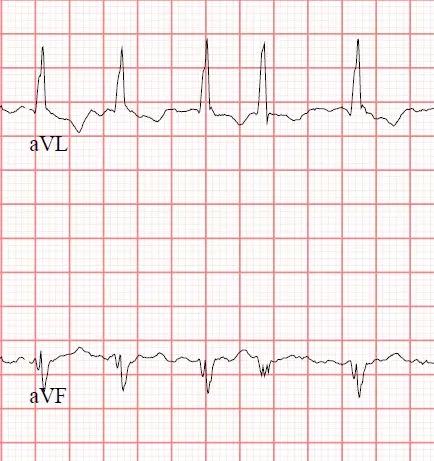
Atrial fibrillation (AF) is the commonest sustained arrhythmia: disorganised atrial electrical activity with loss of effective atrial contraction and an irregularly irregular ventricular response. It affects tens of millions of people worldwide, rises steeply with age, and is driven by hypertension, obesity, diabetes, heart failure, valve disease, sleep apnoea, alcohol and thyroid disease. Its dangers are cardioembolic stroke from left atrial appendage thrombus, tachycardia-induced heart failure and impaired quality of life. Diagnosis needs an ECG recording (12-lead or a single-lead strip of at least 30 seconds) showing irregular RR intervals with no distinct P waves. Management in the 2024 ESC guideline follows the AF-CARE pathway: treat comorbidities and risk factors, avoid stroke with oral anticoagulation (a DOAC for most people with CHA2DS2-VA of 2 or more), reduce symptoms with rate and rhythm control (including early rhythm control and catheter ablation), and re-evaluate dynamically. Haemodynamically unstable AF needs immediate synchronised cardioversion.
Patient case, mechanism, investigations, management, flashcards and exam-style questions.Open the lesson →
Key facts
- AF shows irregularly irregular RR intervals with no discernible P waves on an ECG strip of at least 30 seconds
- Classify as first-diagnosed, paroxysmal (ends within 7 days), persistent (over 7 days), long-standing persistent (over 12 months) or permanent
- ESC 2024 uses CHA2DS2-VA (sex removed): oral anticoagulation recommended at 2 or more and considered at 1
- DOACs are preferred over warfarin except with a mechanical valve or moderate-to-severe mitral stenosis, where warfarin is required
- Never use aspirin alone for stroke prevention in AF; bleeding scores identify modifiable risks, not reasons to withhold anticoagulation
- Rate control uses beta-blockers, diltiazem or verapamil (only if LVEF above 40%) or digoxin; initial target resting rate below 110/min
- Before elective cardioversion of AF lasting 24 hours or more, give 3 weeks of anticoagulation or exclude thrombus by TOE
- Catheter ablation (pulmonary vein isolation) is a first-line rhythm-control option in paroxysmal AF and improves outcomes in AF with HFrEF
Differential diagnosis
| Condition | Clues | Key test |
|---|---|---|
| Atrial flutter with variable block | Regular sawtooth flutter waves at about 300/min; RR may look irregular | 12-lead ECG, adenosine to unmask flutter waves |
| Multifocal atrial tachycardia | Three or more P-wave morphologies, often in severe lung disease | 12-lead ECG showing distinct varying P waves |
| Frequent atrial ectopics | Irregular rhythm but visible premature P waves | 12-lead ECG, ambulatory monitoring |
| Sinus tachycardia or sinus arrhythmia | Each QRS preceded by a normal P wave | 12-lead ECG |
| Pre-excited AF (WPW) | Very fast, irregular, broad and varying QRS complexes | 12-lead ECG; sinus rhythm ECG shows delta wave |
| Atrial tachycardia with variable AV block | Discrete P waves with isoelectric baseline between them | 12-lead ECG, digoxin level if on digoxin |
Exam pearls
Guideline
2024 ESC Guidelines for the management of atrial fibrillation (with EACTS) and 2023 ACC/AHA/ACCP/HRS AF guideline
References
- Van Gelder IC, Rienstra M, Bunting KV, et al.. 2024 ESC Guidelines for the management of atrial fibrillation developed in collaboration with the European Association for Cardio-Thoracic Surgery (EACTS). Eur Heart J 2024.
- Joglar JA, Chung MK, Armbruster AL, et al.. 2023 ACC/AHA/ACCP/HRS Guideline for the Diagnosis and Management of Atrial Fibrillation: A Report of the American College of Cardiology/American Heart Association Joint Committee on Clinical Practice Guidelines. Circulation 2024.
- Lip GY, Nieuwlaat R, Pisters R, et al.. Refining clinical risk stratification for predicting stroke and thromboembolism in atrial fibrillation using a novel risk factor-based approach: the euro heart survey on atrial fibrillation. Chest 2010.
- Kirchhof P, Camm AJ, Goette A, et al.. Early Rhythm-Control Therapy in Patients with Atrial Fibrillation. N Engl J Med 2020.
- Healey JS, Lopes RD, Granger CB, et al.. Apixaban for Stroke Prevention in Subclinical Atrial Fibrillation. N Engl J Med 2024.
- Kirchhof P, Toennis T, Goette A, et al.. Anticoagulation with Edoxaban in Patients with Atrial High-Rate Episodes. N Engl J Med 2023.
Related topics
By Dr Khalid Seidi (B.Sc., M.D.) · MedEd World Clinical Knowledge library. Original teaching content checked against current guidelines (November 2026); confirm the latest local guidance before clinical use. Not a substitute for clinical judgement.