Clinical Knowledge › Internal medicine › Cardiology and angiology › Arrhythmias and conduction disorders
Sudden cardiac death
Sudden cardiac death (SCD) is an unexpected natural death from a cardiac cause, occurring within 1 hour of symptom onset when witnessed, or within 24 hours of the person last being seen well when unwitnessed. Most cases are caused by ventricular fibrillation or rapid ventricular tachycardia. Over the age of 35 the usual substrate is coronary artery disease, acute or healed infarction, or cardiomyopathy; in the young, inherited cardiomyopathies and channelopathies, myocarditis, coronary anomalies and drugs dominate. Survival depends on the chain of survival: rapid recognition, bystander CPR, early defibrillation with a public-access AED and post-resuscitation care. Survivors need a search for the cause and usually a secondary-prevention ICD. Prevention in others rests on treating the substrate, optimal heart failure therapy and a primary-prevention ICD for selected high-risk patients. After an unexplained death in a young person, autopsy, molecular autopsy and family screening can save relatives.
Patient case, mechanism, investigations, management, flashcards and exam-style questions.Open the lesson →
Key facts
- SCD = natural death from a cardiac cause within 1 hour of symptoms (witnessed) or within 24 hours of last being seen well (unwitnessed)
- VF, often preceded by VT, is the commonest initial rhythm; non-shockable rhythms are increasingly common and carry a worse outcome
- Coronary artery disease causes most SCD over 35 years; inherited cardiomyopathies, channelopathies and myocarditis predominate in the young
- Every minute without CPR and defibrillation lowers survival by roughly 10%; bystander CPR and public AEDs can double or triple survival
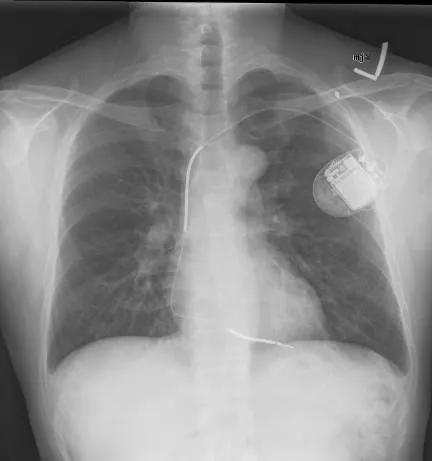
- Secondary-prevention ICD after VF or haemodynamically not tolerated VT without a reversible cause
- Primary-prevention ICD: ischaemic cardiomyopathy with LVEF 35% or less despite at least 3 months of optimal therapy (MADIT-II, SCD-HeFT); wait 40 days after MI
- In non-ischaemic cardiomyopathy, LVEF alone predicts poorly (DANISH); add cardiac MRI scar, genetics (e.g. LMNA) and other risk markers
- After unexplained sudden death in the young: full autopsy with histology and toxicology, molecular autopsy and cascade screening of first-degree relatives
Differential diagnosis
| Condition | Clues | Key test |
|---|---|---|
| Coronary artery disease (acute MI or scar) | Older patient, risk factors, ST elevation or Q waves | ECG, troponin, coronary angiography |
| Hypertrophic cardiomyopathy | Young athlete, family history, LVH with deep T inversion | Echocardiography, cardiac MRI, genetics |
| Arrhythmogenic cardiomyopathy | Exercise-related, epsilon waves, T inversion V1–V3 | Cardiac MRI, signal-averaged ECG, genetics |
| Long QT syndrome | Syncope with emotion, swimming or alarm clocks; long QTc | Serial ECGs, exercise test, genetics |
| Brugada syndrome | Death at rest or sleep, fever trigger, coved ST in V1–V2 | ECG with high leads, sodium channel blocker test |
| Catecholaminergic polymorphic VT | Child with exertional syncope, normal resting ECG | Exercise test showing bidirectional VT, RYR2 testing |
| Non-cardiac sudden death | Massive PE, aortic rupture, subarachnoid haemorrhage, drugs | Autopsy, CT, toxicology |
Exam pearls
Guideline
2022 ESC guidelines for ventricular arrhythmias and the prevention of sudden cardiac death, 2017 AHA/ACC/HRS ventricular arrhythmia and SCD guideline, ERC 2025 and AHA 2025 resuscitation guidelines, and the 2022 EHRA/HRS/APHRS/LAHRS genetic testing consensus
References
- Zeppenfeld K, Tfelt-Hansen J, de Riva M, et al.. 2022 ESC Guidelines for the management of patients with ventricular arrhythmias and the prevention of sudden cardiac death. Eur Heart J 2022.
- Al-Khatib SM, Stevenson WG, Ackerman MJ, et al.. 2017 AHA/ACC/HRS Guideline for Management of Patients With Ventricular Arrhythmias and the Prevention of Sudden Cardiac Death: A Report of the American College of Cardiology/American Heart Association Task Force on Clinical Practice Guidelines and the Heart Rhythm Society. Circulation 2018.
- Soar J, Böttiger BW, Carli P, et al.. European Resuscitation Council Guidelines 2025 Adult Advanced Life Support. Resuscitation 2025.
- Wigginton JG, Agarwal S, Bartos JA, et al.. Part 9: Adult Advanced Life Support: 2025 American Heart Association Guidelines for Cardiopulmonary Resuscitation and Emergency Cardiovascular Care. Circulation 2025.
- Marijon E, Narayanan K, Smith K, et al.. The Lancet Commission to reduce the global burden of sudden cardiac death: a call for multidisciplinary action. Lancet 2023.
- Moss AJ, Zareba W, Hall WJ, et al.. Prophylactic implantation of a defibrillator in patients with myocardial infarction and reduced ejection fraction. N Engl J Med 2002.
Related topics
By Dr Khalid Seidi (B.Sc., M.D.) · MedEd World Clinical Knowledge library. Original teaching content checked against current guidelines (November 2026); confirm the latest local guidance before clinical use. Not a substitute for clinical judgement.