Clinical Knowledge › Anaesthesiology › Airway management
Awake fibreoptic intubation
Awake tracheal intubation (ATI) places a tracheal tube while the patient keeps spontaneous breathing, airway tone and protective reflexes, so that if the attempt fails the patient is still oxygenating. It is usually performed with a flexible bronchoscope (awake fibreoptic intubation); awake videolaryngoscopy is an alternative. It is indicated when difficulty is predicted with laryngoscopy plus facemask or supraglottic rescue, in head and neck pathology, restricted mouth opening, severe obesity or obstructive sleep apnoea, and when predicted difficulty coincides with aspiration risk or physiological instability. The Difficult Airway Society 2020 guideline breaks the procedure into sedation, topicalisation, oxygenation and performance: high-flow nasal oxygen throughout, lidocaine topicalisation within a maximum of 9 mg/kg lean body weight, minimal sedation (often remifentanil), and a two-point check of tube position (bronchoscopic view of the trachea and sustained capnography) before induction. Success exceeds 98%.
Patient case, mechanism, investigations, management, flashcards and exam-style questions.Open the lesson →
Key facts
- ATI keeps spontaneous ventilation and airway reflexes; if it fails the patient is still breathing and can be woken
- Main indications: predicted difficult laryngoscopy with difficult facemask or SGA rescue, head and neck tumours or radiotherapy, trismus, unstable cervical spine, severe obesity/OSA
- DAS 2020 'sTOP': sedation (optional, minimal), topicalisation, oxygenation, performance
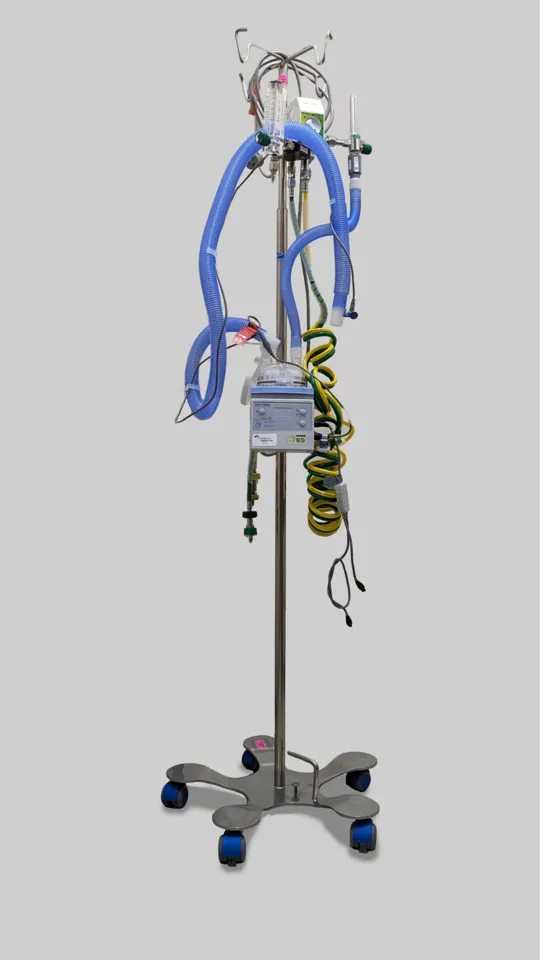
- High-flow nasal oxygen (30–70 L/min) throughout reduces desaturation during ATI
- Maximum topical lidocaine dose 9 mg/kg lean body weight (DAS 2020); watch for local anaesthetic toxicity
- Two-point check before induction: tracheal rings or carina seen through the scope and a sustained capnography trace
- Limit attempts (DAS: 3 plus 1 by a more experienced operator); failure plan may be awake tracheostomy or front-of-neck access under local
- Absolute contraindication: refusal; caution in critical airway obstruction, active bleeding, local anaesthetic allergy and the uncooperative patient
Differential diagnosis
| Condition | Clues | Key test |
|---|---|---|
| Asleep videolaryngoscopy | Predicted difficult laryngoscopy only, easy mask and SGA rescue | Airway assessment; mask ventilation predictors |
| Awake tracheostomy under local anaesthesia | Critical upper airway obstruction (e.g. large glottic tumour) where the scope would obstruct | ENT nasendoscopy; CT neck |
| Inhalational induction with spontaneous ventilation | Some ENT/paediatric obstruction when cooperation impossible | Specialist planning |
| Awake videolaryngoscopy | Adequate mouth opening; operator expertise | Mouth opening above 3 cm |
| Regional or local anaesthesia avoiding the airway | Peripheral limb surgery suitable for block | Surgical site and duration |
| Intubation through an SGA | Rescue after asleep failure with good SGA ventilation | Flexible bronchoscope via SGA |
Exam pearls
Guideline
Difficult Airway Society 2020 guidelines for awake tracheal intubation in adults (with ASA 2022 and Canadian Airway Focus Group 2021)
References
- Ahmad I, El-Boghdadly K, Bhagrath R, et al.. Difficult Airway Society guidelines for awake tracheal intubation (ATI) in adults. Anaesthesia 2020.
- Apfelbaum JL, Hagberg CA, Connis RT, et al.. 2022 American Society of Anesthesiologists practice guidelines for management of the difficult airway. Anesthesiology 2022.
- Law JA, Duggan LV, Asselin M, et al.. Canadian Airway Focus Group updated consensus-based recommendations for management of the difficult airway: part 2. Planning and implementing safe management of the patient with an anticipated difficult airway. Can J Anaesth 2021.
- Cook TM, Woodall N, Frerk C; Fourth National Audit Project. Major complications of airway management in the UK: results of the Fourth National Audit Project of the Royal College of Anaesthetists and the Difficult Airway Society. Part 1: anaesthesia. Br J Anaesth 2011.
- Ahmad I, El-Boghdadly K, Iliff H, et al.. Difficult Airway Society 2025 guidelines for management of unanticipated difficult tracheal intubation in adults. Br J Anaesth 2026.
- Chrimes N, Higgs A, Hagberg CA, et al.. Preventing unrecognised oesophageal intubation: a consensus guideline from the Project for Universal Management of Airways and international airway societies. Anaesthesia 2022.
Related topics
By Dr Khalid Seidi (B.Sc., M.D.) · MedEd World Clinical Knowledge library. Original teaching content checked against current guidelines (November 2026); confirm the latest local guidance before clinical use. Not a substitute for clinical judgement.