Clinical Knowledge › Anaesthesiology › Airway management
Extubation and post-extubation stridor
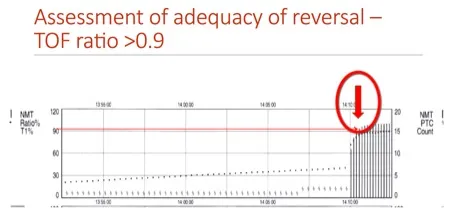
Tracheal extubation is an elective step that carries more airway risk than intubation: in NAP4 about a third of major airway events under anaesthesia happened at emergence or in recovery. The Difficult Airway Society (DAS) 2012 guideline frames extubation in four steps (plan, prepare, perform, post-extubation care) and divides patients into low-risk and at-risk groups. Low-risk patients are extubated awake after full reversal of neuromuscular block to a train-of-four ratio of 0.9 or more, suction under direct vision and preoxygenation. At-risk patients may need a laryngeal mask exchange, remifentanil technique, airway exchange catheter, delayed extubation or tracheostomy. Post-extubation stridor results from laryngeal oedema, typically after prolonged or traumatic intubation in the ICU. A failed cuff-leak test identifies risk; systemic corticosteroids given at least 4 hours before extubation reduce stridor and reintubation. Established stridor is treated with sitting up, humidified oxygen, nebulised adrenaline and IV dexamethasone, with early reintubation if obstruction progresses.
Patient case, mechanism, investigations, management, flashcards and exam-style questions.Open the lesson →
Key facts
- DAS 2012: plan, prepare, perform, post-extubation care; classify as low-risk or at-risk before extubating
- At-risk = uncertain ability to oxygenate, potentially difficult reintubation, or general risk factors (cardiorespiratory, neuromuscular, metabolic, airway surgery)
- Confirm reversal of neuromuscular block with quantitative monitoring: train-of-four ratio 0.9 or more
- Before removal: 100% oxygen, suction under direct vision, bite block, positive pressure as the cuff is deflated
- Laryngospasm is the commonest immediate obstructive event after extubation, especially in children and at light anaesthesia
- Post-extubation stridor risk factors: intubation over 48 hours, female sex, large tube, traumatic intubation, high cuff pressure, agitation
- Cuff-leak volume under about 110 mL (or under roughly 10–15% of tidal volume) suggests laryngeal oedema; ATS/ACCP 2017 advise steroids at least 4 hours before extubation if the test fails in high-risk patients
- Treatment of stridor: sit up, oxygen, nebulised adrenaline, IV dexamethasone, heliox as a bridge; reintubate early with a smaller tube if failing
Differential diagnosis
| Condition | Clues | Key test |
|---|---|---|
| Laryngospasm | Immediate obstruction at extubation, silent or high-pitched, at light anaesthesia | Clinical; responds to CPAP and deepening |
| Laryngeal oedema | Stridor within minutes to hours after prolonged or traumatic intubation | Clinical; nasendoscopy if stable |
| Bilateral vocal cord palsy | Stridor after thyroidectomy; the voice may be near-normal or weak because the cords lie near the midline | Nasendoscopy shows cords in paramedian position |
| Neck haematoma | Swelling and stridor after thyroid or carotid surgery | Inspect wound; open at bedside if obstructing |
| Residual neuromuscular blockade | Weak, shallow breathing, upper airway collapse, ptosis | Quantitative train-of-four |
| Retained throat pack or foreign body | Obstruction after ENT/dental surgery | Direct laryngoscopy; check pack count |
| Angioedema or anaphylaxis | Lip and tongue swelling, urticaria, hypotension | Clinical; tryptase |
| Negative-pressure pulmonary oedema | Pink frothy sputum and hypoxaemia after obstruction | Chest X-ray |
Exam pearls
Guideline
Difficult Airway Society extubation guidelines (2012, current) and ATS/ACCP liberation from mechanical ventilation guideline 2017
References
- Popat M, Mitchell V, Dravid R, et al.. Difficult Airway Society Guidelines for the management of tracheal extubation. Anaesthesia 2012.
- Cook TM, Woodall N, Frerk C; Fourth National Audit Project. Major complications of airway management in the UK: results of the Fourth National Audit Project of the Royal College of Anaesthetists and the Difficult Airway Society. Part 1: anaesthesia. Br J Anaesth 2011.
- Girard TD, Alhazzani W, Kress JP, et al.. An official American Thoracic Society/American College of Chest Physicians clinical practice guideline: liberation from mechanical ventilation in critically ill adults. Rehabilitation protocols, ventilator liberation protocols, and cuff leak tests. Am J Respir Crit Care Med 2017.
- Kuriyama A, Umakoshi N, Sun R. Prophylactic corticosteroids for prevention of postextubation stridor and reintubation in adults: a systematic review and meta-analysis. Chest 2017.
- François B, Bellissant E, Gissot V, et al.. 12-h pretreatment with methylprednisolone versus placebo for prevention of postextubation laryngeal oedema: a randomised double-blind trial. Lancet 2007.
- Miller RL, Cole RP. Association between reduced cuff leak volume and postextubation stridor. Chest 1996.
Related topics
By Dr Khalid Seidi (B.Sc., M.D.) · MedEd World Clinical Knowledge library. Original teaching content checked against current guidelines (November 2026); confirm the latest local guidance before clinical use. Not a substitute for clinical judgement.