Clinical Knowledge › Urology › Urological trauma
Bladder injury
Bladder injury is classified as extraperitoneal, intraperitoneal or combined, and the distinction decides management. Most blunt injuries occur with pelvic fractures: extraperitoneal rupture, the commonest type, results from shearing at the bladder base or laceration by bone fragments, whereas intraperitoneal rupture follows a blow to the lower abdomen when the bladder is full, bursting the dome, its weakest part. Iatrogenic injury occurs during caesarean section, hysterectomy, hernia and sling surgery and transurethral resection of bladder tumours; penetrating wounds and spontaneous rupture of an abnormal bladder (after alcohol binge, radiotherapy or augmentation) are less common. Visible haematuria is present in nearly all, often with suprapubic pain and inability to void; intraperitoneal urine causes ileus, peritonitis and a raised creatinine from peritoneal reabsorption. Retrograde cystography (CT or conventional), with the bladder actively filled with at least 300–350 mL of contrast, is the diagnostic test, after excluding urethral injury if there is blood at the meatus. Uncomplicated extraperitoneal rupture heals with catheter drainage for about 10–14 days, while intraperitoneal, penetrating and complicated extraperitoneal injuries need surgical repair.
Patient case, mechanism, investigations, management, flashcards and exam-style questions.Open the lesson →
Key facts
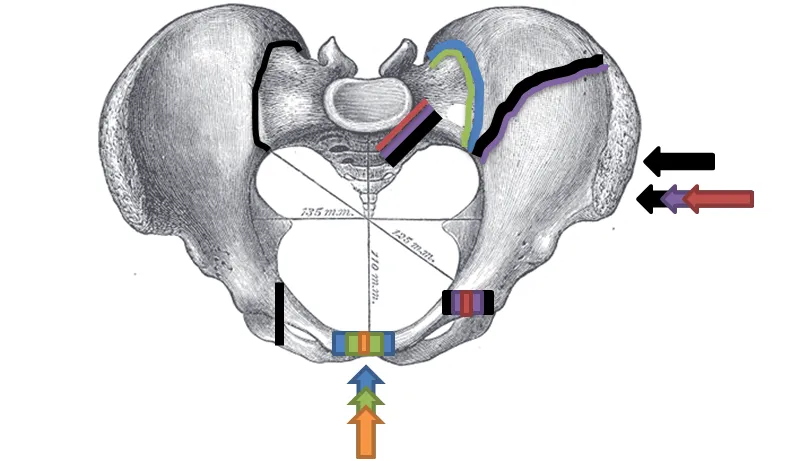
- About 60–85% of bladder injuries are from blunt trauma, and most blunt injuries occur with pelvic fractures; only about 5–10% of pelvic fractures injure the bladder
- Extraperitoneal rupture is the commonest type; intraperitoneal rupture affects the dome when a full bladder is struck; some injuries are combined
- Visible haematuria is present in most bladder injuries; the classic triad is visible haematuria, suprapubic pain and difficulty or inability to void
- Absolute indication for cystography: visible haematuria with pelvic fracture
- Retrograde cystography (CT or plain) needs active filling with at least 300–350 mL of dilute contrast; clamping a catheter during routine CT is not enough
- Exclude urethral injury (retrograde urethrogram) before passing a catheter if there is blood at the meatus
- Uncomplicated extraperitoneal rupture: urethral catheter drainage for about 10–14 days, then cystogram before removal
- Intraperitoneal rupture, penetrating injury and complicated extraperitoneal rupture (bladder neck, bone fragment, rectal or vaginal injury) need surgical repair
Differential diagnosis
| Condition | Clues | Key test |
|---|---|---|
| Urethral injury | Blood at the meatus, inability to void, perineal bruising, high-riding prostate | Retrograde urethrogram |
| Renal injury | Flank pain and haematuria after trauma | Contrast CT with delayed phase |
| Pelvic fracture haematoma compressing the bladder | 'Teardrop' bladder on imaging, no extravasation | CT cystography |
| Hollow viscus (bowel) injury | Peritonitis and free fluid after seat-belt injury | CT; fluid creatinine not raised |
| Acute urinary retention | Palpable bladder, no trauma or extravasation | Bladder scan; catheter drains clear urine |
| Ureteric injury | Flank pain, leak after pelvic surgery | CT urography delayed phase |
Exam pearls
Guideline
EAU Guidelines on Urological Trauma (2026 edition; 2023 summary paper), AUA Urotrauma Guideline (2020 amendment), EAST blunt bladder injury practice management guideline (2019) and WSES–AAST kidney and uro-trauma guidelines (2019)
References
- European Association of Urology. EAU Guidelines on Urological Trauma (2026 edition). EAU Guidelines Office, Arnhem 2026.
- Serafetinidis E, Campos-Juanatey F, Hallscheidt P, et al.. Summary Paper of the Updated 2023 European Association of Urology Guidelines on Urological Trauma. Eur Urol Focus 2024.
- Morey AF, Broghammer JA, Hollowell CMP, McKibben MJ, Souter L. Urotrauma Guideline 2020: AUA Guideline. J Urol 2021.
- Yeung LL, McDonald AA, Como JJ, et al.. Management of blunt force bladder injuries: A practice management guideline from the Eastern Association for the Surgery of Trauma. J Trauma Acute Care Surg 2019.
- Mahat Y, Leong JY, Chung PH. A contemporary review of adult bladder trauma. J Inj Violence Res 2019.
- Coccolini F, Moore EE, Kluger Y, et al.. Kidney and uro-trauma: WSES-AAST guidelines. World J Emerg Surg 2019.
Related topics
By Dr Khalid Seidi (B.Sc., M.D.) · MedEd World Clinical Knowledge library. Original teaching content checked against current guidelines (November 2026); confirm the latest local guidance before clinical use. Not a substitute for clinical judgement.