Clinical Knowledge › Internal medicine › Basics of internal medicine › Laboratory test interpretation
Bone profile (calcium, phosphate, alkaline phosphatase)
The bone profile is the ward panel of total calcium, albumin, phosphate and alkaline phosphatase (ALP). It is requested for confusion, fatigue, bone pain, fractures, renal stones, malignancy, malnutrition, chronic kidney disease, before feeding and before bisphosphonates. Read it as a pattern rather than as single numbers: a high calcium is first confirmed (repeat, adjust for albumin or measure ionised calcium) and then always paired with parathyroid hormone (PTH), which splits the causes into PTH-dependent (mainly primary hyperparathyroidism) and PTH-independent (malignancy, myeloma, vitamin D excess, granulomatous disease, drugs). Low calcium with high phosphate suggests hypoparathyroidism or kidney failure; low calcium with low phosphate and high ALP suggests vitamin D deficiency and osteomalacia; an isolated raised ALP suggests Paget disease, metastases, healing fracture or a liver source (check GGT). Pre-analytical errors are common: EDTA contamination lowers calcium and ALP, haemolysis and delayed separation raise phosphate, and albumin adjustment is unreliable in critical illness.
Patient case, mechanism, investigations, management, flashcards and exam-style questions.Open the lesson →
Key facts
- Typical adult ranges: adjusted calcium 2.20–2.60 mmol/L (8.8–10.4 mg/dL), phosphate 0.80–1.50 mmol/L (2.5–4.5 mg/dL), ALP about 30–130 U/L; always use the local laboratory range
- About 45% of plasma calcium is ionised (the active fraction), about 40–45% is bound to albumin and the rest is complexed
- Common adjustment: adjusted Ca (mmol/L) = total Ca + 0.02 × (40 − albumin g/L); in mg/dL add 0.8 for every 1 g/dL that albumin is below 4.0
- Measure ionised calcium (blood gas analyser) in critical illness, acid–base disturbance, very abnormal albumin and advanced CKD
- Hypercalcaemia + raised or inappropriately normal PTH = PTH-dependent (usually primary hyperparathyroidism); suppressed PTH = look for malignancy, myeloma, vitamin D excess or granulomas
- Primary hyperparathyroidism and hypercalcaemia of malignancy cause about 90% of hypercalcaemia
- EDTA contamination (wrong order of draw) gives very low calcium, very low ALP and very high potassium in a well patient
- An isolated raised ALP with normal GGT points to bone (Paget disease, metastases, osteomalacia, fracture healing, growth, pregnancy is placental)
Differential diagnosis
| Condition | Clues | Key test |
|---|---|---|
| Primary hyperparathyroidism | High calcium, low-normal phosphate, PTH raised or inappropriately normal; often asymptomatic | PTH with 25-hydroxyvitamin D and urine calcium |
| Hypercalcaemia of malignancy | Rapid rise, often >3.0 mmol/L, unwell patient, suppressed PTH | PTH (suppressed), PTHrP, imaging, serum free light chains |
| Vitamin D deficiency and osteomalacia | Low or low-normal calcium and phosphate, raised ALP and PTH, bone pain, proximal myopathy | 25-hydroxyvitamin D |
| CKD–mineral and bone disorder | High phosphate, low or normal calcium, high PTH, low eGFR | eGFR, PTH, trend over time |
| Hypoparathyroidism | Low calcium, high phosphate, low PTH; often after neck surgery | PTH and magnesium |
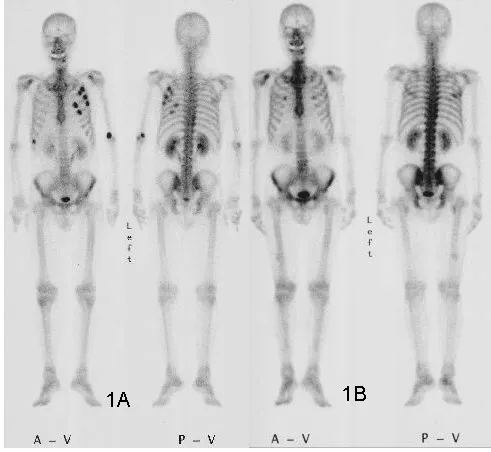
| Paget disease of bone | Isolated raised ALP, normal calcium and phosphate, bone pain or deformity | GGT/bone ALP, plain X-ray and isotope bone scan |
| Spurious result (EDTA contamination, haemolysis) | Implausible values in a well patient: low Ca and ALP with high K, or high phosphate with haemolysis | Repeat sample with correct order of draw |
Exam pearls
Guideline
Fifth International Workshop on Primary Hyperparathyroidism (2022), Endocrine Society vitamin D guideline (2024), NICE NG132 Hyperparathyroidism (primary) (2019) and KDIGO CKD–MBD guideline update (2017)
References
- Bilezikian JP, Khan AA, Silverberg SJ, et al.. Evaluation and management of primary hyperparathyroidism: summary statement and guidelines from the Fifth International Workshop. J Bone Miner Res 2022.
- Demay MB, Pittas AG, Bikle DD, et al.. Vitamin D for the prevention of disease: an Endocrine Society clinical practice guideline. J Clin Endocrinol Metab 2024.
- National Institute for Health and Care Excellence (NICE). Hyperparathyroidism (primary): diagnosis, assessment and initial management (NG132). NICE guideline 2019.
- KDIGO CKD-MBD Update Work Group.. KDIGO 2017 clinical practice guideline update for the diagnosis, evaluation, prevention, and treatment of chronic kidney disease–mineral and bone disorder (CKD-MBD). Kidney Int Suppl 2017.
- Payne RB, Little AJ, Williams RB, Milner JR.. Interpretation of serum calcium in patients with abnormal serum proteins. Br Med J 1973.
- Özdemir E, Yılmaz T, Düzenci D.. Limited diagnostic utility of albumin-corrected calcium in the intensive care unit: a prospective comparison with ionised calcium. PLoS One 2026.
Related topics
By Dr Khalid Seidi (B.Sc., M.D.) · MedEd World Clinical Knowledge library. Original teaching content checked against current guidelines (November 2026); confirm the latest local guidance before clinical use. Not a substitute for clinical judgement.