Clinical Knowledge › Internal medicine › Basics of internal medicine › Laboratory test interpretation
Liver function tests interpretation
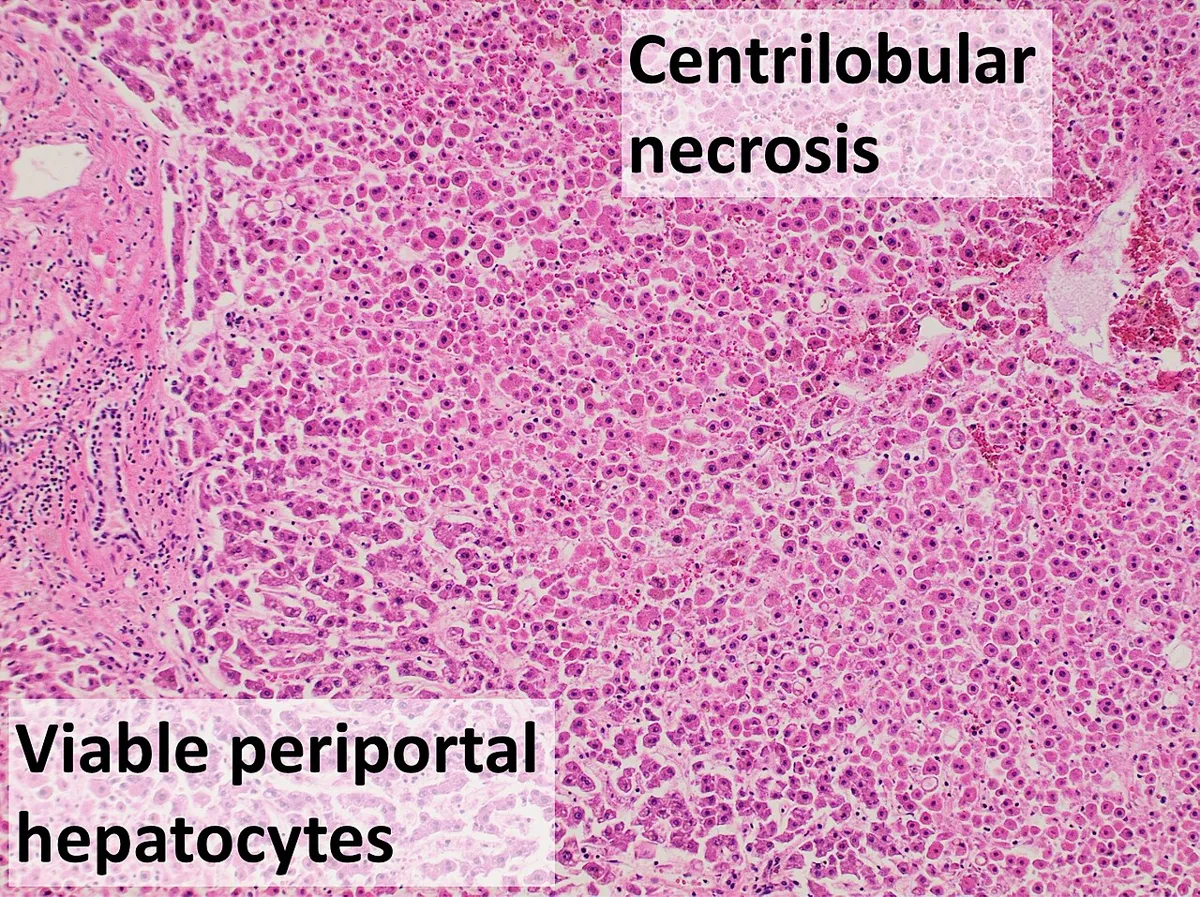
'Liver function tests' mostly measure liver injury rather than function. The transaminases (ALT, AST) leak from damaged hepatocytes; ALP and GGT rise with cholestasis; bilirubin reflects uptake, conjugation and excretion; and only albumin and the prothrombin time (INR) – with bilirubin – reflect true synthetic and excretory function. Interpretation starts with the pattern: hepatocellular (ALT predominant), cholestatic (ALP and GGT predominant) or mixed, often quantified with the R ratio ((ALT/ULN) ÷ (ALP/ULN): above 5 hepatocellular, below 2 cholestatic). The magnitude matters too: ALT in the thousands points to ischaemic hepatitis, paracetamol toxicity, acute viral hepatitis or drug injury. On the ward, common causes are sepsis, heart failure, hypotension, drugs (antibiotics, antituberculous drugs, methotrexate), parenteral nutrition, alcohol and gallstones, and non-hepatic sources (bone ALP, muscle AST, haemolysis) must be excluded. Jaundice with a rising INR, encephalopathy or Hy's law (ALT above 3 × ULN with bilirubin above 2 × ULN) signals severe injury requiring urgent senior and hepatology input.
Patient case, mechanism, investigations, management, flashcards and exam-style questions.Open the lesson →
Key facts
- ALT is more liver-specific than AST; AST is also found in muscle, heart and red cells
- R ratio = (ALT/ULN) ÷ (ALP/ULN): >5 hepatocellular, <2 cholestatic, 2–5 mixed
- ALT above 1000 U/L: ischaemic hepatitis, paracetamol toxicity, acute viral hepatitis, drug injury, autoimmune hepatitis or acute CBD stone
- Raised ALP with raised GGT = hepatobiliary source; raised ALP with normal GGT = bone, pregnancy (placenta) or growth
- AST:ALT above 2 with raised GGT suggests alcohol-related liver disease; AST raised alone, check CK for muscle injury
- Isolated unconjugated hyperbilirubinaemia with normal enzymes: Gilbert syndrome or haemolysis
- True synthetic function = albumin and INR (prolonged INR not corrected by vitamin K indicates severe liver dysfunction)
- Hy's law: ALT >3 × ULN plus bilirubin >2 × ULN without cholestasis predicts about 10% mortality in drug-induced liver injury
Differential diagnosis
| Condition | Clues | Key test |
|---|---|---|
| Ischaemic hepatitis (shock liver) | Recent hypotension or cardiac arrest; ALT and LDH in thousands, falling within days | Trend ALT, LDH; echocardiography |
| Paracetamol hepatotoxicity | Overdose or staggered excess intake; ALT very high; rising INR | Paracetamol level, INR, lactate |
| Drug-induced liver injury | New antibiotic, TB drugs, methotrexate, antiepileptics; any pattern | Timeline, R ratio, exclude other causes, RUCAM |
| Choledocholithiasis or cholangitis | RUQ pain, fever, jaundice, ALP and GGT high; early transient ALT spike | Ultrasound, MRCP or EUS |
| Congestive hepatopathy | Right heart failure, raised JVP, tender hepatomegaly, mild cholestasis | Echocardiography, natriuretic peptide |
| Sepsis-associated cholestasis | Critically ill, raised bilirubin and ALP without duct dilatation | Ultrasound, cultures |
| Gilbert syndrome | Mild unconjugated bilirubin rise with fasting or illness; normal enzymes and FBC | Split bilirubin, reticulocytes, haemolysis screen |
| Bone source of ALP | Normal GGT; fractures, Paget disease, metastases, vitamin D deficiency | GGT, calcium, vitamin D, bone imaging |
Exam pearls
Guideline
BSG guidelines on the management of abnormal liver blood tests (2018), ACG clinical guideline: evaluation of abnormal liver chemistries (2017), EASL clinical practice guidelines on drug-induced liver injury (2019), ACG idiosyncratic DILI guideline (2021), EASL non-invasive tests guideline (2021) and EASL–EASD–EASO MASLD guideline (2024)
References
- Newsome PN, Cramb R, Davison SM, et al.. Guidelines on the management of abnormal liver blood tests. Gut 2018.
- Kwo PY, Cohen SM, Lim JK.. ACG Clinical Guideline: Evaluation of Abnormal Liver Chemistries. Am J Gastroenterol 2017.
- Giannini EG, Testa R, Savarino V.. Liver enzyme alteration: a guide for clinicians. CMAJ 2005.
- European Association for the Study of the Liver (EASL). EASL Clinical Practice Guidelines: Drug-induced liver injury. J Hepatol 2019.
- European Association for the Study of the Liver (EASL). EASL Clinical Practice Guidelines on non-invasive tests for evaluation of liver disease severity and prognosis – 2021 update. J Hepatol 2021.
- EASL, EASD and EASO. EASL–EASD–EASO Clinical Practice Guidelines on the management of metabolic dysfunction-associated steatotic liver disease (MASLD). J Hepatol 2024.
Related topics
By Dr Khalid Seidi (B.Sc., M.D.) · MedEd World Clinical Knowledge library. Original teaching content checked against current guidelines (November 2026); confirm the latest local guidance before clinical use. Not a substitute for clinical judgement.