Clinical Knowledge › Internal medicine › Basics of internal medicine › Laboratory test interpretation
Urea, electrolytes and renal function tests
Urea and electrolytes (U&E) – sodium, potassium, urea, creatinine and eGFR, often with bicarbonate and chloride – is the most requested biochemistry profile in hospital. Read together, the values describe hydration, kidney function and the safety of many drugs. Creatinine reflects glomerular filtration but depends on muscle mass and rises late; urea is also produced by protein breakdown and is reabsorbed when urine flow is low, so a disproportionately high urea suggests hypovolaemia, upper gastrointestinal bleeding or catabolism. eGFR (CKD-EPI 2021, race-free) is valid only in a steady state and is not used to stage acute kidney injury, which is defined by change in creatinine or urine output (KDIGO). Sodium reflects water balance; potassium is tightly regulated and dangerous at both extremes, but haemolysis, delayed separation and EDTA contamination commonly produce false hyperkalaemia. A stepwise approach – check the sample, compare with baseline, read urea and creatinine together, then sodium, potassium and bicarbonate – combined with the clinical picture and medicine list, turns a routine U&E into safe prescribing and early detection of AKI.
Patient case, mechanism, investigations, management, flashcards and exam-style questions.Open the lesson →
Key facts
- Typical adult reference intervals: Na 135–145 mmol/L, K 3.5–5.3 mmol/L, urea 2.5–7.8 mmol/L (BUN about 7–20 mg/dL), creatinine about 60–110 µmol/L in men and 45–90 µmol/L in women
- Creatinine (µmol/L) ÷ 88.4 = mg/dL; urea (mmol/L) × 2.8 = BUN (mg/dL)
- KDIGO AKI: creatinine rise ≥26.5 µmol/L (0.3 mg/dL) in 48 h, or ≥1.5 × baseline within 7 days, or urine output <0.5 mL/kg/h for 6 h
- A urea rise out of proportion to creatinine (BUN:creatinine above about 20:1) suggests hypovolaemia, upper GI bleeding, catabolism or steroids
- eGFR (CKD-EPI 2021) assumes a stable creatinine; it is misleading in AKI, extremes of muscle mass, amputation and pregnancy
- Trimethoprim, cimetidine and some antiretrovirals (dolutegravir, cobicistat) raise creatinine by blocking tubular secretion without reducing GFR
- After starting an ACE inhibitor or ARB, accept a creatinine rise up to 30% (eGFR fall up to 25%); stop if potassium reaches 6.0 mmol/L or more (NICE NG203)
- Haemolysis, delayed separation, EDTA contamination and high platelet or white cell counts cause pseudohyperkalaemia
Differential diagnosis
| Condition | Clues | Key test |
|---|---|---|
| Prerenal state (hypovolaemia, heart failure) | Urea rise disproportionate to creatinine, low urine sodium, thirst, postural hypotension | Fluid assessment, urine sodium or FENa |
| Upper gastrointestinal bleeding | High urea with near-normal creatinine, melaena, falling Hb | FBC, Glasgow–Blatchford score, endoscopy |
| Intrinsic AKI (acute tubular injury) | Rising creatinine after sepsis, hypotension or nephrotoxins; granular casts | Urinalysis, urine microscopy, trend creatinine |
| Obstructive uropathy | Anuria or fluctuating output, palpable bladder, prostatic symptoms | Bladder scan, renal ultrasound |
| Chronic kidney disease | Stable raised creatinine over 3 months, small kidneys, anaemia | Previous results, eGFR and ACR, ultrasound |
| Drug-induced creatinine rise without GFR change | Trimethoprim or cimetidine started; urea unchanged | Cystatin C or recheck after stopping |
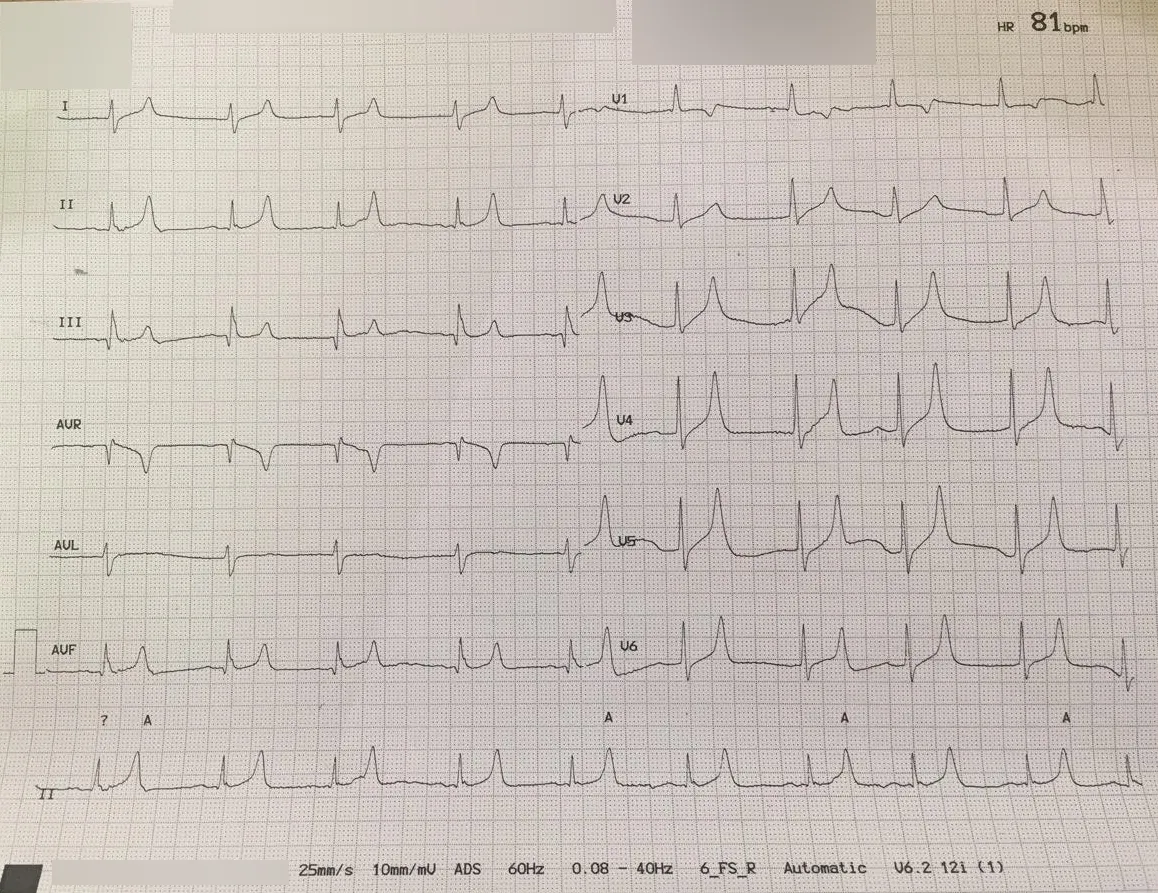
| Pseudohyperkalaemia | High K with normal ECG, haemolysis or delayed sample | Prompt repeat, heparinised plasma or blood gas potassium |
Exam pearls
Guideline
KDIGO Clinical Practice Guideline for Acute Kidney Injury (2012), KDIGO AKD consensus report (2021), NICE NG148 Acute kidney injury (2019), KDIGO 2024 CKD guideline, NICE NG203 Chronic kidney disease (2021), ESE/ESICM/ERA hyponatraemia guideline (2014) and UK Kidney Association hyperkalaemia guideline (2023)
References
- Kidney Disease: Improving Global Outcomes (KDIGO) Acute Kidney Injury Work Group. KDIGO Clinical Practice Guideline for Acute Kidney Injury. Kidney Int Suppl 2012.
- Lameire NH, Levin A, Kellum JA, et al.. Harmonizing acute and chronic kidney disease definition and classification: report of a Kidney Disease: Improving Global Outcomes (KDIGO) Consensus Conference. Kidney Int 2021.
- National Institute for Health and Care Excellence (NICE). Acute kidney injury: prevention, detection and management (NG148). NICE guideline 2019.
- KDIGO CKD Work Group.. KDIGO 2024 Clinical Practice Guideline for the Evaluation and Management of Chronic Kidney Disease. Kidney Int 2024.
- National Institute for Health and Care Excellence (NICE). Chronic kidney disease: assessment and management (NG203). NICE guideline 2021.
- Inker LA, Eneanya ND, Coresh J, et al.. New creatinine- and cystatin C-based equations to estimate GFR without race. N Engl J Med 2021.
Related topics
By Dr Khalid Seidi (B.Sc., M.D.) · MedEd World Clinical Knowledge library. Original teaching content checked against current guidelines (November 2026); confirm the latest local guidance before clinical use. Not a substitute for clinical judgement.