Clinical Knowledge › Internal medicine › Cardiology and angiology › Cardiomyopathies and myocardial diseases
Cardiac sarcoidosis
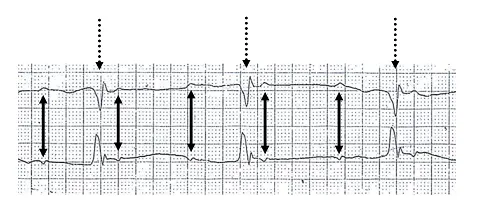
Cardiac sarcoidosis is granulomatous inflammation of the myocardium in sarcoidosis, a multisystem disease of unknown cause characterised by non-necrotising granulomas. Clinically evident heart involvement occurs in about 5% of people with sarcoidosis, but imaging and autopsy find it in about a quarter, and many patients have isolated cardiac disease. Granulomas favour the basal septum, causing high-grade atrioventricular block; scar and active inflammation create re-entrant ventricular tachycardia; extensive disease causes heart failure. Because involvement is patchy, endomyocardial biopsy is insensitive and diagnosis usually combines tissue proof of extracardiac sarcoidosis with cardiac MRI (patchy mid-wall or epicardial late gadolinium enhancement) and FDG-PET showing active inflammation. Treatment combines immunosuppression (glucocorticoids, often with methotrexate, and anti-TNF agents for refractory disease), heart failure therapy, antiarrhythmic drugs or ablation, and devices: an ICD is favoured over a simple pacemaker because sudden death risk is high.
Patient case, mechanism, investigations, management, flashcards and exam-style questions.Open the lesson →
Key facts
- Clinically manifest in about 5% of sarcoidosis, but present in about 25% on imaging or autopsy; isolated cardiac sarcoidosis is common
- Classic triad of presentations: high-grade AV block, ventricular tachycardia and heart failure; sudden death may be the first event
- Unexplained Mobitz II or complete heart block in an adult under 60 warrants screening for cardiac sarcoidosis (and giant cell myocarditis)
- CMR: patchy mid-wall or epicardial LGE, often basal septum and inferolateral wall, sometimes RV; echo may show basal septal thinning
- FDG-PET after dietary preparation (high-fat, low-carbohydrate diet and fasting) shows active inflammation and guides therapy
- Endomyocardial biopsy is specific but sensitivity is only about 20–30% because of patchy involvement
- First-line therapy: prednisolone about 0.5 mg/kg (30–40 mg) daily tapered over months, often with methotrexate; anti-TNF agents for refractory disease
- ICD if LVEF 35% or less, after sustained VT or arrest, and reasonably when a pacemaker is needed or LVEF above 35% with significant LGE
Differential diagnosis
| Condition | Clues | Key test |
|---|---|---|
| Giant cell myocarditis | Fulminant course, rapidly falling LVEF, refractory VT; multinucleated giant cells without granulomas | Endomyocardial biopsy |
| Arrhythmogenic cardiomyopathy | Family history, epsilon waves, RV aneurysms, fibrofatty replacement; no extracardiac sarcoid | Genetic testing, Task Force or Padua criteria; PET usually negative |
| Idiopathic dilated cardiomyopathy | Global dysfunction, no patchy inflammation or nodal disease | CMR, FDG-PET, genetics |
| Ischaemic cardiomyopathy | Subendocardial or transmural LGE in a coronary territory, risk factors | Coronary angiography or CT |
| Lyme carditis | Tick exposure, erythema migrans, variable AV block that resolves | Borrelia serology |
| Degenerative conduction disease | Older patient, no structural disease | Age, normal CMR |
| Viral or other myocarditis | Recent viral illness, troponin rise, subepicardial lateral LGE | CMR, biopsy if severe |
Exam pearls
Guideline
2024 AHA scientific statement on diagnosis and management of cardiac sarcoidosis; HRS 2014 expert consensus on arrhythmias in cardiac sarcoidosis; 2022 ESC ventricular arrhythmia and sudden cardiac death guideline; 2023 ESC cardiomyopathy guideline
References
- Cheng RK, Kittleson MM, Beavers CJ, et al.. Diagnosis and Management of Cardiac Sarcoidosis: A Scientific Statement From the American Heart Association. Circulation 2024.
- Birnie DH, Sauer WH, Bogun F, et al.. HRS expert consensus statement on the diagnosis and management of arrhythmias associated with cardiac sarcoidosis. Heart Rhythm 2014.
- Zeppenfeld K, Tfelt-Hansen J, de Riva M, et al.. 2022 ESC Guidelines for the management of patients with ventricular arrhythmias and the prevention of sudden cardiac death. Eur Heart J 2022.
- Arbelo E, Protonotarios A, Gimeno JR, et al.. 2023 ESC Guidelines for the management of cardiomyopathies. Eur Heart J 2023.
- Baughman RP, Valeyre D, Korsten P, et al.. ERS clinical practice guidelines on treatment of sarcoidosis. Eur Respir J 2021.
- Nordenswan HK, Lehtonen J, Ekström K, et al.. Outcome of Cardiac Sarcoidosis Presenting With High-Grade Atrioventricular Block. Circ Arrhythm Electrophysiol 2018.
Related topics
By Dr Khalid Seidi (B.Sc., M.D.) · MedEd World Clinical Knowledge library. Original teaching content checked against current guidelines (November 2026); confirm the latest local guidance before clinical use. Not a substitute for clinical judgement.