Clinical Knowledge › Internal medicine › Cardiology and angiology › Cardiomyopathies and myocardial diseases
Takotsubo (stress) cardiomyopathy
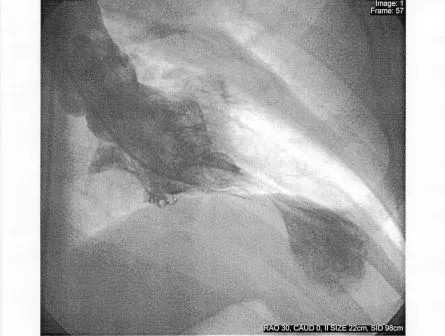
Takotsubo syndrome (stress cardiomyopathy, 'broken heart syndrome') is an acute, usually reversible heart failure syndrome with regional LV wall motion abnormality that extends beyond the territory of a single coronary artery. It accounts for 1–3% of suspected acute coronary syndromes, and about 90% of patients are postmenopausal women. Physical (surgery, sepsis, asthma, stroke) or emotional triggers precede most episodes; a catecholamine surge with microvascular dysfunction is the leading mechanism. The classic apical type shows apical ballooning with a hypercontractile base, giving the shape of a Japanese octopus pot. ST elevation evolving to deep T inversion and QT prolongation, with a modest troponin but high natriuretic peptide, is typical. Coronary angiography with left ventriculography is usually needed to exclude myocardial infarction; cardiac MRI shows oedema without significant late enhancement. Treatment is supportive, but complications such as LV outflow tract obstruction, cardiogenic shock, LV thrombus and torsades de pointes make in-hospital risk similar to ACS.
Patient case, mechanism, investigations, management, flashcards and exam-style questions.Open the lesson →
Key facts
- About 90% are postmenopausal women; 1–3% of suspected ACS presentations
- Triggers: physical (about 36%) more often than emotional (about 28%); none in about 28%
- Wall motion abnormality extends beyond one coronary territory; apical type about 80%, then mid-ventricular, basal (inverted) and focal
- ECG: ST elevation (often anterior), then deep diffuse T inversion and QT prolongation; troponin modestly raised, BNP disproportionately high
- Angiography with ventriculography usually required to exclude MI; coexisting coronary disease does not exclude takotsubo
- CMR: myocardial oedema in affected segments without significant LGE
- Complications: cardiogenic shock, LVOT obstruction (avoid inotropes and nitrates), LV thrombus, AF, torsades de pointes, rupture
- In-hospital death and shock rates are similar to ACS; recurrence about 2% per year; ACE inhibitors or ARBs associated with better survival
Differential diagnosis
| Condition | Clues | Key test |
|---|---|---|
| STEMI (anterior) | Wall motion abnormality confined to one coronary territory, culprit occlusion | Emergency coronary angiography |
| Acute myocarditis | Viral prodrome, younger patient, subepicardial or mid-wall LGE | CMR, endomyocardial biopsy if severe |
| Phaeochromocytoma crisis | Paroxysmal hypertension, headache, sweating; can trigger takotsubo | Plasma metanephrines |
| Spontaneous coronary artery dissection | Young woman, peripartum, fibromuscular dysplasia | Careful angiography, intracoronary imaging |
| Coronary vasospasm (MINOCA) | Rest pain at night, transient ST elevation, normal LV afterwards | Provocation testing |
| Hypertrophic cardiomyopathy with LVOT obstruction | Persistent septal hypertrophy and SAM | Echo after recovery |
| Subarachnoid haemorrhage (neurogenic stunning) | Thunderclap headache, reduced consciousness | CT head; it may also trigger takotsubo |
Exam pearls
Guideline
International Expert Consensus Document on Takotsubo Syndrome (InterTAK, 2018); 2023 ESC Guidelines for the management of acute coronary syndromes (MINOCA section); 2026 Fifth Universal Definition of Myocardial Infarction
References
- Ghadri JR, Wittstein IS, Prasad A, et al.. International Expert Consensus Document on Takotsubo Syndrome (Part I): Clinical Characteristics, Diagnostic Criteria, and Pathophysiology. Eur Heart J 2018.
- Ghadri JR, Wittstein IS, Prasad A, et al.. International Expert Consensus Document on Takotsubo Syndrome (Part II): Diagnostic Workup, Outcome, and Management. Eur Heart J 2018.
- Byrne RA, Rossello X, Coughlan JJ, et al.. 2023 ESC Guidelines for the management of acute coronary syndromes. Eur Heart J 2023.
- Templin C, Ghadri JR, Diekmann J, et al.. Clinical Features and Outcomes of Takotsubo (Stress) Cardiomyopathy. N Engl J Med 2015.
- Mills NL, Newby LK, Zaman S, et al.. Fifth Universal Definition of Myocardial Infarction (2026). Eur Heart J 2026.
- Arbelo E, Protonotarios A, Gimeno JR, et al.. 2023 ESC Guidelines for the management of cardiomyopathies. Eur Heart J 2023.
Related topics
By Dr Khalid Seidi (B.Sc., M.D.) · MedEd World Clinical Knowledge library. Original teaching content checked against current guidelines (November 2026); confirm the latest local guidance before clinical use. Not a substitute for clinical judgement.