Clinical Knowledge › Internal medicine › Pulmonology › Clinical problems
Chronic cough: approach to the patient
Chronic cough is a cough lasting more than 8 weeks in adults (more than 4 weeks in children). It affects around one adult in ten worldwide, is more common in women and is a frequent cause of referral, with major effects on sleep, work, continence and mood. Modern guidelines view most chronic cough as cough hypersensitivity: the vagal sensory pathways become overly responsive, so innocent triggers such as talking, cold air or perfumes provoke bouts of coughing. Underlying 'treatable traits' must still be sought, chiefly eosinophilic airway disease (asthma or non-asthmatic eosinophilic bronchitis), rhinosinus disease, reflux and drugs such as ACE inhibitors, while red flags such as haemoptysis, weight loss, smoking history or an abnormal chest X-ray demand exclusion of cancer, tuberculosis and bronchiectasis. Every patient needs a chest X-ray and spirometry; FeNO or blood eosinophils guide an inhaled corticosteroid trial. Refractory cough is treated with speech and language therapy and neuromodulators such as low-dose morphine or gabapentin.
Patient case, mechanism, investigations, management, flashcards and exam-style questions.Open the lesson →
Key facts
- Chronic cough: more than 8 weeks in adults, more than 4 weeks in children; subacute 3–8 weeks (often post-infectious)
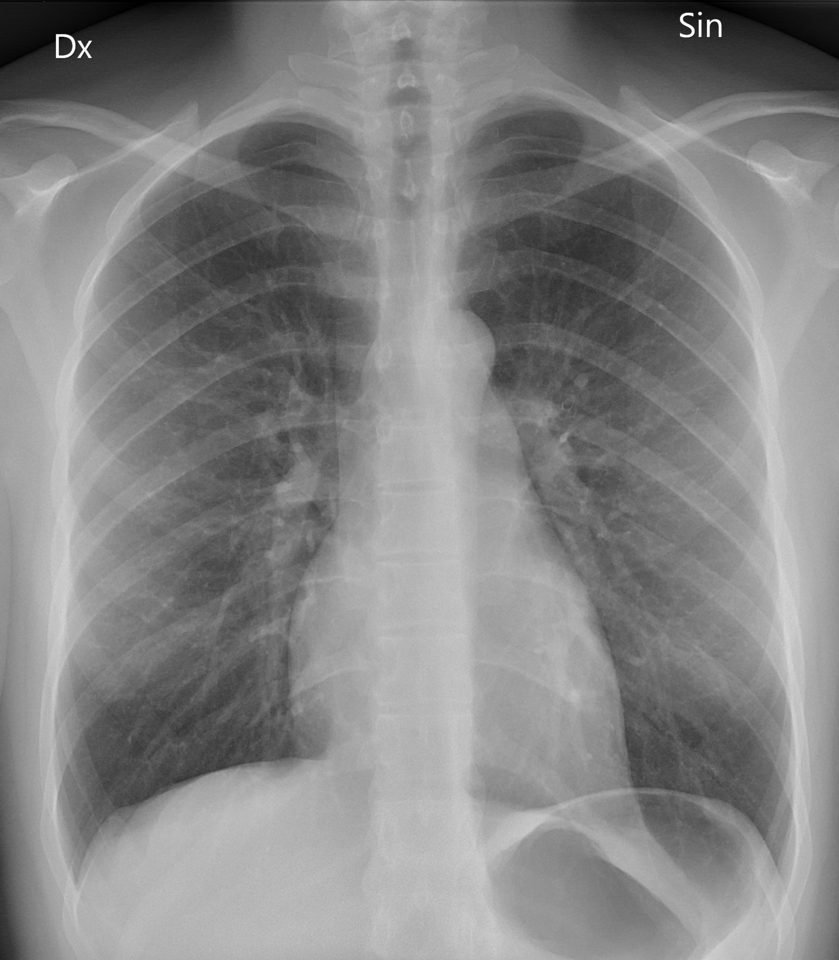
- Every adult with chronic cough needs a chest X-ray and spirometry; abnormal results or red flags need further investigation first
- Cough hypersensitivity: cough triggered by low-level stimuli such as talking, laughing, cold air and scents, with a throat tickle
- ACE inhibitor cough affects up to about 1 in 10 users; it settles within 1–4 weeks of stopping but can take up to 3 months
- Raised FeNO or blood eosinophils predict a response to inhaled corticosteroid (cough-variant asthma or eosinophilic bronchitis)
- PPIs help cough only when there are typical reflux symptoms; they should not be given empirically for isolated cough
- Refractory chronic cough: speech and language therapy, low-dose modified-release morphine, gabapentin or pregabalin
- Gefapixant, a P2X3 receptor antagonist, reduces cough frequency modestly but causes taste disturbance; licensing varies by country
Differential diagnosis
| Condition | Clues | Key test |
|---|---|---|
| Cough-variant asthma | Cough worse at night and with exercise or cold air, atopy, sometimes wheeze | Spirometry with reversibility, FeNO, bronchial challenge test |
| Non-asthmatic eosinophilic bronchitis | Dry cough with normal spirometry and no airway hyper-responsiveness | Sputum or blood eosinophils, raised FeNO |
| Upper airway cough syndrome (rhinosinusitis) | Post-nasal drip, frequent throat clearing, nasal blockage | Nasal examination; trial of intranasal steroid; sinus CT if chronic rhinosinusitis suspected |
| Reflux-associated cough | Heartburn, regurgitation, cough after meals or on lying down | Trial of PPI if typical reflux symptoms; pH-impedance in selected cases |
| ACE inhibitor cough | Dry tickly cough starting days to months after an ACE inhibitor | Stop drug and switch to an angiotensin receptor blocker |
| Lung cancer | Smoker over 40 with a new or changed cough, haemoptysis, weight loss | Chest X-ray, then CT chest and bronchoscopy |
| Bronchiectasis | Daily productive cough of purulent sputum, recurrent infections | High-resolution CT |
| Pulmonary tuberculosis | Cough over 2–3 weeks with fever, night sweats, weight loss, exposure | Chest X-ray, sputum smear, nucleic acid amplification test (e.g. Xpert MTB/RIF) and culture |
Exam pearls
Guideline
ERS guidelines on chronic cough in adults and children (2020), CHEST cough guidelines (2016–2018) and BTS clinical statement on chronic cough in adults (2023)
References
- Morice AH, Millqvist E, Bieksiene K, et al.. ERS guidelines on the diagnosis and treatment of chronic cough in adults and children. Eur Respir J 2020.
- Irwin RS, French CL, Chang AB, Altman KW; CHEST Expert Cough Panel.. Classification of Cough as a Symptom in Adults and Management Algorithms: CHEST Guideline and Expert Panel Report. Chest 2018.
- Parker SM, Smith JA, Birring SS, et al.. British Thoracic Society Clinical Statement on chronic cough in adults. Thorax 2023.
- Chung KF, McGarvey L, Song WJ, et al.. Cough hypersensitivity and chronic cough. Nat Rev Dis Primers 2022.
- McGarvey LP, Birring SS, Morice AH, et al.. Efficacy and safety of gefapixant, a P2X3 receptor antagonist, in refractory chronic cough and unexplained chronic cough (COUGH-1 and COUGH-2): results from two double-blind, randomised, parallel-group, placebo-controlled, phase 3 trials. Lancet 2022.
- Ryan NM, Birring SS, Gibson PG.. Gabapentin for refractory chronic cough: a randomised, double-blind, placebo-controlled trial. Lancet 2012.
Related topics
By Dr Khalid Seidi (B.Sc., M.D.) · MedEd World Clinical Knowledge library. Original teaching content checked against current guidelines (November 2026); confirm the latest local guidance before clinical use. Not a substitute for clinical judgement.