Clinical Knowledge › Internal medicine › Pulmonology › Clinical problems
Wheeze: approach to the patient
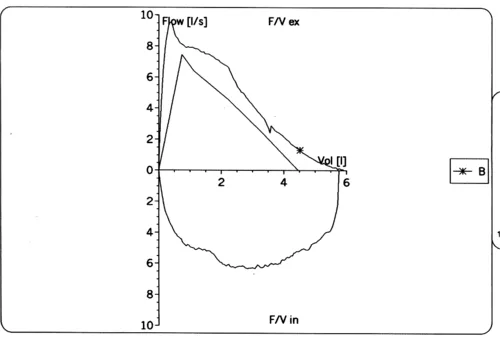
Wheeze is a continuous, musical, mainly expiratory sound produced when air flows fast through a narrowed intrathoracic airway and makes its walls oscillate. Widespread polyphonic wheeze reflects diffuse airway narrowing, typically asthma, COPD or an acute viral illness; a fixed monophonic wheeze localised to one area suggests a single obstructed bronchus from a tumour, carcinoid or foreign body; and a high-pitched inspiratory noise loudest over the neck is stridor, not wheeze. 'All that wheezes is not asthma': heart failure, anaphylaxis, inducible laryngeal obstruction, bronchiectasis, eosinophilic lung disease, aspiration and drugs such as beta-blockers can all wheeze. The approach starts with severity: a silent chest, exhaustion, hypoxaemia or a normal or rising PaCO2 in an acute attack signals life-threatening disease. Age shapes the differential: bronchiolitis and episodic viral wheeze in infants and preschool children, asthma in children and young adults, COPD and heart failure in older smokers. Objective tests — peak flow, spirometry with bronchodilator responsiveness, FeNO and blood eosinophils, chest X-ray, flow–volume loops and laryngoscopy — confirm the cause before long-term treatment.
Patient case, mechanism, investigations, management, flashcards and exam-style questions.Open the lesson →
Key facts
- Wheeze is a continuous musical sound, usually expiratory, from flow-induced oscillation of narrowed intrathoracic airways
- Polyphonic diffuse wheeze suggests asthma or COPD; a fixed monophonic localised wheeze suggests a single-airway lesion (tumour, carcinoid, foreign body)
- A silent chest in acute asthma means very little airflow and is a life-threatening sign
- Life-threatening asthma: PEF below 33% best or predicted, SpO2 below 92%, PaO2 below 8 kPa, 'normal' PaCO2, silent chest, cyanosis, exhaustion, hypotension or confusion
- Bronchiolitis (usually under 12 months, RSV) is managed supportively; bronchodilators and corticosteroids are not recommended
- Inducible laryngeal obstruction mimics asthma; diagnose by laryngoscopy during symptoms or provocation and do not escalate asthma drugs
- NG245 (2024): in adults, FeNO 50 ppb or more or raised eosinophils supports asthma; GINA 2026 notes that older bronchodilator-response criteria under-diagnosed asthma
- GINA 2026 extends as-needed budesonide–formoterol reliever to children aged 6–11 at Steps 1–2, after the CARE trial showed about 45% fewer attacks than salbutamol
Differential diagnosis
| Condition | Clues | Key test |
|---|---|---|
| Asthma | Variable episodic symptoms, triggers, atopy, nocturnal cough | Spirometry with bronchodilator responsiveness, PEF variability, FeNO, eosinophils |
| COPD | Smoker or biomass exposure, over 35, chronic sputum, progressive breathlessness | Post-bronchodilator FEV1/FVC below 0.70 |
| Heart failure ('cardiac asthma') | Orthopnoea, PND, oedema, basal crackles, older patient | NT-proBNP, chest X-ray, echocardiography |
| Anaphylaxis | Sudden onset after allergen, urticaria, angio-oedema, hypotension | Clinical diagnosis; mast cell tryptase |
| Inducible laryngeal obstruction | Sudden throat tightness, inspiratory noise, rapid resolution, poor response to inhalers | Laryngoscopy during symptoms or exercise |
| Endobronchial tumour or carcinoid | Fixed monophonic localised wheeze, haemoptysis, recurrent pneumonia in one lobe | CT chest, bronchoscopy |
| Inhaled foreign body | Sudden choking episode, unilateral wheeze, toddlers | Expiratory chest X-ray, bronchoscopy |
| Bronchiolitis | Infant under 12 months, coryza, crackles and wheeze, winter epidemic | Clinical diagnosis; SpO2 |
Exam pearls
Guideline
GINA 2026 update, GOLD 2027 report, BTS/NICE/SIGN asthma guideline NG245 (2024), ERS/ELS statement on inducible laryngeal obstruction (2017) and AAP bronchiolitis guideline (2014)
References
- Global Initiative for Asthma. Global Strategy for Asthma Management and Prevention (2026 update). GINA 2026.
- Global Initiative for Chronic Obstructive Lung Disease. Global Strategy for the Diagnosis, Management, and Prevention of Chronic Obstructive Pulmonary Disease: 2027 Report. GOLD 2026.
- National Institute for Health and Care Excellence, British Thoracic Society and Scottish Intercollegiate Guidelines Network. Asthma: diagnosis, monitoring and chronic asthma management (NG245). NICE guideline NG245 2024.
- Halvorsen T, Walsted ES, Bucca C, et al.. Inducible laryngeal obstruction: an official joint European Respiratory Society and European Laryngological Society statement. Eur Respir J 2017.
- Brand PLP, Baraldi E, Bisgaard H, et al.. Definition, assessment and treatment of wheezing disorders in preschool children: an evidence-based approach. Eur Respir J 2008.
- Ralston SL, Lieberthal AS, Meissner HC, et al.. Clinical practice guideline: the diagnosis, management, and prevention of bronchiolitis. Pediatrics 2014.
Related topics
By Dr Khalid Seidi (B.Sc., M.D.) · MedEd World Clinical Knowledge library. Original teaching content checked against current guidelines (November 2026); confirm the latest local guidance before clinical use. Not a substitute for clinical judgement.