Clinical Knowledge › Paediatrics › Paediatric gastroenterology and surgery
Coeliac disease in children
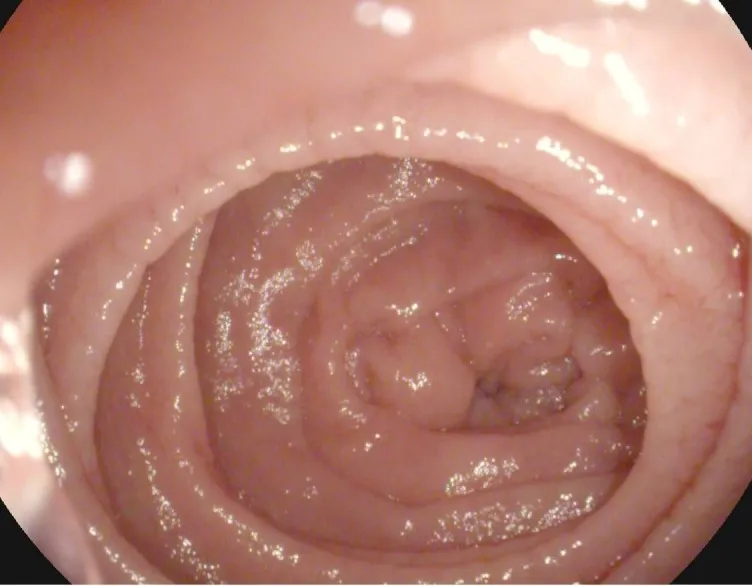
Coeliac disease is an immune-mediated enteropathy triggered by gluten in genetically susceptible people carrying HLA-DQ2 or DQ8, affecting about 1% of children, most undiagnosed. In children the presentation depends on age: toddlers soon after gluten introduction may have the classic picture of chronic diarrhoea, abdominal distension, irritability, wasted buttocks and faltering growth, whereas older children more often have abdominal pain, constipation, short stature, delayed puberty, iron-deficiency anaemia, enamel defects or raised transaminases, or are found by screening risk groups (relatives, type 1 diabetes, Down syndrome). Under the ESPGHAN 2020 guideline, testing starts with total IgA and tissue transglutaminase IgA while the child is eating gluten. Children with TGA-IgA at least 10 times the upper limit of normal and a positive endomysial antibody on a second sample can be diagnosed without biopsy if the family agrees; others need duodenal biopsies. Treatment is a lifelong strict gluten-free diet with dietitian support and monitoring of growth and antibodies.
Patient case, mechanism, investigations, management, flashcards and exam-style questions.Open the lesson →
Key facts
- Prevalence about 1% of children in Europe, the Middle East, South Asia and the Americas; female to male about 1.5–2:1
- Almost all patients carry HLA-DQ2 or DQ8; risk in first-degree relatives is about 10%
- Classic toddler picture: chronic diarrhoea, distension, irritability, buttock wasting, faltering growth after gluten introduction
- Older children: abdominal pain, constipation, short stature, delayed puberty, iron deficiency, enamel defects, raised transaminases, fatigue
- Screen risk groups: first-degree relatives, type 1 diabetes, autoimmune thyroid or liver disease, Down, Turner and Williams syndromes, selective IgA deficiency
- First test: total IgA plus TGA-IgA on a gluten-containing diet; IgG-based tests only if IgA deficient
- No-biopsy diagnosis: TGA-IgA at least 10 × ULN plus positive EMA-IgA on a second sample, with family agreement (HLA and symptoms not required)
- Lifelong gluten-free diet; TGA-IgA should normalise within 12–24 months; catch-up growth usually within 1–2 years
Differential diagnosis
| Condition | Clues | Key test |
|---|---|---|
| Cow's milk protein allergy | Infant with eczema, vomiting, blood or mucus in stool; may coexist | Elimination and reintroduction of cow's milk |
| Cystic fibrosis | Steatorrhoea, recurrent chest infections, rectal prolapse, faltering growth | Newborn screening result; sweat chloride; faecal elastase |
| Giardiasis | Prolonged watery diarrhoea, bloating after nursery outbreak or travel | Stool antigen or PCR |
| Toddler's diarrhoea (functional) | Thriving child with loose stools containing undigested food | Normal growth and coeliac serology |
| Inflammatory bowel disease | Blood in stool, perianal disease, raised inflammatory markers | Faecal calprotectin; endoscopy |
| Wheat allergy (IgE-mediated) | Urticaria, vomiting or anaphylaxis within minutes to 2 hours of wheat | Skin prick test or specific IgE |
| Growth hormone deficiency or constitutional delay | Short stature with normal bowel habit | Coeliac serology first, then growth hormone tests and bone age |
| Inadequate intake or neglect | Faltering growth with low intake, social concerns | Dietary and social history; weight gain in hospital |
Exam pearls
Guideline
ESPGHAN Guidelines for diagnosing coeliac disease (2020), ESPGHAN position paper on management and follow-up of children and adolescents with coeliac disease (2022) and NICE NG20 Coeliac disease: recognition, assessment and management (2015)
References
- Husby S, Koletzko S, Korponay-Szabó I, et al.. European Society Paediatric Gastroenterology, Hepatology and Nutrition guidelines for diagnosing coeliac disease 2020. J Pediatr Gastroenterol Nutr 2020.
- Mearin ML, Agardh D, Antunes H, et al.. ESPGHAN position paper on management and follow-up of children and adolescents with celiac disease. J Pediatr Gastroenterol Nutr 2022.
- National Institute for Health and Care Excellence. Coeliac disease: recognition, assessment and management (NG20). NICE guideline 2015.
- International Society for Pediatric and Adolescent Diabetes. ISPAD Clinical Practice Consensus Guidelines 2022: other complications and associated conditions in children and adolescents with type 1 diabetes. Pediatr Diabetes 2022.
- Szajewska H, Shamir R, Mearin L, et al.. Gluten introduction and the risk of coeliac disease: a position paper by the European Society for Pediatric Gastroenterology, Hepatology, and Nutrition. J Pediatr Gastroenterol Nutr 2016.
- Catassi C, Verdu EF, Bai JC, Lionetti E.. Coeliac disease. Lancet 2022.
Related topics
By Dr Khalid Seidi (B.Sc., M.D.) · MedEd World Clinical Knowledge library. Original teaching content checked against current guidelines (November 2026); confirm the latest local guidance before clinical use. Not a substitute for clinical judgement.