Clinical Knowledge › Paediatrics › Paediatric gastroenterology and surgery
Inflammatory bowel disease in children
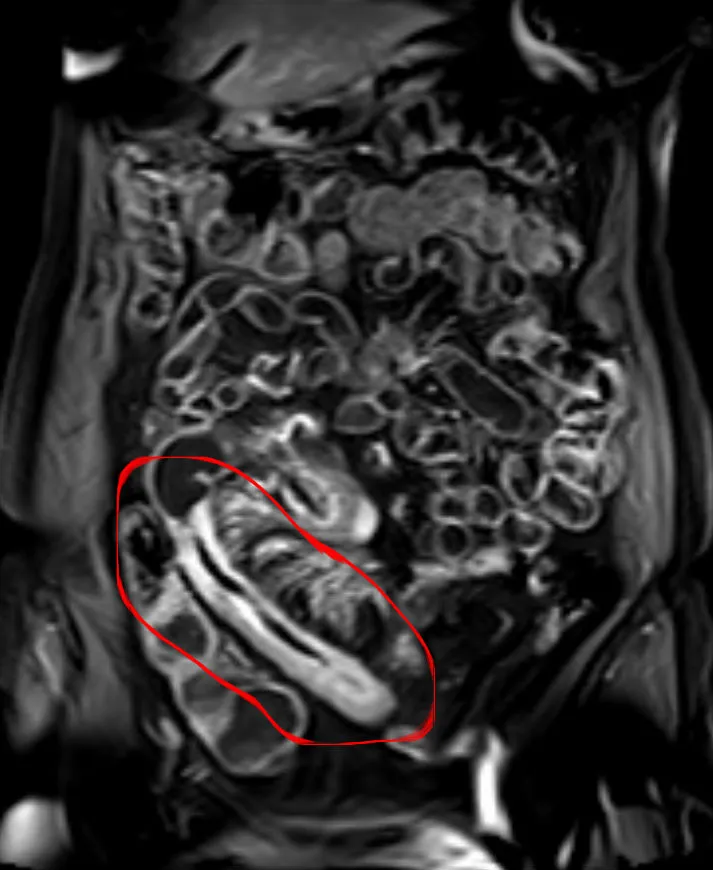
About a quarter of inflammatory bowel disease (IBD) begins in childhood, and incidence is rising worldwide. Crohn disease is commoner than ulcerative colitis in children, and childhood disease is more extensive than adult disease: pancolitis in ulcerative colitis and ileocolonic and upper gut involvement in Crohn disease. Child-specific harms are growth failure, delayed puberty, low bone density and disrupted schooling; slowing height velocity may precede gut symptoms. Onset under 6 years may be monogenic. Diagnosis follows the revised Porto criteria: bloods, faecal calprotectin, stool infection screen, upper endoscopy and ileocolonoscopy with biopsies, and MR enterography. Treatment is risk-stratified: exclusive enteral nutrition or the Crohn Disease Exclusion Diet with partial enteral nutrition induces remission in low-risk luminal Crohn disease without steroid toxicity, while high-risk children start anti-TNF therapy early. Mild colitis gets aminosalicylates; acute severe colitis needs admission and IV steroids. Targets are mucosal healing, normal growth and smooth transition.
Patient case, mechanism, investigations, management, flashcards and exam-style questions.Open the lesson →
Key facts
- 20–25% of IBD presents before age 20; median age at paediatric diagnosis is about 12 years
- In children Crohn disease is commoner than ulcerative colitis; IBD-unclassified is more frequent than in adults
- Paediatric UC is extensive (pancolitis in most); paediatric Crohn disease is often ileocolonic with upper gut involvement
- Growth failure affects up to a third of children with Crohn disease at diagnosis and may precede gut symptoms
- Very early onset IBD (under 6 years), especially infantile (under 2), suggests a monogenic or immune defect
- Revised Porto criteria: upper endoscopy and ileocolonoscopy with biopsies for all, plus small-bowel MR enterography unless typical UC
- Exclusive enteral nutrition (or CDED with partial enteral nutrition) is preferred induction for low-risk luminal Crohn disease
- Activity scores: PUCAI for UC (65 or more = severe) and weighted PCDAI for Crohn disease
Differential diagnosis
| Condition | Clues | Key test |
|---|---|---|
| Infective colitis (Campylobacter, Salmonella, Shigella, E. coli O157, C. difficile) | Acute bloody diarrhoea, contacts, travel | Stool culture/PCR and toxin testing |
| Coeliac disease | Diarrhoea, faltering growth, anaemia without blood in stool | tTG-IgA with total IgA; duodenal biopsy |
| Irritable bowel syndrome / functional abdominal pain | No weight loss, normal growth and bloods, normal calprotectin | Faecal calprotectin |
| Intestinal tuberculosis | Endemic area, ileocaecal disease, caseating granulomas | Biopsy culture, PCR, IGRA, chest X-ray |
| Henoch–Schönlein purpura (IgA vasculitis) | Purpura on legs, arthralgia, abdominal pain, haematuria | Clinical; urinalysis |
| Juvenile polyps or Meckel diverticulum | Painless rectal bleeding without systemic upset | Colonoscopy; technetium-99m pertechnetate scan |
| Chronic granulomatous disease or other primary immunodeficiency | Very early onset, recurrent infections, perianal abscesses | Dihydrorhodamine test, immunology and genetic testing |
| Eating disorder | Weight loss with food restriction, normal inflammatory markers | Normal CRP and calprotectin; psychiatric assessment |
Exam pearls
Guideline
ECCO-ESPGHAN guideline update on management of paediatric Crohn disease (2026); ECCO-ESPGHAN paediatric ulcerative colitis guidelines parts 1 and 2 (2018); ESPGHAN revised Porto diagnostic criteria (2014); STRIDE-II treat-to-target (2021)
References
- Shouval DS, Hojsak I, Miele E, et al.. Management of pediatric Crohn's disease: an ECCO-ESPGHAN guideline update. J Crohns Colitis 2026.
- Turner D, Ruemmele FM, Orlanski-Meyer E, et al.. Management of paediatric ulcerative colitis, part 1: ambulatory care – an evidence-based guideline from ECCO and ESPGHAN. J Pediatr Gastroenterol Nutr 2018.
- Turner D, Ruemmele FM, Orlanski-Meyer E, et al.. Management of paediatric ulcerative colitis, part 2: acute severe colitis – an evidence-based consensus guideline from ECCO and ESPGHAN. J Pediatr Gastroenterol Nutr 2018.
- Levine A, Koletzko S, Turner D, et al.. ESPGHAN revised Porto criteria for the diagnosis of inflammatory bowel disease in children and adolescents. J Pediatr Gastroenterol Nutr 2014.
- Turner D, Ricciuto A, Lewis A, et al.. STRIDE-II: an update on the Selecting Therapeutic Targets in Inflammatory Bowel Disease (STRIDE) initiative of the IOIBD. Gastroenterology 2021.
- National Institute for Health and Care Excellence. Crohn's disease: management (NG129). NICE guideline 2019.
Related topics
By Dr Khalid Seidi (B.Sc., M.D.) · MedEd World Clinical Knowledge library. Original teaching content checked against current guidelines (November 2026); confirm the latest local guidance before clinical use. Not a substitute for clinical judgement.