Clinical Knowledge › Internal medicine › Gastroenterology and hepatology › Inflammatory bowel disease and colitis
Crohn disease
Crohn disease is a chronic, relapsing, transmural inflammatory bowel disease that can affect any part of the gut from mouth to anus, most often the terminal ileum and right colon, with skip lesions between areas of normal bowel. It results from an abnormal immune response to gut microbes in genetically susceptible people (NOD2 variants), and smoking roughly doubles the risk and worsens the course. Patients present with chronic diarrhoea, right iliac fossa pain, weight loss, fatigue and sometimes perianal fistulas or abscesses; children may present with growth failure. Diagnosis combines raised faecal calprotectin and CRP with ileocolonoscopy and biopsies (patchy inflammation, non-caseating granulomas) and cross-sectional imaging of the small bowel by MR enterography or intestinal ultrasound. Inflammation progresses to strictures and fistulas, so modern treatment aims for clinical and endoscopic remission using early advanced therapy (anti-TNF, IL-12/23 or IL-23 inhibitors, vedolizumab, upadacitinib) in moderate to severe disease, with surgery for complications.
Patient case, mechanism, investigations, management, flashcards and exam-style questions.Open the lesson →
Key facts
- Transmural, patchy (skip) inflammation anywhere from mouth to anus; terminal ileum is the commonest site
- Smoking increases the risk of Crohn disease and of postoperative recurrence; stopping is a disease-modifying intervention
- Faecal calprotectin above about 100 µg/g separates inflammatory from functional symptoms and is used to monitor activity
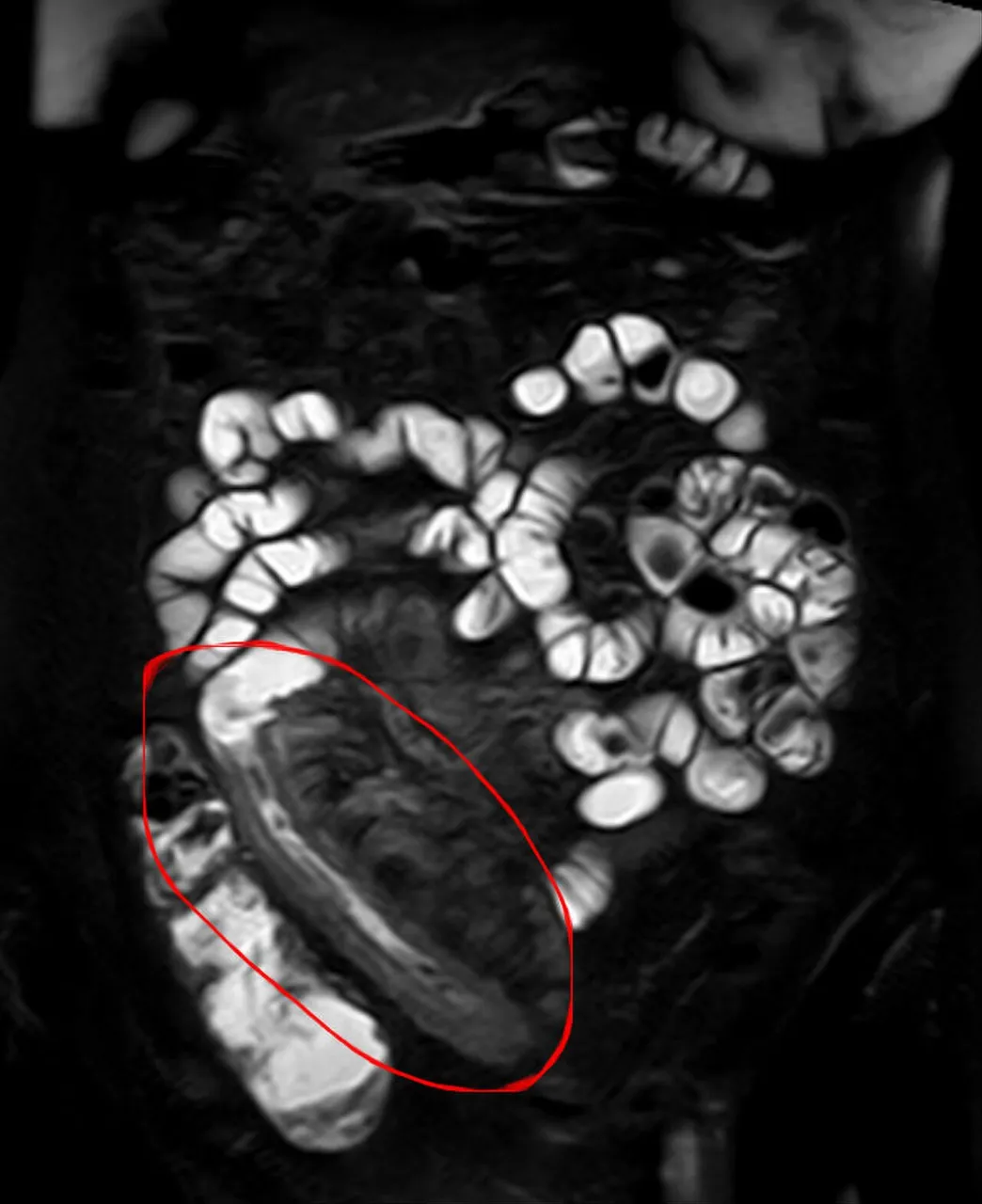
- Ileocolonoscopy with biopsies plus MR enterography or intestinal ultrasound establishes extent and complications
- Montreal classification: age at diagnosis (A), location (L1 ileal, L2 colonic, L3 ileocolonic, L4 upper GI) and behaviour (B1 inflammatory, B2 stricturing, B3 penetrating, p perianal)
- Corticosteroids induce but never maintain remission; 5-ASA (mesalazine) has little role in Crohn disease
- Moderate to severe disease: early advanced therapy (infliximab with a thiopurine, adalimumab, ustekinumab, risankizumab, guselkumab, mirikizumab, vedolizumab, upadacitinib)
- Screen for TB, hepatitis B, HIV and VZV immunity and update vaccines before immunosuppression
Differential diagnosis
| Condition | Clues | Key test |
|---|---|---|
| Ulcerative colitis | Continuous mucosal inflammation from the rectum; bloody diarrhoea; no fistulas or ileal disease (except backwash) | Colonoscopy and biopsies |
| Intestinal tuberculosis | Ileocaecal disease in a person from an endemic area; fever, night sweats, ascites; caseating granulomas | Biopsy for AFB culture and PCR, IGRA, chest X-ray |
| Irritable bowel syndrome | Pain relieved or linked to defecation, no weight loss, normal blood tests | Faecal calprotectin below 50 µg/g, normal CRP and FBC |
| Coeliac disease | Diarrhoea, iron or folate deficiency, no fistulas | Tissue transglutaminase IgA and duodenal biopsy |
| Infective ileitis (Yersinia) or appendicitis | Acute right iliac fossa pain and fever of short duration | Stool culture, ultrasound or CT |
| NSAID enteropathy | NSAID use, small-bowel ulcers or diaphragm strictures | Drug history, capsule endoscopy after stopping NSAIDs |
| Lymphoma or ileocaecal carcinoma | Older patient, mass, B symptoms | Biopsy, CT staging |
| Behçet disease | Oral and genital ulcers, uveitis, ileocaecal ulcers | Clinical criteria, pathergy, endoscopy |
Exam pearls
Guideline
ECCO Guidelines on Therapeutics in Crohn's Disease: Medical Treatment (2024), ACG Clinical Guideline: Management of Crohn's Disease in Adults (2025) and BSG guidelines on inflammatory bowel disease in adults (2025)
References
- Gordon H, Minozzi S, Kopylov U, et al.. ECCO Guidelines on Therapeutics in Crohn's Disease: Medical Treatment. J Crohns Colitis 2024.
- Lichtenstein GR, Loftus EV Jr, Afzali A, et al.. ACG Clinical Guideline: Management of Crohn's Disease in Adults. Am J Gastroenterol 2025.
- Moran GW, Gordon M, Sinopoulou V, et al.. British Society of Gastroenterology guidelines on inflammatory bowel disease in adults: 2025. Gut 2025.
- Satsangi J, Silverberg MS, Vermeire S, Colombel JF.. The Montreal classification of inflammatory bowel disease: controversies, consensus, and implications. Gut 2006.
- Noor NM, Lee JC, Bond S, et al.. A biomarker-stratified comparison of top-down versus accelerated step-up treatment strategies for patients with newly diagnosed Crohn's disease (PROFILE): a multicentre, open-label randomised controlled trial. Lancet Gastroenterol Hepatol 2024.
- European Crohn's and Colitis Organisation (ECCO). ECCO Guidelines on Therapeutics in Crohn's Disease: Surgical Treatment. J Crohns Colitis 2024.
Related topics
By Dr Khalid Seidi (B.Sc., M.D.) · MedEd World Clinical Knowledge library. Original teaching content checked against current guidelines (November 2026); confirm the latest local guidance before clinical use. Not a substitute for clinical judgement.