Clinical Knowledge › Internal medicine › Gastroenterology and hepatology › Inflammatory bowel disease and colitis
Ischaemic colitis
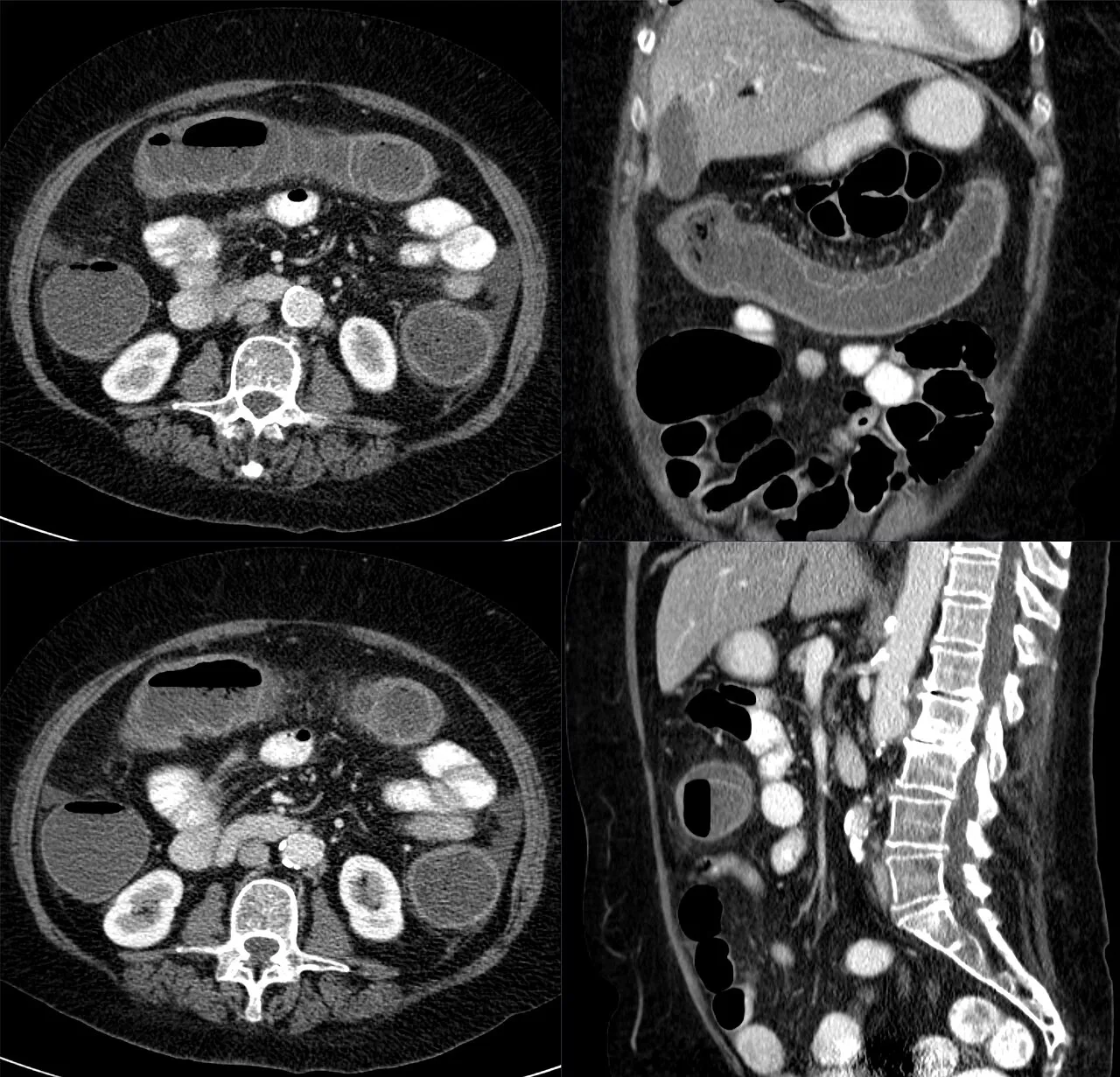
Ischaemic colitis (colon ischaemia) is injury to the colon caused by a temporary fall in blood flow, and it is the commonest form of intestinal ischaemia. Most cases are non-occlusive: a brief drop in perfusion damages the watershed areas at the splenic flexure and rectosigmoid junction. The typical patient is an older adult with cardiovascular disease who develops sudden crampy left-sided abdominal pain followed within 24 hours by bloody diarrhoea. Triggers include hypotension, dehydration, cardiac or aortic surgery, vasoconstrictor drugs, constipation and, in young people, cocaine or endurance exercise. CT with intravenous contrast shows segmental wall thickening and helps exclude other causes; colonoscopy with biopsy confirms the diagnosis. Most patients recover in days with fluids, bowel rest and removal of the trigger, with antibiotics for moderate or severe disease. Gangrene, perforation or peritonitis need urgent colectomy. Isolated right colon ischaemia carries a worse prognosis and should prompt CT angiography to exclude acute mesenteric ischaemia.
Patient case, mechanism, investigations, management, flashcards and exam-style questions.Open the lesson →
Key facts
- Colon ischaemia is the commonest ischaemic disorder of the gut; most cases are non-occlusive and transient
- Watershed areas are most vulnerable: splenic flexure (Griffiths point) and rectosigmoid junction (Sudeck point)
- Classic picture: older adult, sudden crampy left lower quadrant pain, urgency, then bloody diarrhoea within 24 hours
- Pain is milder than in acute mesenteric ischaemia and is felt over the affected segment
- CT with IV contrast first: segmental wall thickening and thumbprinting; pneumatosis or portal venous gas suggests transmural necrosis
- Colonoscopy within about 48 hours (gentle CO2 insufflation) with biopsy confirms the diagnosis; a single longitudinal ulcer is characteristic
- Isolated right colon ischaemia may signal superior mesenteric artery disease: do CT angiography
- Most recover with supportive care; gangrene, perforation or peritonitis need urgent surgery, with high mortality
Differential diagnosis
| Condition | Clues | Key test |
|---|---|---|
| Acute mesenteric ischaemia | Severe pain out of proportion to findings, atrial fibrillation, raised lactate, little early bleeding | CT angiography |
| Infective colitis (Shigella, Campylobacter, E. coli O157, C. difficile) | Fever, contacts, travel or antibiotic exposure | Stool PCR or culture, C. difficile toxin |
| Ulcerative colitis | Younger patient, gradual onset, continuous disease from the rectum | Colonoscopy with biopsy showing chronic architectural change |
| Diverticular bleeding | Painless large-volume bleeding | CT angiography; colonoscopy |
| Acute diverticulitis | Left iliac fossa pain with fever, bleeding uncommon | CT abdomen with contrast |
| Colorectal cancer | Change in bowel habit, weight loss, iron deficiency | Colonoscopy with biopsy |
| NSAID or radiation colitis | Drug history or previous pelvic radiotherapy | History and biopsy |
Exam pearls
Guideline
ACG clinical guideline on colon ischaemia (2015), ESVS clinical practice guidelines on diseases of the mesenteric and renal arteries and veins (2025) and WSES updated acute mesenteric ischaemia guideline (2022)
References
- Brandt LJ, Feuerstadt P, Longstreth GF, Boley SJ.. ACG clinical guideline: epidemiology, risk factors, patterns of presentation, diagnosis, and management of colon ischemia (CI). Am J Gastroenterol 2015.
- Koelemay MJ, Geelkerken RH, Kärkkäinen J, et al.. European Society for Vascular Surgery (ESVS) 2025 Clinical Practice Guidelines on the Management of Diseases of the Mesenteric and Renal Arteries and Veins. Eur J Vasc Endovasc Surg 2025.
- Bala M, Catena F, Kashuk J, et al.. Acute mesenteric ischemia: updated guidelines of the World Society of Emergency Surgery. World J Emerg Surg 2022.
- Theodoropoulou A, Koutroubakis IE.. Ischemic colitis: clinical practice in diagnosis and treatment. World J Gastroenterol 2008.
- Clair DG, Beach JM.. Mesenteric Ischemia. N Engl J Med 2016.
- Sengupta N, Feuerstein JD, Jairath V, et al.. Management of Patients With Acute Lower Gastrointestinal Bleeding: An Updated ACG Guideline. Am J Gastroenterol 2023.
Related topics
By Dr Khalid Seidi (B.Sc., M.D.) · MedEd World Clinical Knowledge library. Original teaching content checked against current guidelines (November 2026); confirm the latest local guidance before clinical use. Not a substitute for clinical judgement.