Clinical Knowledge › Internal medicine › Gastroenterology and hepatology › Inflammatory bowel disease and colitis
Toxic megacolon
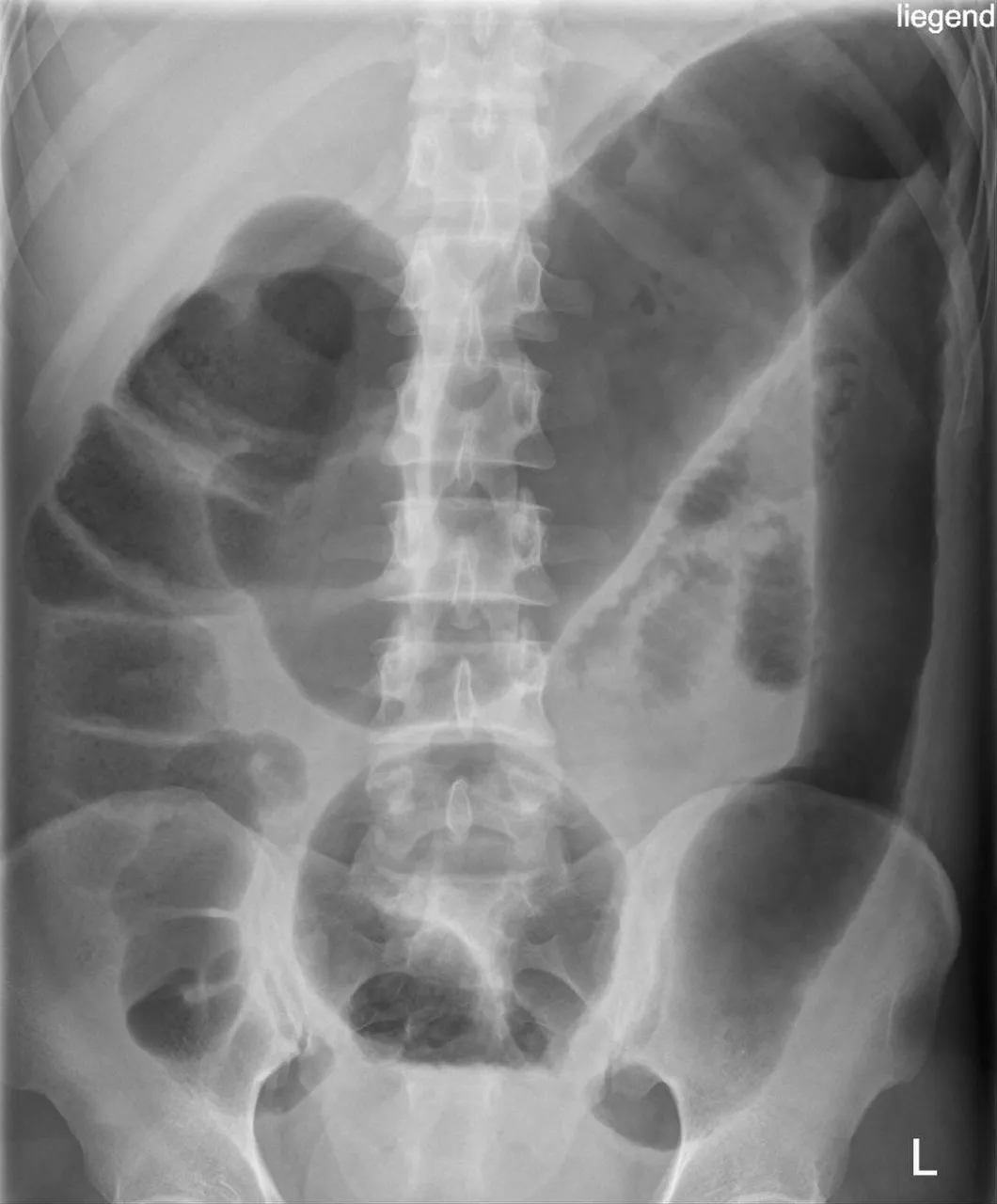
Toxic megacolon is acute, non-obstructive dilatation of the colon (transverse colon usually 6 cm or more) with systemic toxicity, complicating severe colitis. Ulcerative colitis is the classic cause; Crohn colitis, C. difficile, other infections and ischaemic colitis can also cause it. Precipitants include opioids, antimotility and anticholinergic drugs, hypokalaemia, hypomagnesaemia and colonoscopy. Transmural inflammation and nitric oxide paralyse the colonic muscle. Patients have bloody diarrhoea that may paradoxically lessen, distension, tenderness, fever, tachycardia and sometimes shock; steroids can mask peritonism. Jalan criteria combine radiological dilatation with markers of systemic toxicity. Management is joint medical and surgical care in a high-dependency setting: resuscitation, stopping precipitants, correcting electrolytes, VTE prophylaxis, IV steroids for IBD or anti-C. difficile therapy, and serial assessment. Failure to improve within 24–72 hours, perforation or bleeding needs subtotal colectomy with end ileostomy.
Patient case, mechanism, investigations, management, flashcards and exam-style questions.Open the lesson →
Key facts
- Definition: total or segmental non-obstructive colonic dilatation (usually 6 cm or more in the transverse colon) plus systemic toxicity
- Causes: ulcerative colitis (commonest), Crohn colitis, C. difficile and other infective colitis, CMV colitis in immunosuppressed patients, ischaemic colitis
- Precipitants: opioids, loperamide, anticholinergics, antidepressants, hypokalaemia, hypomagnesaemia, barium enema or colonoscopy, abrupt steroid withdrawal
- Jalan criteria: colonic dilatation plus 3 of fever above 38.6 °C, HR above 120/min, WCC above 10.5 × 10⁹/L, anaemia; plus 1 of dehydration, altered consciousness, electrolyte disturbance, hypotension
- Plain abdominal X-ray: dilated transverse colon, loss of haustra, mucosal islands; CT shows complications such as perforation and abscess
- Initial care: HDU or ICU, nil by mouth, IV fluids, correct potassium and magnesium, stop precipitating drugs, LMWH, stool tests for C. difficile
- IBD: IV hydrocortisone 100 mg four times daily (teaching dose); C. difficile: enteral vancomycin plus IV metronidazole; CMV: ganciclovir
- Surgery (subtotal colectomy with end ileostomy) for perforation, haemorrhage, worsening toxicity or no improvement within 24–72 hours; mortality rises sharply after perforation
Differential diagnosis
| Condition | Clues | Key test |
|---|---|---|
| Acute colonic pseudo-obstruction (Ogilvie syndrome) | Older, post-operative or bedbound patient; massive distension without colitis or toxicity | CT shows dilatation without wall thickening or colitis |
| Mechanical large-bowel obstruction | Absolute constipation, colicky pain, transition point | CT with a cut-off (tumour, volvulus, stricture) |
| Sigmoid or caecal volvulus | Sudden distension, 'coffee bean' loop | Abdominal X-ray or CT |
| Acute severe colitis without megacolon | Bloody diarrhoea and systemic toxicity, colon under 6 cm | Abdominal X-ray and CT |
| Hirschsprung disease (congenital megacolon) | Lifelong constipation, child, no toxicity | Rectal biopsy showing absent ganglion cells |
| Perforated viscus with ileus | Peritonism and free gas | Erect chest X-ray or CT |
Exam pearls
Guideline
WSES-AAST guidelines on management of inflammatory bowel disease in the emergency setting (2021), ASCRS clinical practice guidelines for the surgical management of ulcerative colitis (2021), ECCO guidelines on therapeutics in ulcerative colitis: medical (2022) and surgical (2022) treatment, ACG ulcerative colitis guideline (2025), BSG IBD guideline (2025) and IDSA/SHEA C. difficile focused update (2021)
References
- De Simone B, Davies J, Chouillard E, et al.. WSES-AAST guidelines: management of inflammatory bowel disease in the emergency setting. World J Emerg Surg 2021.
- Holubar SD, Lightner AL, Poylin V, et al.. The American Society of Colon and Rectal Surgeons Clinical Practice Guidelines for the Surgical Management of Ulcerative Colitis. Dis Colon Rectum 2021.
- Raine T, Bonovas S, Burisch J, et al.. ECCO Guidelines on Therapeutics in Ulcerative Colitis: Medical Treatment. J Crohns Colitis 2022.
- Rubin DT, Ananthakrishnan AN, Siegel CA, Barnes EL, Long MD.. ACG clinical guideline update: ulcerative colitis in adults. Am J Gastroenterol 2025.
- Spinelli A, Bonovas S, Burisch J, et al.. ECCO Guidelines on Therapeutics in Ulcerative Colitis: Surgical Treatment. J Crohns Colitis 2022.
- Sheth SG, LaMont JT.. Toxic megacolon. Lancet 1998.
Related topics
By Dr Khalid Seidi (B.Sc., M.D.) · MedEd World Clinical Knowledge library. Original teaching content checked against current guidelines (November 2026); confirm the latest local guidance before clinical use. Not a substitute for clinical judgement.