Clinical Knowledge › Dermatology › Urticaria, drug eruptions and reactive disorders
Drug reaction with eosinophilia and systemic symptoms (DRESS)
Drug reaction with eosinophilia and systemic symptoms (DRESS), also called drug-induced hypersensitivity syndrome (DIHS), is a severe, delayed, T-cell-mediated drug reaction. It typically starts 2-8 weeks after a new drug - most often an aromatic anticonvulsant, allopurinol, a sulfonamide, dapsone, minocycline or vancomycin. Fever, a spreading morbilliform eruption that becomes oedematous and infiltrated, centrofacial oedema and lymphadenopathy are followed by blood abnormalities (eosinophilia, atypical lymphocytes) and internal organ involvement, most often hepatitis, then nephritis, pneumonitis and myocarditis. Sequential reactivation of human herpesvirus 6 drives a relapsing course. Diagnosis uses the RegiSCAR score after excluding infection and other causes. Management is immediate withdrawal of the culprit, organ-directed monitoring, potent topical corticosteroids for mild disease and systemic corticosteroids tapered slowly over weeks for moderate to severe disease. Mortality is about 2-10%, and autoimmune disease (thyroiditis, type 1 diabetes) can follow months later.
Patient case, mechanism, investigations, management, flashcards and exam-style questions.Open the lesson →
Key facts
- Long latency: usually 2-8 weeks after starting the drug (RegiSCAR median about 3 weeks) - much later than morbilliform eruptions or SJS
- Classic culprits: aromatic anticonvulsants, allopurinol, sulfonamides including sulfasalazine, dapsone, minocycline, vancomycin, abacavir and nevirapine
- Clinical triad: fever, widespread eruption (often over 50% BSA) with facial oedema, and internal organ involvement; lymphadenopathy is common
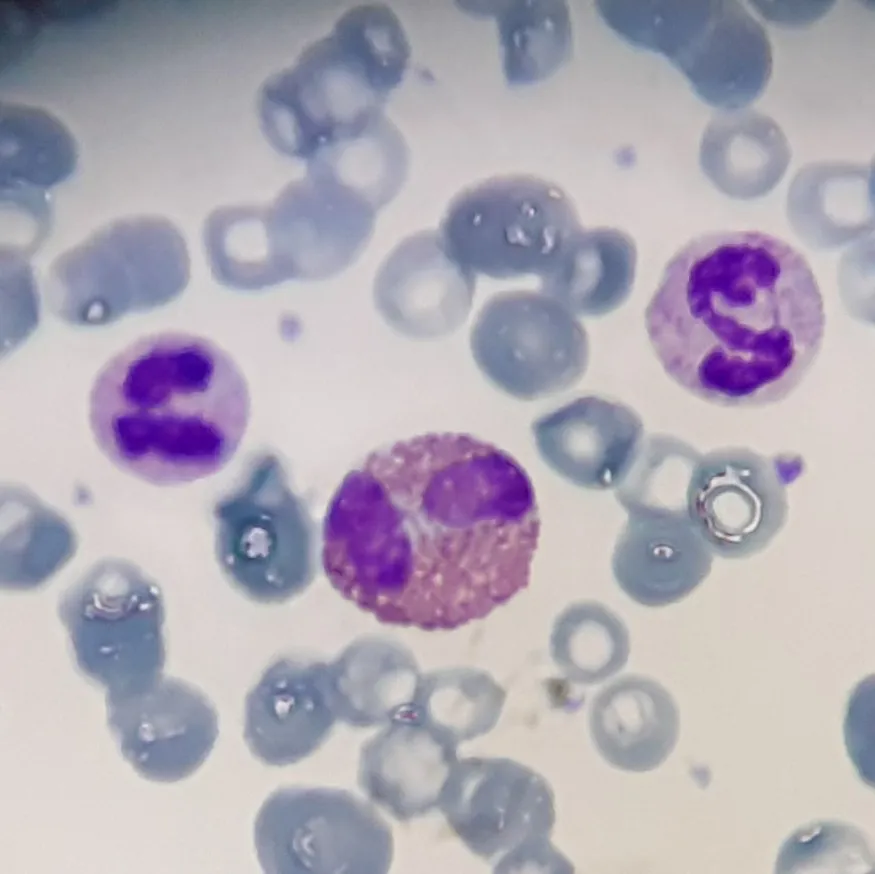
- Blood: eosinophilia (often over 1.5 x 10^9/L), atypical lymphocytes, lymphocytosis or lymphopenia; eosinophilia may appear late or be absent
- Liver is the commonest internal organ affected; kidney involvement is typical with allopurinol; myocarditis is rare but the most lethal
- RegiSCAR score: below 2 no case, 2-3 possible, 4-5 probable, above 5 definite
- HLA associations: HLA-B*58:01 allopurinol, HLA-A*31:01 carbamazepine, HLA-B*13:01 dapsone, HLA-B*57:01 abacavir
- Systemic prednisolone (about 0.5-1 mg/kg/day) tapered over at least 6-8 weeks for moderate-severe DRESS; rapid tapering causes relapse
Differential diagnosis
| Condition | Clues | Key test |
|---|---|---|
| Morbilliform (maculopapular) drug eruption | Onset 4-14 days; no facial oedema, fever is low-grade, no organ dysfunction; resolves within 1-2 weeks of stopping drug | FBC, LFT and creatinine normal |
| SJS/TEN | Dusky macules, atypical targets, painful skin, epidermal detachment, severe mucositis at two or more sites | Biopsy: full-thickness keratinocyte necrosis; SCORTEN |
| Acute generalised exanthematous pustulosis (AGEP) | Onset within 48 hours (often antibiotics), hundreds of small sterile non-follicular pustules on erythema, flexural start | Biopsy: subcorneal pustules; neutrophilia |
| Viral exanthem (EBV, CMV, HHV-6, HIV seroconversion) | Prodrome, pharyngitis, splenomegaly; no culprit drug or short latency | Viral serology and PCR; HIV antigen/antibody test |
| Hypereosinophilic syndrome | Persistent eosinophilia over 1.5 x 10^9/L with organ damage, no drug trigger, chronic course | Bone marrow; FIP1L1-PDGFRA; tryptase |
| Erythrodermic cutaneous T-cell lymphoma (Sézary syndrome) | Chronic erythroderma, intense itch, keratoderma, circulating clonal T cells | Flow cytometry (CD4:CD8, CD7/CD26 loss); TCR clonality |
| Adult-onset Still disease | Salmon-pink evanescent rash with fever spikes, arthralgia, sore throat; neutrophilia rather than eosinophilia | Ferritin (very high), glycosylated ferritin |
| Kawasaki disease (children) | Fever 5 days or more, conjunctival injection, strawberry tongue, extremity changes | Echocardiography, CRP |
Exam pearls
Guideline
International Delphi-based consensus on management of adult DRESS (Brüggen et al., JAMA Dermatology 2024) with RegiSCAR diagnostic scoring (Kardaun 2007/2013); no BAD guideline yet
References
- International DRESS Delphi consensus group (Brüggen MC, Walsh S, Ameri MM, et al.). Management of adult patients with drug reaction with eosinophilia and systemic symptoms: a Delphi-based international consensus. JAMA Dermatol 2024.
- Kardaun SH, Sekula P, Valeyrie-Allanore L, et al.. Drug reaction with eosinophilia and systemic symptoms (DRESS): an original multisystem adverse drug reaction. Results from the prospective RegiSCAR study. Br J Dermatol 2013.
- Shiohara T, Mizukawa Y. Drug-induced hypersensitivity syndrome (DiHS)/drug reaction with eosinophilia and systemic symptoms (DRESS): an update in 2019. Allergol Int 2019.
- Hung SI, Mockenhaupt M, Blumenthal KG, et al.. Severe cutaneous adverse reactions. Nat Rev Dis Primers 2024.
- American College of Rheumatology (FitzGerald JD, Dalbeth N, Mikuls T, et al.). 2020 American College of Rheumatology guideline for the management of gout. Arthritis Care Res (Hoboken) 2020.
- AAAAI/ACAAI Joint Task Force on Practice Parameters (Khan DA, Banerji A, Blumenthal KG, et al.). Drug allergy: a 2022 practice parameter update. J Allergy Clin Immunol 2022.
Related topics
By Dr Khalid Seidi (B.Sc., M.D.) · MedEd World Clinical Knowledge library. Original teaching content checked against current guidelines (November 2026); confirm the latest local guidance before clinical use. Not a substitute for clinical judgement.