Clinical Knowledge › Dermatology › Bacterial skin infections
Folliculitis, furuncles and carbuncles
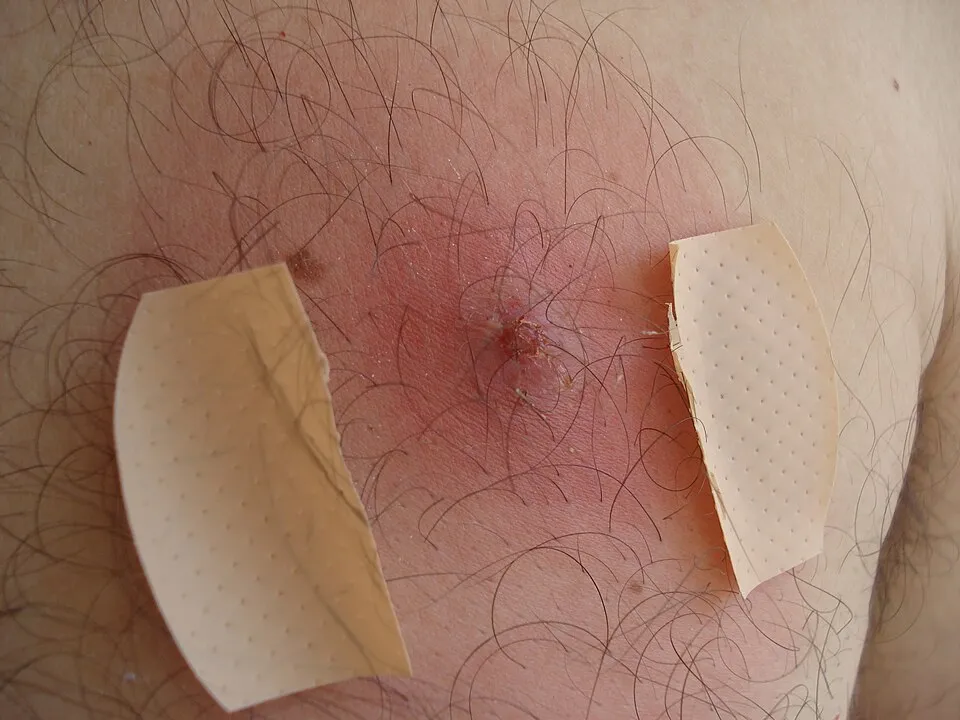
Folliculitis, furuncles and carbuncles form a spectrum of hair-follicle infection, usually caused by Staphylococcus aureus. Superficial folliculitis presents as small itchy or tender pustules, each pierced by a hair, on the scalp, beard, buttocks and thighs. A furuncle (boil) is a deeper perifollicular abscess: a painful, red, firm nodule that becomes fluctuant, points and discharges pus. A carbuncle is a larger, deeper, multiloculated abscess formed by several adjacent furuncles, with multiple draining openings, often on the nape of the neck, back or thighs, often with fever in people with diabetes. Pseudomonas ('hot tub'), Malassezia and pseudofolliculitis barbae are other causes of folliculitis. Diagnosis is clinical, with pus culture for recurrent, severe or non-responding disease, including Panton-Valentine leukocidin (PVL) and MRSA testing. Superficial folliculitis responds to antiseptics; fluctuant furuncles need incision and drainage, with antibiotics for cellulitis, systemic features, central-facial lesions or immunosuppression. Recurrent furunculosis calls for screening for diabetes, decolonisation of carriers and household hygiene measures.
Patient case, mechanism, investigations, management, flashcards and exam-style questions.Open the lesson →
Key facts
- Spectrum: superficial folliculitis (pustule) -> furuncle (deep perifollicular abscess) -> carbuncle (coalescent furuncles with multiple heads)
- S. aureus is the usual cause; MRSA and PVL-producing strains cause recurrent boils in healthy young adults and close-contact groups
- Hot tub folliculitis: Pseudomonas aeruginosa, itchy follicular papulopustules under the swimsuit 8-48 hours after exposure; usually self-limiting
- Malassezia folliculitis: itchy monomorphic papulopustules on upper trunk; does not respond to antibiotics
- Fluctuant furuncles and carbuncles: incision and drainage is the main treatment
- Add antibiotics for systemic features, surrounding cellulitis, immunosuppression, extremes of age, central facial lesions or failure of drainage
- Central-face ('danger triangle') furuncles risk septic cavernous sinus thrombosis - never squeeze
- Recurrent furunculosis: check glucose/HbA1c, culture with PVL testing, decolonise (nasal mupirocin plus chlorhexidine wash) the patient and household
Differential diagnosis
| Condition | Clues | Key test |
|---|---|---|
| Hidradenitis suppurativa | Recurrent nodules restricted to axillae, groins, buttocks with tunnels and double-ended comedones | Clinical; ultrasound |
| Acne vulgaris | Comedones, papules and pustules on face, chest and back in adolescents | Clinical |
| Inflamed epidermoid cyst | Single nodule with central punctum, history of a pre-existing cyst | Clinical; ultrasound |
| Malassezia (pityrosporum) folliculitis | Itchy monomorphic papulopustules on upper back and chest, after heat, sweating or antibiotics | KOH or Gram stain shows round yeasts |
| Pseudofolliculitis barbae | Papules and pustules in beard area of men with tightly curled hair after close shaving | Clinical; ingrowing hairs |
| Tinea (Majocchi granuloma) | Perifollicular papules within an annular scaly plaque, often after topical steroid | KOH scraping and fungal culture |
| Eosinophilic folliculitis | Intensely itchy follicular papules on face and upper trunk in advanced HIV | Biopsy (eosinophils), CD4 count |
Exam pearls
Guideline
IDSA skin and soft tissue infection guideline 2014 (furuncles, carbuncles, abscesses) and IDSA MRSA guideline 2011; WHO AWaRe antibiotic book 2022; UK PVL-SA guidance (HPA 2008, now UKHSA); Cochrane review of folliculitis and boils 2021
References
- Infectious Diseases Society of America (Stevens DL, Bisno AL, Chambers HF, et al.). Practice guidelines for the diagnosis and management of skin and soft tissue infections: 2014 update by the Infectious Diseases Society of America. Clin Infect Dis 2014.
- Lin HS, Lin PT, Tsai YS, Wang SH, Chi CC. Interventions for bacterial folliculitis and boils (furuncles and carbuncles). Cochrane Database Syst Rev 2021.
- Luelmo-Aguilar J, Santandreu MS. Folliculitis: recognition and management. Am J Clin Dermatol 2004.
- Laureano AC, Schwartz RA, Cohen PJ. Facial bacterial infections: folliculitis. Clin Dermatol 2014.
- Infectious Diseases Society of America (Liu C, Bayer A, Cosgrove SE, et al.). Clinical practice guidelines by the IDSA for the treatment of methicillin-resistant Staphylococcus aureus infections in adults and children. Clin Infect Dis 2011.
- World Health Organization. The WHO AWaRe (Access, Watch, Reserve) antibiotic book. WHO, Geneva 2022.
Related topics
By Dr Khalid Seidi (B.Sc., M.D.) · MedEd World Clinical Knowledge library. Original teaching content checked against current guidelines (November 2026); confirm the latest local guidance before clinical use. Not a substitute for clinical judgement.