Clinical Knowledge › Obstetrics and gynaecology › Basics of obstetrics and gynaecology
Gynaecological history and pelvic examination
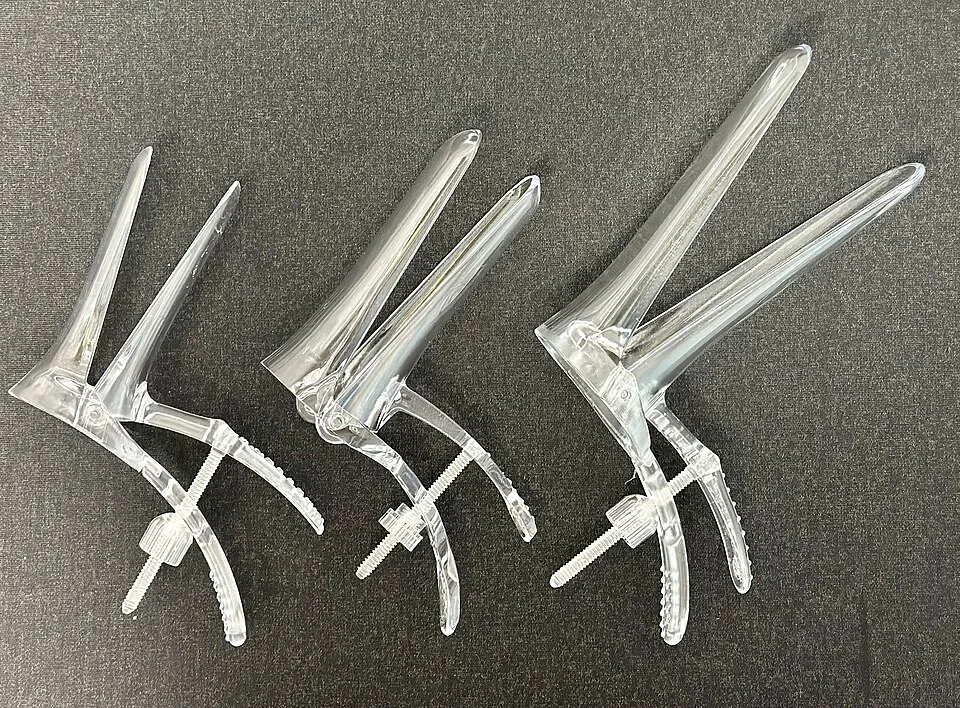
The gynaecological history and pelvic examination are the foundation of every women's health consultation and a core licensing-exam skill. A focused history covers the presenting complaint, a structured menstrual history (last menstrual period, cycle length, duration, volume, intermenstrual, postcoital and postmenopausal bleeding), pain, discharge, sexual and contraceptive history, obstetric history, cervical screening record, urinary and bowel symptoms, drugs and family history of breast, ovarian, endometrial and bowel cancer. Every woman of reproductive age with pain or bleeding needs a pregnancy test. The examination is intimate: explain its purpose, obtain and document consent, offer a chaperone whatever the clinician's gender, and stop if asked (GMC 2024). After general and abdominal examination, inspection of the vulva is followed by a Cusco speculum examination of the cervix with appropriate swabs or cervical screening sample, and a bimanual examination for uterine size, position, mobility, cervical motion tenderness and adnexal masses. Pelvic examination is performed when symptoms or history indicate it, not as routine screening. Safeguarding (domestic abuse, FGM, under-16s) is part of every consultation.
Patient case, mechanism, investigations, management, flashcards and exam-style questions.Open the lesson →
Key facts
- Offer a chaperone for every intimate examination, whatever the gender of patient and clinician; record the offer, the chaperone's name or the declined offer, and verbal consent (GMC 2024)
- Normal menstruation (FIGO 2018): frequency 24–38 days, duration up to 8 days, cycle-to-cycle variation up to 7–9 days; volume is defined by the patient's experience
- Any woman of reproductive age with pelvic pain or abnormal bleeding needs a urine or serum hCG before further work-up
- Postmenopausal bleeding is bleeding 12 months or more after the last period; at 55 years or over it triggers a suspected cancer pathway referral in the UK (NICE NG12)
- Cusco (bivalve) speculum views the cervix; Sims speculum in the left lateral position assesses prolapse of the anterior and posterior vaginal walls
- Chlamydia and gonorrhoea are tested by NAAT on a vulvovaginal swab (self-taken is acceptable); BV, candida and trichomonas need a high vaginal swab or point-of-care tests
- Cervical motion tenderness on bimanual examination suggests PID or ectopic pregnancy; a fixed retroverted uterus with uterosacral nodularity suggests endometriosis
- England's cervical screening programme is HPV-primary: 25–64 years, every 5 years if HPV-negative (25–49-year-olds moved from 3 to 5 years from July 2025)
Differential diagnosis
| Condition | Clues | Key test |
|---|---|---|
| Ectopic pregnancy | Amenorrhoea, unilateral pain, positive hCG, cervical motion tenderness | Urine/serum hCG and transvaginal ultrasound |
| Pelvic inflammatory disease | Lower abdominal pain, discharge, fever, cervical motion and adnexal tenderness | NAAT for chlamydia and gonorrhoea; clinical diagnosis |
| Cervical cancer | Postcoital or intermenstrual bleeding, abnormal-looking or friable cervix, overdue screening | Urgent colposcopy and biopsy |
| Cervical ectropion | Postcoital bleeding or mucoid discharge, red glandular area around the os in a young woman or pill user | Speculum view, up-to-date cervical screening |
| Endometriosis | Cyclical pelvic pain, deep dyspareunia, dyschezia, fixed retroverted uterus | Transvaginal ultrasound; laparoscopy if needed |
| Ovarian cyst or tumour | Adnexal mass, bloating, early satiety; may be found on bimanual examination | Transvaginal ultrasound, CA-125 (and IOTA rules) |
| Uterine fibroids | Heavy menstrual bleeding, bulky irregular uterus on bimanual examination | Pelvic ultrasound |
| Pelvic organ prolapse | Vaginal bulge or dragging sensation, worse at end of day | Sims speculum examination with Valsalva; POP-Q staging |
Exam pearls
Guideline
GMC Intimate examinations and chaperones (2024), ACOG Committee Opinion 754 on routine pelvic examination (2018), NHS cervical screening programme (interval change July 2025) and NICE NG12 suspected cancer (2015, updated)
References
- General Medical Council (GMC). Intimate examinations and chaperones. GMC ethical guidance 2024.
- American College of Obstetricians and Gynecologists (ACOG). ACOG Committee Opinion No. 754: The utility of and indications for routine pelvic examination. Obstet Gynecol 2018.
- National Institute for Health and Care Excellence (NICE). Suspected cancer: recognition and referral (NG12). NICE guideline 2015.
- NHS England. NHS Cervical Screening Programme: personalised screening intervals for people testing HPV negative. NHS England 2025.
- Munro MG, Critchley HOD, Fraser IS; FIGO Menstrual Disorders Committee.. The two FIGO systems for normal and abnormal uterine bleeding symptoms and classification of causes of abnormal uterine bleeding in the reproductive years: 2018 revisions. Int J Gynaecol Obstet 2018.
- Haylen BT, de Ridder D, Freeman RM, et al.. An International Urogynecological Association (IUGA)/International Continence Society (ICS) joint report on the terminology for female pelvic floor dysfunction. Neurourol Urodyn 2010.
Related topics
By Dr Khalid Seidi (B.Sc., M.D.) · MedEd World Clinical Knowledge library. Original teaching content checked against current guidelines (November 2026); confirm the latest local guidance before clinical use. Not a substitute for clinical judgement.