Clinical Knowledge › Internal medicine › Endocrinology › Endocrine tumours and polyglandular syndromes
Insulinoma
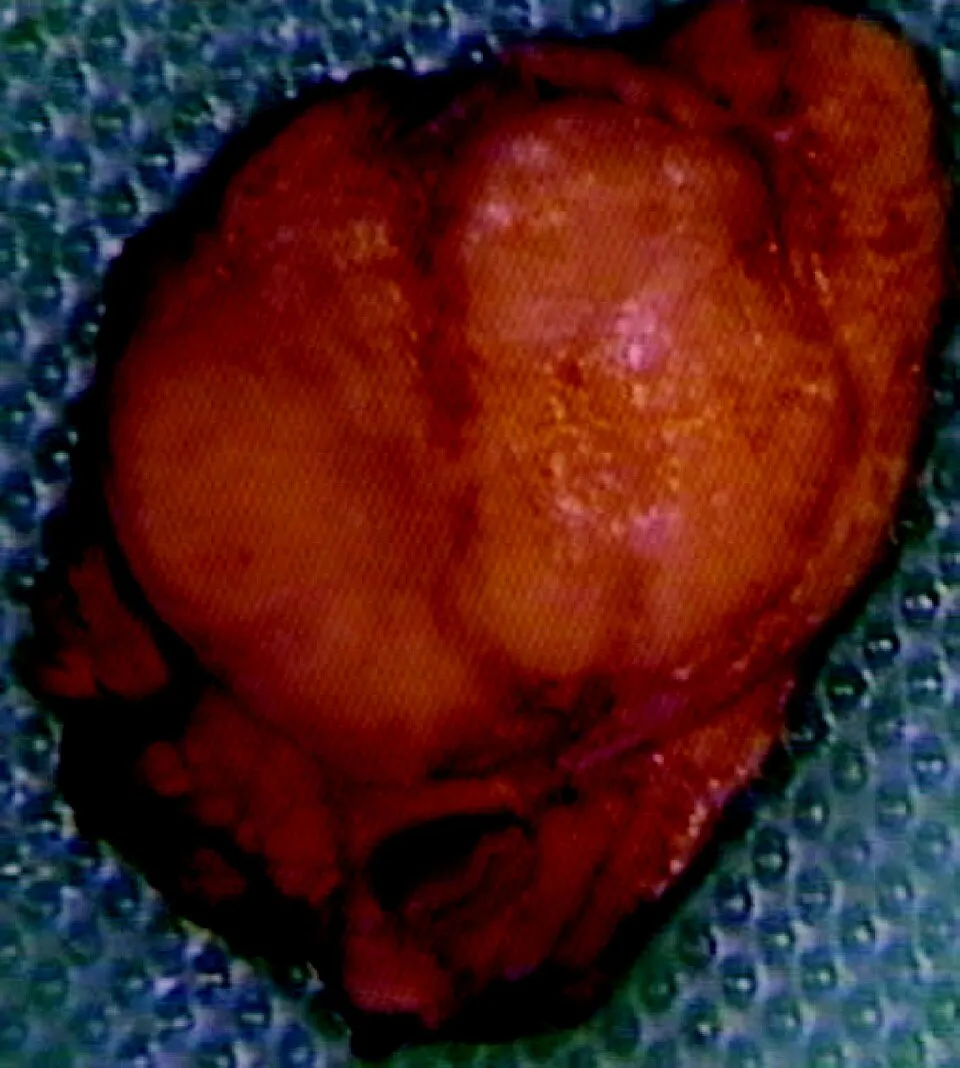
An insulinoma is a pancreatic neuroendocrine tumour of β cells that secretes insulin autonomously, causing endogenous hyperinsulinaemic hypoglycaemia. It is the commonest functioning pancreatic neuroendocrine tumour but rare overall (about 1–4 per million per year). About 90% are solitary, benign and under 2 cm, spread evenly through the pancreas; 5–10% occur in MEN1, often multiple, and a similar proportion are malignant. Fasting or exercise-induced neuroglycopenia (confusion, odd behaviour, seizures) is often misdiagnosed as epilepsy or psychiatric illness, and many patients gain weight from frequent eating. Diagnosis requires documented Whipple's triad and a critical sample (during a spontaneous episode or a supervised fast) showing glucose below 3.0 mmol/L (55 mg/dL) with inappropriately raised insulin, C-peptide and proinsulin, low β-hydroxybutyrate and a negative sulfonylurea screen. Tumours are localised by CT or MRI, endoscopic ultrasound and, where available, GLP-1 receptor PET. Surgical enucleation or resection cures most patients; diazoxide, frequent meals and other medical or ablative treatments are used when surgery is delayed or impossible.
Patient case, mechanism, investigations, management, flashcards and exam-style questions.Open the lesson →
Key facts
- Insulinoma = β-cell pancreatic NET causing fasting hyperinsulinaemic hypoglycaemia; commonest functioning PanNET
- Rule of 10s (approximately): about 10% malignant, 10% multiple, 10% associated with MEN1
- Whipple's triad: symptoms of hypoglycaemia, low plasma glucose at the time, relief when glucose is raised
- 72-hour supervised fast: about two-thirds positive within 24 h and over 95% within 48 h
- Diagnostic profile at glucose below 3.0 mmol/L: insulin ≥18 pmol/L (3 µU/mL), C-peptide ≥0.2 nmol/L, proinsulin ≥5 pmol/L, β-hydroxybutyrate ≤2.7 mmol/L, negative sulfonylurea screen
- Localise only after biochemical diagnosis: multiphase CT or MRI, EUS, then GLP-1 receptor (exendin-4) PET; selective arterial calcium stimulation if still occult
- Benign insulinomas express GLP-1 receptors strongly; malignant ones more often express somatostatin receptor 2 (DOTATATE PET-positive)
- Treatment: enucleation or partial pancreatectomy (cure in over 90%); diazoxide as bridge; EUS-guided ablation for selected small tumours
Differential diagnosis
| Condition | Clues | Key test |
|---|---|---|
| Surreptitious sulfonylurea or meglitinide use | Identical insulin and C-peptide profile; healthcare worker or relative with diabetes | Plasma sulfonylurea and glinide screen |
| Exogenous insulin | High insulin with suppressed C-peptide and proinsulin | Insulin:C-peptide molar ratio; analogue-specific assays |
| Post-bariatric hypoglycaemia | Postprandial (1–3 h) hypoglycaemia after gastric bypass | Mixed-meal test; history of surgery; CGM |
| Insulin autoimmune syndrome | Very high insulin, postprandial or fasting, sulfhydryl drug exposure | Insulin autoantibodies; PEG precipitation |
| Non-islet cell tumour hypoglycaemia | Large mesenchymal tumour or HCC; low insulin and C-peptide | IGF-2:IGF-1 ratio above 10 |
| Adrenal insufficiency | Hypotension, hyponatraemia, pigmentation; low insulin | Cortisol and short Synacthen test |
| Epilepsy or psychiatric disorder | Episodes not linked to fasting; normal glucose during events | Glucose during attack; EEG; CGM |
Exam pearls
Guideline
Endocrine Society Clinical Practice Guideline: evaluation and management of adult hypoglycaemic disorders (2009, still current), ENETS 2023 guidance paper for functioning pancreatic NET syndromes, and the WHO 2022 classification of neuroendocrine neoplasms
References
- Cryer PE, Axelrod L, Grossman AB, et al.. Evaluation and management of adult hypoglycemic disorders: an Endocrine Society clinical practice guideline. J Clin Endocrinol Metab 2009.
- Hofland J, Falconi M, Christ E, et al.. European Neuroendocrine Tumor Society 2023 guidance paper for functioning pancreatic neuroendocrine tumour syndromes. J Neuroendocrinol 2023.
- Service FJ, McMahon MM, O'Brien PC, Ballard DJ. Functioning insulinoma – incidence, recurrence, and long-term survival of patients: a 60-year study. Mayo Clin Proc 1991.
- Christ E, Wild D, Ederer S, et al.. Glucagon-like peptide-1 receptor imaging for the localisation of insulinomas: a prospective multicentre imaging study. Lancet Diabetes Endocrinol 2013.
- Thakker RV, Newey PJ, Walls GV, et al.. Clinical practice guidelines for multiple endocrine neoplasia type 1 (MEN1). J Clin Endocrinol Metab 2012.
- Rindi G, Mete O, Uccella S, et al.. Overview of the 2022 WHO classification of neuroendocrine neoplasms. Endocr Pathol 2022.
Related topics
By Dr Khalid Seidi (B.Sc., M.D.) · MedEd World Clinical Knowledge library. Original teaching content checked against current guidelines (November 2026); confirm the latest local guidance before clinical use. Not a substitute for clinical judgement.