Clinical Knowledge › Internal medicine › Endocrinology › Endocrine tumours and polyglandular syndromes
Neuroendocrine tumours and carcinoid syndrome
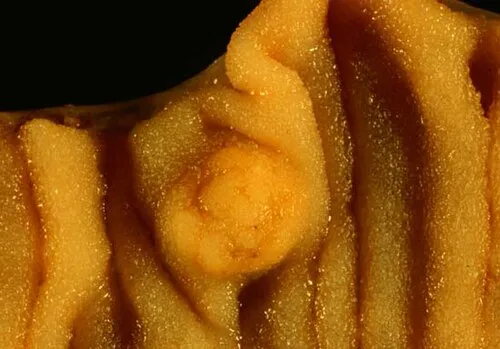
Neuroendocrine neoplasms (NENs) arise from neuroendocrine cells throughout the body, most often in the small intestine, pancreas, lung, rectum, stomach and appendix. The WHO 2022 classification separates well-differentiated neuroendocrine tumours (NETs), graded G1–G3 by Ki-67 index, from poorly differentiated neuroendocrine carcinomas. Many NETs are non-functioning, but some secrete hormones. Carcinoid syndrome, mainly from small-intestinal NETs with liver metastases, results from serotonin, tachykinins and other amines reaching the systemic circulation: flushing, diarrhoea, cramps and wheeze. Its serious complications are carcinoid heart disease, with fibrotic thickening of the tricuspid and pulmonary valves and right heart failure, and carcinoid crisis during anaesthesia or tumour manipulation. Diagnosis uses 24-hour urinary or plasma 5-hydroxyindoleacetic acid (5-HIAA), cross-sectional imaging and somatostatin receptor PET, with NT-proBNP and echocardiography to screen the heart. Somatostatin analogues control symptoms and growth; telotristat, radioligand and liver-directed therapy follow for refractory disease.
Patient case, mechanism, investigations, management, flashcards and exam-style questions.Open the lesson →
Key facts
- WHO 2022: well-differentiated NET G1 (Ki-67 below 3%), G2 (3–20%), G3 (above 20%); poorly differentiated NEC (small or large cell) is a separate, aggressive entity
- Carcinoid syndrome = flushing, diarrhoea, abdominal cramps, wheeze; usually small-intestinal NET with liver metastases that let amines bypass hepatic inactivation
- Bronchial and ovarian NETs can cause carcinoid syndrome without liver metastases because their venous drainage bypasses the liver
- Best biochemical test: 24-hour urinary 5-HIAA (or plasma 5-HIAA), after avoiding serotonin-rich foods such as bananas, avocado, pineapple, kiwi, plums, tomatoes and walnuts
- Carcinoid heart disease: right-sided valve plaques causing tricuspid regurgitation and pulmonary stenosis/regurgitation; screen with NT-proBNP and echocardiography
- Somatostatin receptor PET-CT (68Ga- or 64Cu-DOTATATE) is the most sensitive imaging for well-differentiated NETs and selects patients for radioligand therapy
- First-line symptom control: long-acting octreotide or lanreotide; telotristat ethyl (tryptophan hydroxylase inhibitor) for refractory diarrhoea
- Carcinoid crisis (flushing, hypotension, bronchospasm, arrhythmia) can occur during anaesthesia, surgery or embolisation; treat with IV octreotide and fluids
Differential diagnosis
| Condition | Clues | Key test |
|---|---|---|
| Menopausal vasomotor symptoms | Hot flushes with sweating in perimenopause, no diarrhoea | FSH; normal 5-HIAA |
| Systemic mastocytosis | Flushing, urticaria pigmentosa, anaphylaxis, diarrhoea | Serum tryptase; KIT D816V; bone marrow |
| Medullary thyroid carcinoma | Flushing and diarrhoea with thyroid nodule | Calcitonin, CEA |
| VIPoma | Large-volume watery diarrhoea with hypokalaemia and achlorhydria | Plasma VIP; pancreatic imaging |
| Phaeochromocytoma | Pallor rather than flushing, paroxysmal hypertension, sweating | Plasma metanephrines |
| Drug- or alcohol-induced flushing | Niacin, calcium-channel blockers, vancomycin, alcohol with aldehyde dehydrogenase variants | Drug history; symptoms resolve on withdrawal |
| Irritable bowel syndrome or inflammatory bowel disease | Chronic diarrhoea and cramps without flushing | Faecal calprotectin, colonoscopy; normal 5-HIAA |
Exam pearls
Guideline
ENETS 2022 guidance paper for carcinoid syndrome and carcinoid heart disease, ENETS 2024 guidance paper for small-intestinal NETs, ESMO Clinical Practice Guideline for gastroenteropancreatic neuroendocrine neoplasms (2020) and the WHO 2022 classification of neuroendocrine neoplasms
References
- Grozinsky-Glasberg S, Davar J, Hofland J, et al.. European Neuroendocrine Tumor Society (ENETS) 2022 guidance paper for carcinoid syndrome and carcinoid heart disease. J Neuroendocrinol 2022.
- Lamarca A, Bartsch DK, Caplin M, et al.. European Neuroendocrine Tumor Society (ENETS) 2024 guidance paper for the management of well-differentiated small intestine neuroendocrine tumours. J Neuroendocrinol 2024.
- Pavel M, Öberg K, Falconi M, et al.. Gastroenteropancreatic neuroendocrine neoplasms: ESMO Clinical Practice Guidelines for diagnosis, treatment and follow-up. Ann Oncol 2020.
- Rindi G, Mete O, Uccella S, et al.. Overview of the 2022 WHO classification of neuroendocrine neoplasms. Endocr Pathol 2022.
- Kulke MH, Hörsch D, Caplin ME, et al.. Telotristat ethyl, a tryptophan hydroxylase inhibitor for the treatment of carcinoid syndrome. J Clin Oncol 2017.
- Strosberg J, El-Haddad G, Wolin E, et al.. Phase 3 trial of 177Lu-Dotatate for midgut neuroendocrine tumors. N Engl J Med 2017.
Related topics
By Dr Khalid Seidi (B.Sc., M.D.) · MedEd World Clinical Knowledge library. Original teaching content checked against current guidelines (November 2026); confirm the latest local guidance before clinical use. Not a substitute for clinical judgement.