Clinical Knowledge › Internal medicine › Pulmonology › Pleural diseases
Malignant pleural effusion
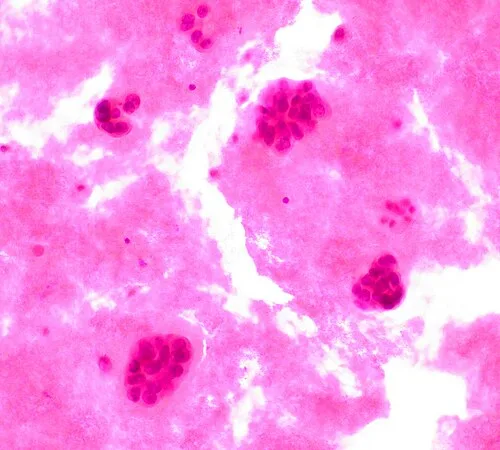
A malignant pleural effusion (MPE) is an effusion with malignant cells in the fluid or on the pleura. It is the second commonest exudate and signals advanced cancer, most often lung cancer, breast cancer, lymphoma, mesothelioma or ovarian and gastrointestinal cancers. Median survival is about 3–12 months and can be estimated with the LENT score. Patients present with progressive breathlessness, cough, chest discomfort and weight loss, with signs of a large effusion. Ultrasound-guided aspiration gives a lymphocyte-rich exudate; cytology is positive in about 60% (lower in mesothelioma), so thoracoscopic or image-guided pleural biopsy is needed when cytology is negative and suspicion remains. Contrast CT shows nodular or circumferential pleural thickening. Management is palliative and guided by symptoms, lung expansion, prognosis and patient choice: therapeutic aspiration, then talc pleurodesis or an indwelling pleural catheter (IPC). IPCs allow home drainage and are preferred for non-expandable lung. Systemic anticancer therapy may control effusions from sensitive tumours.
Patient case, mechanism, investigations, management, flashcards and exam-style questions.Open the lesson →
Key facts
- MPE means malignant cells in pleural fluid or tissue; in lung cancer it is stage M1a (stage IV) disease
- Commonest primaries: lung and breast cancer, followed by lymphoma, mesothelioma, ovarian and GI cancers; about 10% have unknown primary
- Fluid is usually a lymphocyte-predominant exudate; it may be bloodstained; low pH and glucose suggest high tumour burden and poorer survival
- Pleural fluid cytology is positive in about 60%; if non-diagnostic and malignancy is suspected, proceed to image-guided or thoracoscopic biopsy
- Median survival 3–12 months; the LENT score (LDH, ECOG, neutrophil:lymphocyte ratio, tumour type) estimates prognosis
- Asymptomatic MPE does not need drainage; symptomatic recurrent MPE needs a definitive procedure
- Choose talc pleurodesis or an IPC according to patient preference when the lung expands; use an IPC for non-expandable lung
- Talc through an IPC (IPC-PLUS) and daily IPC drainage increase pleurodesis success
Differential diagnosis
| Condition | Clues | Key test |
|---|---|---|
| Parapneumonic effusion or empyema | Fever, raised CRP, neutrophil-rich fluid, low pH, pus | Pleural fluid pH, Gram stain, culture |
| Tuberculous pleurisy | Younger patient, fever, high-TB setting, lymphocytic exudate | Pleural ADA, pleural biopsy with culture and histology |
| Heart failure (transudate) | Bilateral effusions, raised BNP, oedema | Light's criteria, NT-proBNP, echocardiogram |
| Benign asbestos pleural effusion | Asbestos exposure, small effusion, no mass | Exclusion after biopsy and follow-up for mesothelioma |
| Pulmonary embolism with effusion | Pleuritic pain, small bloodstained exudate | CT pulmonary angiography |
| Paramalignant effusion | Cancer present but fluid cytology negative; caused by lymphatic or bronchial obstruction, SVCO or treatment | Cytology and pleural biopsy negative for tumour |
| Rheumatoid or lupus pleuritis | Known autoimmune disease, very low glucose (rheumatoid) | Pleural glucose, RF, ANA |
Exam pearls
Guideline
BTS guideline for pleural disease (2023), ERS/EACTS statement on management of malignant pleural effusions (2018) and ATS/STS/STR MPE guideline (2018)
References
- Roberts ME, Rahman NM, Maskell NA, et al.. British Thoracic Society Guideline for pleural disease. Thorax 2023.
- Bibby AC, Dorn P, Psallidas I, et al.. ERS/EACTS statement on the management of malignant pleural effusions. Eur Respir J 2018.
- Feller-Kopman DJ, Reddy CB, DeCamp MM, et al.. Management of Malignant Pleural Effusions. An Official ATS/STS/STR Clinical Practice Guideline. Am J Respir Crit Care Med 2018.
- Davies HE, Mishra EK, Kahan BC, et al.. Effect of an indwelling pleural catheter vs chest tube and talc pleurodesis for relieving dyspnea in patients with malignant pleural effusion: the TIME2 randomized controlled trial. JAMA 2012.
- Thomas R, Fysh ETH, Smith NA, et al.. Effect of an Indwelling Pleural Catheter vs Talc Pleurodesis on Hospitalization Days in Patients With Malignant Pleural Effusion: The AMPLE Randomized Clinical Trial. JAMA 2017.
- Bhatnagar R, Keenan EK, Morley AJ, et al.. Outpatient Talc Administration by Indwelling Pleural Catheter for Malignant Effusion. N Engl J Med 2018.
Related topics
By Dr Khalid Seidi (B.Sc., M.D.) · MedEd World Clinical Knowledge library. Original teaching content checked against current guidelines (November 2026); confirm the latest local guidance before clinical use. Not a substitute for clinical judgement.