Clinical Knowledge › Urology › Bladder, prostate and continence disorders
Mixed and overflow incontinence
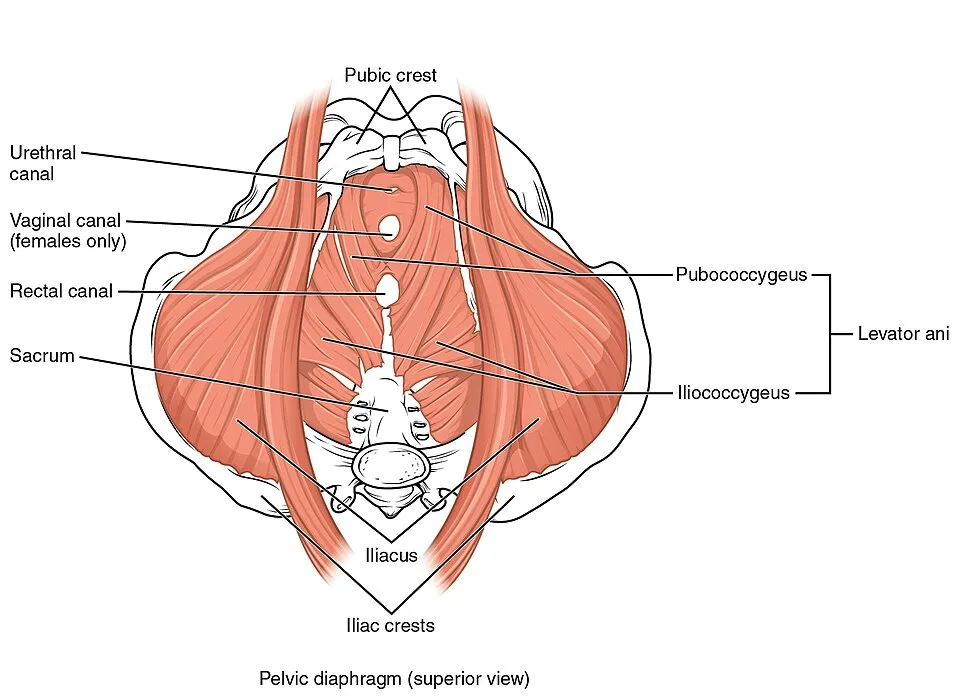
Mixed urinary incontinence is involuntary leakage associated both with urgency and with effort, coughing or sneezing; it combines stress incontinence (urethral sphincter or support failure) with urgency incontinence (usually detrusor overactivity). It is common in middle-aged and older women and after prostate surgery in men. Management starts with the most bothersome component: pelvic floor muscle training for at least 3 months, bladder training, weight loss and caffeine reduction, then drugs (antimuscarinics with attention to anticholinergic burden, or a beta-3 agonist) for urgency and a mid-urethral sling or other surgery for stress leakage, ideally after urodynamics. Overflow incontinence is leakage from an overfull bladder that does not empty, caused by outlet obstruction or an underactive detrusor; it is really chronic retention. A bladder scan separates it from urgency incontinence, which matters because antimuscarinics worsen overflow. Treatment targets emptying: removing causative drugs, outlet surgery or intermittent catheterisation.
Patient case, mechanism, investigations, management, flashcards and exam-style questions.Open the lesson →
Key facts
- Mixed urinary incontinence (MUI) = leakage with urgency AND with effort, coughing or sneezing; about a third of incontinent women have both components
- Treat the predominant, most bothersome component first; a 3-day bladder diary and validated questionnaire help decide which
- First line for MUI: supervised pelvic floor muscle training (at least 3 months, 8 contractions three times daily) plus bladder training, weight loss and caffeine reduction
- Urodynamics are recommended before surgery when urgency is prominent or the type is unclear; detrusor overactivity can persist after a sling
- Overflow incontinence = leakage associated with incomplete emptying and chronic retention; always measure the post-void residual
- Antimuscarinics can tip a poorly emptying bladder into retention; avoid oxybutynin in frail older women and count total anticholinergic burden
- Mirabegron (teaching dose 50 mg once daily; check local formulary) avoids anticholinergic effects but needs blood pressure checks
- Overflow is treated by emptying the bladder: stop culprit drugs, relieve obstruction, or intermittent self-catheterisation
Differential diagnosis
| Condition | Clues | Key test |
|---|---|---|
| Pure stress urinary incontinence | Leakage only with cough, sneeze or exercise; no urgency | Cough stress test; bladder diary |
| Overactive bladder with urgency incontinence | Urgency, frequency, nocturia; small residual | Bladder diary; PVR |
| Overflow incontinence (chronic retention) | Dribbling, weak stream, large residual | Bladder scan PVR |
| Urinary tract infection | New frequency, urgency and leakage with dysuria | Urine dipstick and culture |
| Vesicovaginal or ureterovaginal fistula | Continuous leakage day and night after pelvic surgery | Speculum, dye test, CT urogram |
| Functional incontinence | Normal bladder but cannot reach the toilet (mobility, cognition) | Functional and cognitive assessment |
| Nocturnal polyuria | Night-time wetting with large night volumes | Frequency–volume chart |
Exam pearls
Guideline
NICE NG123 Urinary incontinence and pelvic organ prolapse in women (2019); AUA/SUFU idiopathic overactive bladder guideline (2024); AUA/SUFU female stress urinary incontinence guideline (2023 update); EAU Guidelines on non-neurogenic female LUTS (2026 edition)
References
- National Institute for Health and Care Excellence. Urinary incontinence and pelvic organ prolapse in women: management (NG123). NICE, London 2019.
- Cameron AP, Chung DE, Dielubanza EJ, et al.. The AUA/SUFU guideline on the diagnosis and treatment of idiopathic overactive bladder. J Urol 2024.
- Kobashi KC, Vasavada S, Bloschichak A, et al.. Updates to surgical treatment of female stress urinary incontinence (SUI): AUA/SUFU guideline (2023). J Urol 2023.
- Abrams P, Cardozo L, Fall M, et al.. The standardisation of terminology of lower urinary tract function: report from the Standardisation Sub-committee of the International Continence Society. Neurourol Urodyn 2002.
- Haylen BT, de Ridder D, Freeman RM, et al.. An International Urogynecological Association (IUGA)/International Continence Society (ICS) joint report on the terminology for female pelvic floor dysfunction. Neurourol Urodyn 2010.
- Sung VW, Borello-France D, Newman DK, et al.. Effect of behavioral and pelvic floor muscle therapy combined with surgery vs surgery alone on incontinence symptoms among women with mixed urinary incontinence: the ESTEEM randomized clinical trial. JAMA 2019.
Related topics
By Dr Khalid Seidi (B.Sc., M.D.) · MedEd World Clinical Knowledge library. Original teaching content checked against current guidelines (November 2026); confirm the latest local guidance before clinical use. Not a substitute for clinical judgement.