Clinical Knowledge › Urology › Bladder, prostate and continence disorders
Urinary fistulae
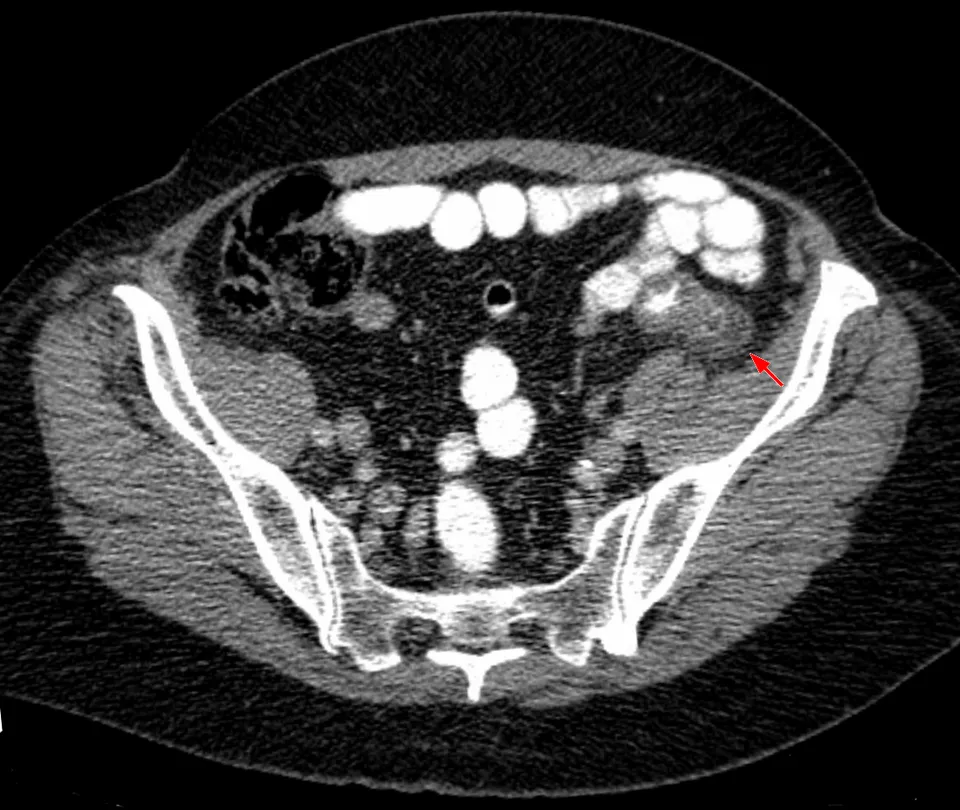
A urinary fistula is an abnormal epithelialised track between the urinary tract and another organ or the skin. Urogenital fistulae (vesicovaginal, ureterovaginal, urethrovaginal, vesicouterine) cause continuous painless leakage; in low-resource settings most follow prolonged obstructed labour, whereas in high-income countries most follow hysterectomy, caesarean section, pelvic cancer surgery or radiotherapy. Uroenteric fistulae, most often colovesical from sigmoid diverticulitis, then colorectal cancer, Crohn disease and radiotherapy, cause pneumaturia, faecaluria and recurrent polymicrobial urinary infection. Rectourethral fistulae follow prostate surgery or radiotherapy, and the rare ureteroarterial fistula presents with torrential haematuria. Diagnosis combines a dye or three-swab test, cystoscopy, CT urography for ureteric involvement and CT with contrast for bowel fistulae. Small fresh vesicovaginal fistulae may close with catheter drainage; most need a tension-free layered repair, often with tissue interposition; colovesical fistulae need resection of the diseased bowel.
Patient case, mechanism, investigations, management, flashcards and exam-style questions.Open the lesson →
Key facts
- Continuous painless leakage of urine per vagina day and night after pelvic surgery or obstructed labour = urogenital fistula until proven otherwise
- Post-hysterectomy vesicovaginal fistula typically presents 7–14 days after surgery; check for associated ureteric injury (CT urogram)
- Three-swab (tampon) test with methylene blue in the bladder: blue upper swab = vesicovaginal; wet but unstained swab = ureterovaginal
- Colovesical fistula: pneumaturia, faecaluria, recurrent polymicrobial UTI; commonest cause sigmoid diverticulitis, then colorectal cancer and Crohn disease
- CT with contrast: air in a non-instrumented bladder adjacent to thickened sigmoid is the key sign; colonoscopy to exclude cancer
- Small fresh non-radiation vesicovaginal fistulae may close with 2–6 weeks of continuous catheter drainage; most need surgery
- Principles of repair: excise devitalised tissue, tension-free watertight layered closure, non-overlapping suture lines, interpose healthy tissue (Martius, omentum, gracilis), drain the bladder
- Radiation fistulae heal poorly and need biopsy to exclude recurrent cancer; many require flap repair or urinary diversion
Differential diagnosis
| Condition | Clues | Key test |
|---|---|---|
| Stress urinary incontinence | Leakage only with cough or effort; dry at rest | Cough stress test; dye test negative |
| Overflow incontinence | Dribbling with palpable bladder | Post-void residual |
| Ectopic ureter | Lifelong continuous dribbling in a girl with normal voiding | Ultrasound/MR urography for duplex kidney |
| Vaginal discharge (vaginitis) | Discharge, not urine; itch or odour | Speculum, swabs; fluid creatinine |
| Urinoma or ureteric injury without fistula | Flank pain, ileus, fever after surgery | CT urogram with delayed phase |
| Gas-forming cystitis (emphysematous cystitis) | Diabetic, gas in bladder wall, no bowel disease | CT showing intramural gas |
| Urethral diverticulum | Post-void dribbling, dyspareunia, tender anterior vaginal mass | MRI pelvis |
Exam pearls
Guideline
WHO Obstetric fistula: guiding principles for clinical management and programme development (2006); ASCRS clinical practice guideline for left-sided colonic diverticulitis (2020); AUA Urotrauma guideline (2020 amendment) for iatrogenic ureteric and bladder injury
References
- Hillary CJ, Osman NI, Hilton P, Chapple CR. The aetiology, treatment, and outcome of urogenital fistulae managed in well- and low-resourced countries: a systematic review. Eur Urol 2016.
- Wall LL. Obstetric vesicovaginal fistula as an international public-health problem. Lancet 2006.
- Goh JT. A new classification for female genital tract fistula. Aust N Z J Obstet Gynaecol 2004.
- World Health Organization. Obstetric fistula: guiding principles for clinical management and programme development. WHO, Geneva 2006.
- Hall J, Hardiman K, Lee S, et al.. The American Society of Colon and Rectal Surgeons clinical practice guidelines for the treatment of left-sided colonic diverticulitis. Dis Colon Rectum 2020.
- Morey AF, Broghammer JA, Hollowell CMP, McKibben MJ, Souter L. Urotrauma Guideline 2020: AUA Guideline. J Urol 2021.
Related topics
By Dr Khalid Seidi (B.Sc., M.D.) · MedEd World Clinical Knowledge library. Original teaching content checked against current guidelines (November 2026); confirm the latest local guidance before clinical use. Not a substitute for clinical judgement.