Clinical Knowledge › Urology › Bladder, prostate and continence disorders
Neurogenic bladder
Neurogenic bladder, or neurogenic lower urinary tract dysfunction, is abnormal bladder storage or emptying caused by disease of the brain, spinal cord or peripheral nerves. The level of the lesion predicts the pattern: suprapontine lesions (stroke, Parkinson disease, dementia) cause detrusor overactivity with coordinated voiding; suprasacral spinal lesions (spinal cord injury, multiple sclerosis) cause detrusor overactivity with detrusor–sphincter dyssynergia and dangerous high pressures; sacral and peripheral lesions (cauda equina, spina bifida, diabetes, pelvic surgery) cause an underactive bladder and retention. The priorities are to protect the kidneys by keeping storage pressure low, achieve continence and prevent infection. Video-urodynamics define the pattern. Clean intermittent self-catheterisation is the cornerstone; antimuscarinics, beta-3 agonists and intradetrusor botulinum toxin treat overactivity, and augmentation or diversion is reserved for refractory cases. Spinal injury at or above T6 risks autonomic dysreflexia.
Patient case, mechanism, investigations, management, flashcards and exam-style questions.Open the lesson →
Key facts
- Pontine micturition centre coordinates detrusor contraction with sphincter relaxation; lesions below the pons but above the sacral cord cause detrusor–sphincter dyssynergia (DSD)
- Suprapontine lesion → detrusor overactivity, synergic sphincter, low residual; suprasacral spinal → overactivity + DSD, high pressure; sacral/infrasacral → underactive detrusor, retention
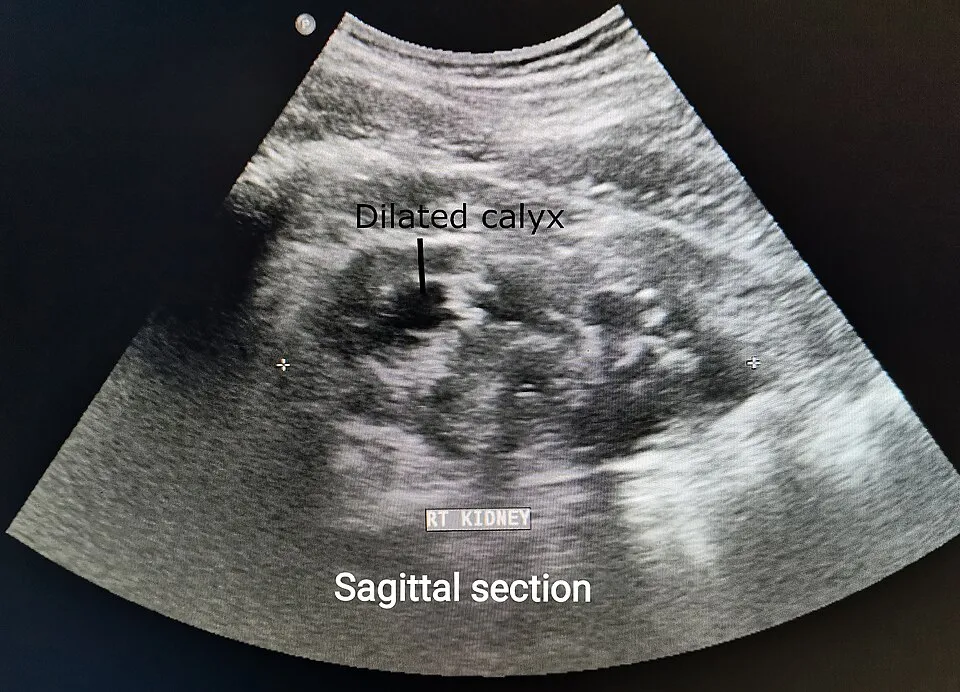
- Spinal cord injury and spina bifida carry the greatest risk; high-risk features are DSD with high pressure, poor compliance, sustained storage pressure above 40 cmH2O, hydronephrosis, vesicoureteric reflux or renal impairment
- Video-urodynamics are the key test; risk-stratify all patients and follow high-risk patients with lifelong upper-tract imaging and renal function
- Clean intermittent self-catheterisation 4–6 times daily is first line for incomplete emptying; prefer a suprapubic to an indwelling urethral catheter long term
- Neurogenic detrusor overactivity: antimuscarinic (trospium does not cross the blood–brain barrier) or mirabegron, then intradetrusor onabotulinumtoxinA (teaching dose 200 units; check local formulary)
- Autonomic dysreflexia (lesion at or above T6): sit up, remove trigger (usually a blocked catheter or full bladder), treat SBP ≥150 mmHg with nifedipine or GTN
- Do not screen for or treat asymptomatic bacteriuria in people who catheterise
Differential diagnosis
| Condition | Clues | Key test |
|---|---|---|
| Idiopathic overactive bladder | Urgency without neurological disease; normal emptying | Neurological examination; urodynamics |
| Benign prostatic obstruction | Older man, voiding LUTS, enlarged prostate, no neurological signs | DRE, flow rate, pressure–flow study |
| Cauda equina syndrome (acute) | New painless retention with back pain and saddle anaesthesia | Urgent MRI spine |
| Urinary tract infection | Acute change in continence, fever, cloudy urine | Urine culture when symptomatic |
| Fowler syndrome | Young woman, retention, normal neurology | Urethral sphincter EMG |
| Bladder stone or tumour | Haematuria, recurrent infection, sudden change in pattern | Cystoscopy, ultrasound |
| Drug-induced retention | Anticholinergics, opioids in a neurological patient | Medication review, PVR |
Exam pearls
Guideline
EAU Guidelines on neuro-urology (2026 edition; summary of 2024 update), AUA/SUFU Guideline on adult neurogenic lower urinary tract dysfunction (2021), and NICE CG148 Urinary incontinence in neurological disease (2012)
References
- European Association of Urology. EAU Guidelines on neuro-urology. EAU Guidelines Office, Arnhem 2026.
- Sartori AM, Kessler TM, Castro-Díaz DM, et al.. Summary of the 2024 update of the European Association of Urology guidelines on neurourology. Eur Urol 2024.
- Ginsberg DA, Boone TB, Cameron AP, et al.. The AUA/SUFU guideline on adult neurogenic lower urinary tract dysfunction: diagnosis and evaluation. J Urol 2021.
- Ginsberg DA, Boone TB, Cameron AP, et al.. The AUA/SUFU guideline on adult neurogenic lower urinary tract dysfunction: treatment and follow-up. J Urol 2021.
- National Institute for Health and Care Excellence. Urinary incontinence in neurological disease: assessment and management (CG148). NICE, London 2012.
- Panicker JN, Fowler CJ, Kessler TM. Lower urinary tract dysfunction in the neurological patient: clinical assessment and management. Lancet Neurol 2015.
Related topics
By Dr Khalid Seidi (B.Sc., M.D.) · MedEd World Clinical Knowledge library. Original teaching content checked against current guidelines (November 2026); confirm the latest local guidance before clinical use. Not a substitute for clinical judgement.