Clinical Knowledge › Dermatology › Pigmentation, hair and nail disorders
Paronychia
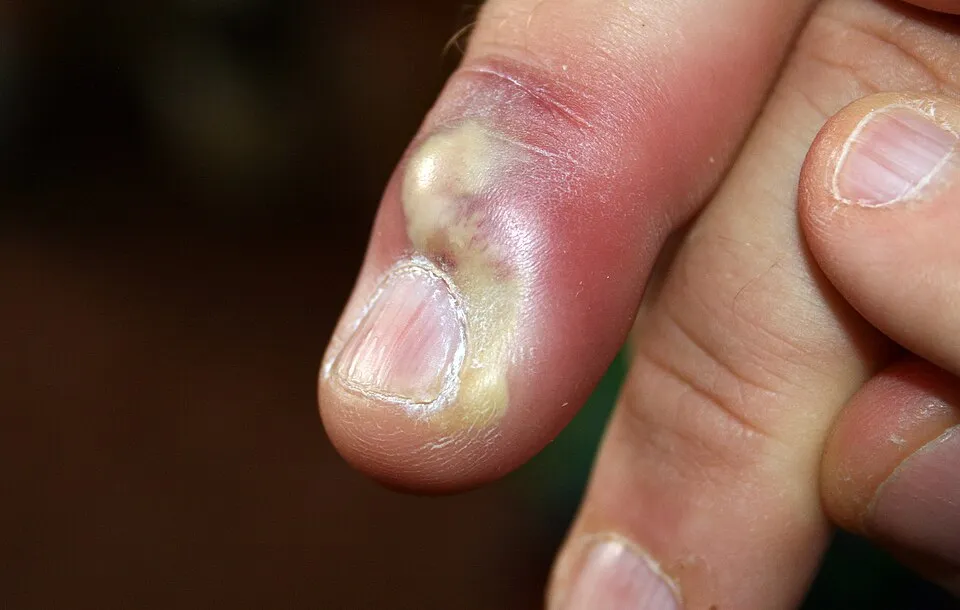
Paronychia is inflammation of the proximal or lateral nail folds. Acute paronychia develops over hours to days after a breach of the cuticle (hangnail, manicure, nail biting, finger sucking) and is usually a bacterial infection with Staphylococcus aureus or streptococci; a painful, red, swollen fold that becomes fluctuant needs drainage rather than antibiotics alone. Chronic paronychia lasts 6 weeks or more, affects several fingers in people doing wet work, and is essentially an irritant or allergic dermatitis of the nail fold: the cuticle is lost, the folds are bolstered and the nail shows transverse ridges. Candida is often cultured but is mainly a colonist, so treatment is glove protection, emollients and a potent topical corticosteroid or tacrolimus rather than oral antifungals. Key mimics are herpetic whitlow (never incise), felon, psoriasis and, in chronic single-digit disease, squamous cell carcinoma or amelanotic melanoma of the nail unit, which require biopsy. EGFR inhibitors and retinoids cause drug-induced paronychia with granulation tissue.
Patient case, mechanism, investigations, management, flashcards and exam-style questions.Open the lesson →
Key facts
- Acute paronychia: one digit, hours to days, S. aureus or streptococci after minor trauma
- Chronic paronychia: 6 weeks or more, several fingers, wet work, lost cuticle and bolstered folds
- Pus means drainage: lift the nail fold off the plate under digital block
- Antibiotic when spreading or immunosuppressed: flucloxacillin; co-amoxiclav if oral flora (finger sucking)
- Chronic paronychia is a dermatitis: topical steroids outperform oral antifungals
- Herpetic whitlow: grouped vesicles, pain out of proportion; antivirals, never incise
- Single-digit chronic paronychia not responding: biopsy to exclude squamous cell carcinoma
- EGFR inhibitors, taxanes and retinoids cause drug-induced paronychia with pyogenic granuloma-like tissue
Differential diagnosis
| Condition | Clues | Key test |
|---|---|---|
| Herpetic whitlow | Grouped vesicles, clear fluid, severe pain, recurrent at same site | HSV PCR from vesicle |
| Felon | Tense, exquisitely tender fingertip pulp, not the fold | Clinical; X-ray if deep |
| Ingrown toenail (onychocryptosis) | Lateral fold of great toe with granulation tissue and nail spike | Clinical |
| Nail psoriasis | Pits, onycholysis, oil spots, plaques elsewhere | Clinical; biopsy rarely |
| Onychomycosis | Thick, crumbly, discoloured plate with subungual debris; folds normal | Nail clippings for microscopy and culture |
| Squamous cell carcinoma of nail unit | Single digit, chronic, warty or eroded fold, unresponsive to treatment | Biopsy |
| Amelanotic or subungual melanoma | Chronic single-digit swelling, nail destruction, Hutchinson sign if pigmented | Biopsy |
| Flexor tenosynovitis | Fusiform swelling, flexed posture, pain on passive extension, tendon sheath tenderness | Clinical (Kanavel signs); urgent hand surgery |
Exam pearls
Guideline
NICE CKS Paronychia (current to 2026), IDSA skin and soft tissue infection guideline 2014 and ESMO 2021 guideline on dermatological toxicities of anticancer agents
References
- Leggit JC. Acute and chronic paronychia. Am Fam Physician 2017.
- Tosti A, Piraccini BM, Ghetti E, Colombo MD. Topical steroids versus systemic antifungals in the treatment of chronic paronychia: an open, randomized double-blind and double dummy study. J Am Acad Dermatol 2002.
- Stevens DL, Bisno AL, Chambers HF, et al.. Practice guidelines for the diagnosis and management of skin and soft tissue infections: 2014 update by the Infectious Diseases Society of America. Clin Infect Dis 2014.
- Lacouture ME, Sibaud V, Gerber PA, et al.. Prevention and management of dermatological toxicities related to anticancer agents: ESMO Clinical Practice Guidelines. Ann Oncol 2021.
- Ameen M, Lear JT, Madan V, Mohd Mustapa MF, Richardson M. British Association of Dermatologists' guidelines for the management of onychomycosis 2014. Br J Dermatol 2014.
- National Institute for Health and Care Excellence. Clinical Knowledge Summaries: Paronychia (acute and chronic). NICE CKS 2026.
Related topics
By Dr Khalid Seidi (B.Sc., M.D.) · MedEd World Clinical Knowledge library. Original teaching content checked against current guidelines (November 2026); confirm the latest local guidance before clinical use. Not a substitute for clinical judgement.