Clinical Knowledge › Dermatology › Pigmentation, hair and nail disorders
Telogen effluvium
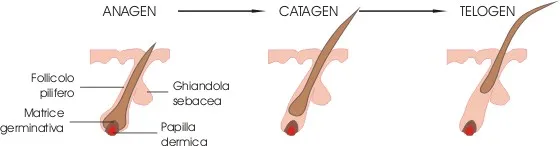
Telogen effluvium is the commonest cause of diffuse, non-scarring hair shedding. A physiological or emotional stress pushes many anagen follicles prematurely into telogen, and because telogen hairs are released after about 3 months, shedding typically starts 2-3 months after the trigger. Common triggers include high fever (including COVID-19), childbirth, surgery, crash dieting, iron deficiency, thyroid disease, severe stress and drugs such as retinoids, anticoagulants and lithium. Patients notice handfuls of hair while washing and diffuse thinning, but the scalp is normal and there are no bald patches; the pull test yields club hairs with non-pigmented bulbs. Trichoscopy lacks the miniaturisation of androgenetic alopecia and the yellow dots of alopecia areata. Investigations focus on full blood count, ferritin and thyroid function, with biopsy reserved for chronic or uncertain cases. Treatment is reassurance, removal of the trigger and correction of deficiencies; acute TE recovers within 6-12 months, while chronic TE may benefit from minoxidil.
Patient case, mechanism, investigations, management, flashcards and exam-style questions.Open the lesson →
Key facts
- Premature shift of anagen follicles into telogen causes diffuse non-scarring shedding
- Shedding begins about 2-3 months after the trigger (telogen lasts about 3 months)
- Triggers: fever, childbirth, surgery, crash diet, iron deficiency, thyroid disease, stress, drugs
- Positive pull test with club hairs (non-pigmented bulb); scalp is normal
- Trichoscopy: no hair diameter variability (unlike AGA), no yellow dots (unlike AA)
- Check FBC, ferritin and TSH; targeted tests for other causes
- Acute TE (under 6 months) resolves in 6-12 months after the trigger is removed
- Chronic TE (over 6 months) in middle-aged women fluctuates; minoxidil may help
Differential diagnosis
| Condition | Clues | Key test |
|---|---|---|
| Androgenetic alopecia | Gradual patterned thinning, widening part, miniaturised hairs | Trichoscopy: diameter variability over 20% |
| Diffuse alopecia areata | Rapid diffuse loss, nail pitting, autoimmune history | Trichoscopy: yellow and black dots, exclamation mark hairs |
| Anagen effluvium | Chemotherapy within 1-3 weeks, extensive loss | Pull test: dystrophic tapered anagen hairs |
| Hypothyroidism | Diffuse dry coarse hair, fatigue, weight gain, lateral brow thinning | TSH and free T4 |
| Secondary syphilis | Moth-eaten patchy alopecia, rash, mucosal lesions | Syphilis serology |
| Loose anagen syndrome | Fair-haired young child, hair easily pulled painlessly | Pull test: anagen hairs without sheaths |
Exam pearls
Guideline
No NICE or BAD guideline specific to telogen effluvium: expert reviews (2013-2023) and Rook's Textbook of Dermatology 10th edition (2024)
References
- Asghar F, Shamim N, Farooque U, Sheikh H, Aqeel R. Telogen effluvium: a review of the literature. Cureus 2020.
- Rebora A. Telogen effluvium: a comprehensive review. Clin Cosmet Investig Dermatol 2019.
- Jimeno Ortega I, Stefanato CM. Telogen effluvium: a 360 degree review. Ital J Dermatol Venerol 2023.
- Grover C, Khurana A. Telogen effluvium. Indian J Dermatol Venereol Leprol 2013.
- Griffiths CEM, Barker J, Bleiker TO, Hussain W, Simpson RC, eds.. Rook's Textbook of Dermatology. 2024.
- Papadakis MA, Rabow MW, McQuaid KR, eds.. CURRENT Medical Diagnosis & Treatment 2026. 2026.
Related topics
By Dr Khalid Seidi (B.Sc., M.D.) · MedEd World Clinical Knowledge library. Original teaching content checked against current guidelines (November 2026); confirm the latest local guidance before clinical use. Not a substitute for clinical judgement.