Clinical Knowledge › Internal medicine › Haematology and oncology › Myeloid neoplasms
Polycythaemia vera
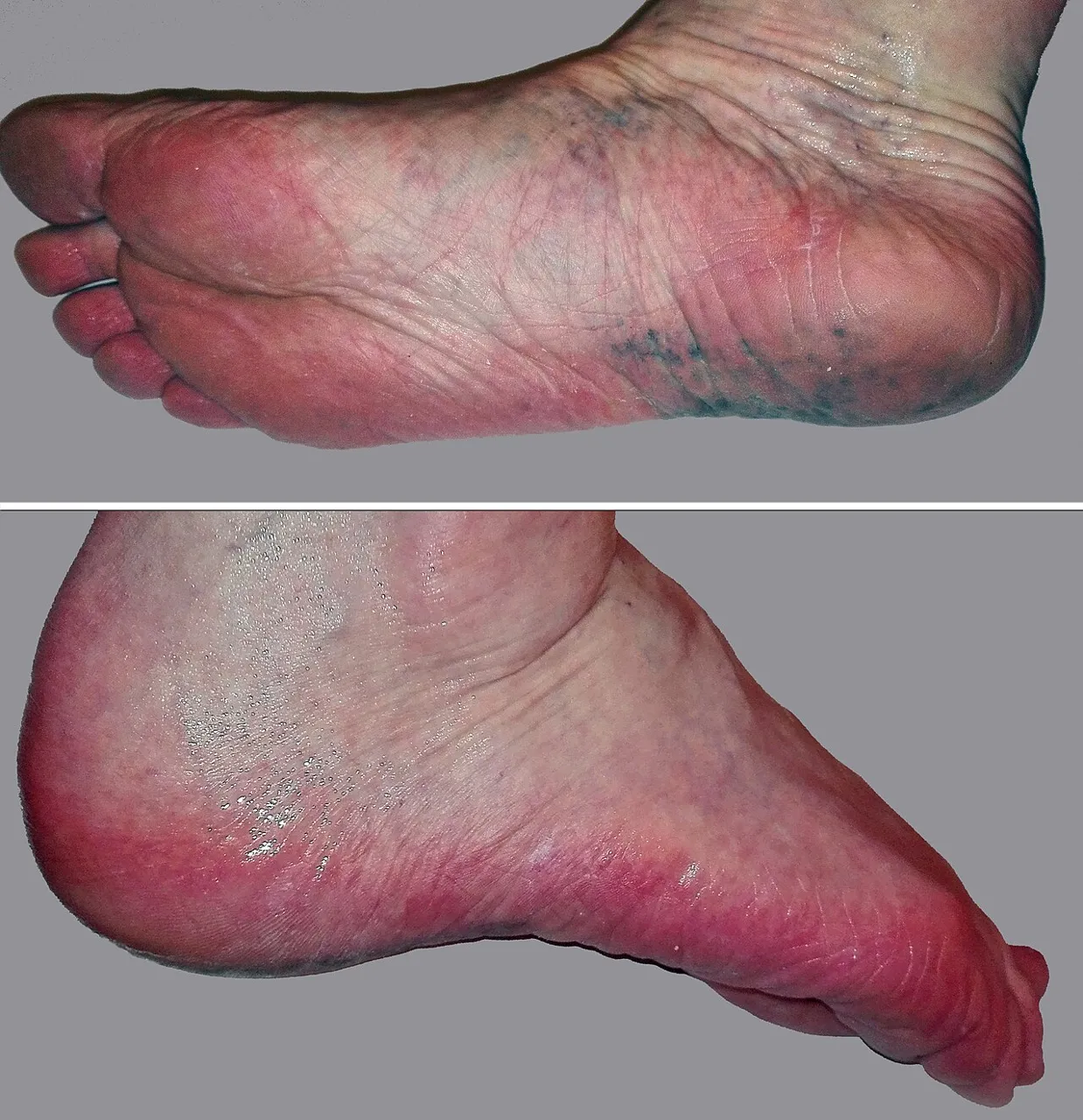
Polycythaemia vera (PV) is a chronic Philadelphia-negative myeloproliferative neoplasm in which a JAK2-mutated stem cell (V617F in about 97%, exon 12 in most of the rest) produces red cells independently of erythropoietin, often with raised neutrophils and platelets. It presents in middle age with plethora, headache, visual disturbance, aquagenic itch, erythromelalgia, splenomegaly or arterial and venous thrombosis, including Budd–Chiari syndrome. Diagnosis uses WHO 2022 criteria: raised haemoglobin or haematocrit, JAK2 mutation and marrow panmyelosis, with a low serum erythropoietin; secondary causes such as hypoxia, smoking, testosterone and EPO-secreting tumours must be excluded. Every patient receives venesection to keep the haematocrit below 45% and low-dose aspirin, plus control of cardiovascular risk factors. High-risk patients (age 60 or over or previous thrombosis) also need cytoreduction with hydroxycarbamide or interferon, with ruxolitinib or the hepcidin mimetic rusfertide as further options. Long-term risks are thrombosis, myelofibrosis and acute leukaemia.
Patient case, mechanism, investigations, management, flashcards and exam-style questions.Open the lesson →
Key facts
- JAK2 V617F is present in about 95–97% of PV; JAK2 exon 12 mutations account for most of the rest
- WHO 2022 major criteria: Hb above 165 g/L (men) or 160 g/L (women), or haematocrit above 49%/48%; marrow panmyelosis; JAK2 mutation. Minor: subnormal serum EPO
- Classic symptoms: aquagenic pruritus, plethora, headache, erythromelalgia, splenomegaly
- Thrombosis is the main cause of morbidity and death; unusual sites (hepatic, portal, mesenteric veins) should prompt JAK2 testing
- All patients: venesection to haematocrit below 45% (CYTO-PV trial) and aspirin 75–100 mg daily unless contraindicated
- High risk = age 60 or over or previous thrombosis: add cytoreduction (hydroxycarbamide or interferon-alpha, e.g. ropeginterferon)
- Ruxolitinib is second-line for hydroxycarbamide resistance or intolerance; rusfertide (hepcidin mimetic) was approved in the USA in 2026 to reduce venesection needs
- Long term: about 10–15% develop post-PV myelofibrosis and a few per cent AML over 15–20 years
Differential diagnosis
| Condition | Clues | Key test |
|---|---|---|
| Hypoxic secondary erythrocytosis (COPD, OSA, cyanotic heart disease, altitude) | Low oxygen saturation, normal WBC and platelets, no spleen | Oximetry or ABG, sleep study; EPO normal or high; JAK2 negative |
| Smoker's polycythaemia | Heavy smoker, raised carboxyhaemoglobin | Carboxyhaemoglobin level; resolves after stopping |
| EPO-secreting tumour (renal cell carcinoma, hepatocellular carcinoma, cerebellar haemangioblastoma, fibroids) | Isolated erythrocytosis with high EPO | Renal and liver imaging |
| Drug-induced erythrocytosis (testosterone, SGLT2 inhibitors, EPO misuse) | Relevant medication or athlete | Drug history; EPO level |
| Relative (apparent) polycythaemia | Dehydration, diuretics, obesity, alcohol; normal red cell mass | Repeat after rehydration; red cell mass if needed |
| Essential thrombocythaemia | Isolated thrombocytosis, normal haemoglobin | Hb normal; JAK2, CALR or MPL; marrow megakaryocytes |
| Post-transplant erythrocytosis | Kidney transplant recipient | History; responds to ACE inhibitor or ARB |
Exam pearls
Guideline
ELN 2021 recommendations for Philadelphia-negative myeloproliferative neoplasms, BSH 2019 polycythaemia vera guideline, WHO 5th edition (2022) criteria and NCCN MPN updates to 2026
References
- Marchetti M, Vannucchi AM, Griesshammer M, et al.. Appropriate management of polycythaemia vera with cytoreductive drug therapy: European LeukemiaNet 2021 recommendations. Lancet Haematol 2022.
- McMullin MF, Harrison CN, Ali S, et al.. A guideline for the diagnosis and management of polycythaemia vera. A British Society for Haematology Guideline. Br J Haematol 2019.
- Khoury JD, Solary E, Abla O, et al.. The 5th edition of the World Health Organization Classification of Haematolymphoid Tumours: myeloid and histiocytic/dendritic neoplasms. Leukemia 2022.
- Marchioli R, Finazzi G, Specchia G, et al.. Cardiovascular events and intensity of treatment in polycythemia vera. N Engl J Med 2013.
- Kremyanskaya M, Kuykendall AT, Pemmaraju N, et al.. Rusfertide, a hepcidin mimetic, for control of erythrocytosis in polycythemia vera. N Engl J Med 2024.
- Gisslinger H, Klade C, Georgiev P, et al.. Ropeginterferon alfa-2b versus standard therapy for polycythaemia vera (PROUD-PV and CONTINUATION-PV): a randomised, non-inferiority, phase 3 trial and its extension study. Lancet Haematol 2020.
Related topics
By Dr Khalid Seidi (B.Sc., M.D.) · MedEd World Clinical Knowledge library. Original teaching content checked against current guidelines (November 2026); confirm the latest local guidance before clinical use. Not a substitute for clinical judgement.