Clinical Knowledge › Internal medicine › Cardiology and angiology › Arrhythmias and conduction disorders
Sinus node dysfunction (sick sinus syndrome)
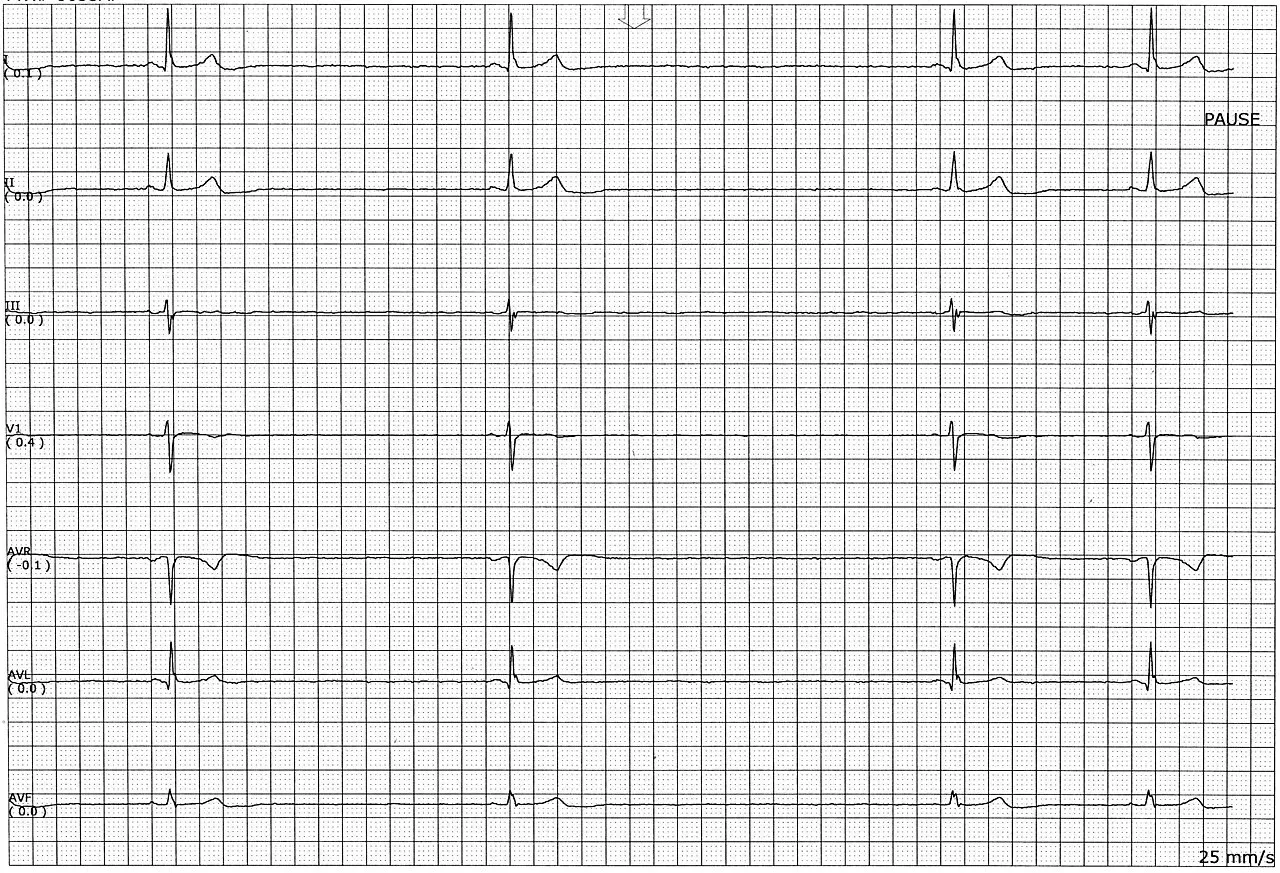
Sinus node dysfunction, or sick sinus syndrome, is failure of the sinoatrial node to generate or conduct impulses at a rate appropriate to the body's needs. It covers inappropriate sinus bradycardia, sinus pauses and arrest, sinoatrial exit block, chronotropic incompetence and the tachycardia–bradycardia syndrome, in which atrial fibrillation or flutter alternates with slow rhythms and pauses. Most cases are due to age-related fibrosis of the node, but ischaemia, infiltrative disease, cardiac surgery and inherited channel variants contribute, and drugs, hypothyroidism, hyperkalaemia and high vagal tone can cause or worsen it. Patients report fatigue, dizziness, exercise intolerance or syncope. Diagnosis rests on correlating symptoms with the rhythm using ECG, ambulatory monitoring or an implantable loop recorder, after reversible causes are excluded. A permanent pacemaker, usually dual-chamber, relieves symptoms but does not prolong life, and rate-control drugs or ablation can then be used for the tachyarrhythmia.
Patient case, mechanism, investigations, management, flashcards and exam-style questions.Open the lesson →
Key facts
- Sinus node dysfunction includes sinus bradycardia, sinus pauses or arrest, SA exit block, chronotropic incompetence and tachy–brady syndrome
- Commonest cause is idiopathic degenerative fibrosis in older people; it is one of the main indications for permanent pacing
- Always exclude reversible causes first: beta blockers, non-dihydropyridine calcium channel blockers, digoxin, ivabradine, amiodarone, hypothyroidism, hyperkalaemia, hypothermia
- Diagnosis needs symptom–rhythm correlation; asymptomatic bradycardia or pauses during sleep do not need treatment
- Chronotropic incompetence: failure to reach about 80% of age-predicted maximum heart rate on exercise
- Acute symptomatic bradycardia: atropine IV (repeated up to 3 mg), then adrenaline or isoprenaline infusion or transcutaneous pacing
- Pacing for symptomatic SND: dual-chamber (DDD) pacing with algorithms that minimise unnecessary ventricular pacing
- Tachy–brady syndrome: pace to allow rate-control drugs, and anticoagulate according to stroke risk for the AF
Differential diagnosis
| Condition | Clues | Key test |
|---|---|---|
| Physiological sinus bradycardia | Athlete or sleep, asymptomatic, normal chronotropic response | ECG, exercise test |
| Drug-induced bradycardia | Beta blocker, verapamil, diltiazem, digoxin, ivabradine, donepezil | Medication review; withdraw and reassess |
| Hypothyroidism | Weight gain, cold intolerance, dry skin, slow-relaxing reflexes | TSH and free T4 |
| Atrioventricular block | P waves not followed by QRS complexes | 12-lead ECG, ambulatory monitoring |
| Blocked atrial premature beats | Premature P wave in the T wave followed by a pause | Careful ECG review of the preceding T wave |
| Reflex (vasovagal or carotid sinus) syncope | Triggers, prodrome, pauses only during episodes | Carotid sinus massage, tilt test, loop recorder |
| Hyperkalaemia or hypothermia | Renal failure, peaked T waves; exposure, J waves | Potassium, core temperature |
Exam pearls
Guideline
2021 ESC guidelines on cardiac pacing and cardiac resynchronisation therapy, 2018 ACC/AHA/HRS bradycardia and conduction delay guideline, 2023 HRS/APHRS/LAHRS physiological pacing guideline and 2025 ESC/EHRA conduction system pacing consensus
References
- Glikson M, Nielsen JC, Kronborg MB, et al.. 2021 ESC Guidelines on cardiac pacing and cardiac resynchronization therapy. Eur Heart J 2021.
- Kusumoto FM, Schoenfeld MH, Barrett C, et al.. 2018 ACC/AHA/HRS Guideline on the Evaluation and Management of Patients With Bradycardia and Cardiac Conduction Delay. Circulation 2019.
- Chung MK, Patton KK, Lau CP, et al.. 2023 HRS/APHRS/LAHRS guideline on cardiac physiologic pacing for the avoidance and mitigation of heart failure. Heart Rhythm 2023.
- Brignole M, Moya A, de Lange FJ, et al.. 2018 ESC Guidelines for the diagnosis and management of syncope. Eur Heart J 2018.
- Nielsen JC, Thomsen PE, Højberg S, et al.. A comparison of single-lead atrial pacing with dual-chamber pacing in sick sinus syndrome. Eur Heart J 2011.
- Semelka M, Gera J, Usman S.. Sick sinus syndrome: a review. Am Fam Physician 2013.
Related topics
By Dr Khalid Seidi (B.Sc., M.D.) · MedEd World Clinical Knowledge library. Original teaching content checked against current guidelines (November 2026); confirm the latest local guidance before clinical use. Not a substitute for clinical judgement.