Clinical Knowledge › Dermatology › Relevant pharmacology
Topical calcineurin inhibitors
Topical calcineurin inhibitors (TCIs) - tacrolimus ointment 0.03% and 0.1% and pimecrolimus cream 1% - are non-steroidal anti-inflammatory agents used mainly for atopic eczema, especially on thin, steroid-sensitive skin such as the eyelids, face, neck, flexures and genitals. They bind the immunophilin FKBP12; the complex blocks calcineurin, so NFAT is not dephosphorylated and T cells and mast cells release less IL-2 and other cytokines. Because they do not affect collagen synthesis they cause no skin atrophy, striae or glaucoma, so they suit steroid-sparing and proactive maintenance use. The main adverse effect is transient burning or stinging during the first week; alcohol-induced facial flushing and an increased risk of local viral infection (herpes simplex, molluscum) also occur. A US boxed warning about lymphoma and skin cancer remains on the labels, but long-term paediatric cohorts and a 5-year randomised infant trial have not shown increased cancer risk. TCIs are also used off-label for facial vitiligo, seborrhoeic dermatitis, inverse psoriasis and perioral dermatitis.
Patient case, mechanism, investigations, management, flashcards and exam-style questions.Open the lesson →
Key facts
- Agents: tacrolimus ointment 0.03% (licensed from 2 years) and 0.1% (16 years and over); pimecrolimus cream 1% (licensed from 2 years for mild to moderate eczema)
- Mechanism: drug-FKBP12 complex inhibits calcineurin, preventing NFAT dephosphorylation and IL-2 transcription in T cells
- No effect on collagen: no atrophy, striae, telangiectasia or raised intraocular pressure - ideal for eyelids, face, flexures and genitals
- Commonest adverse effect: burning, stinging or warmth at the site, usually settling within 1 week of regular use
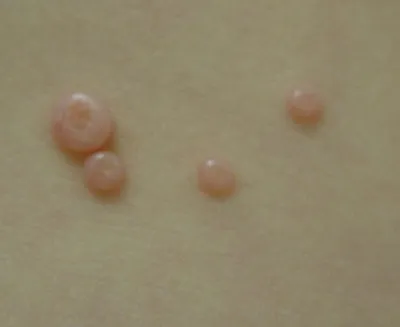
- Avoid on clinically infected skin; increased local herpes simplex, eczema herpeticum, molluscum and folliculitis risk
- Alcohol intolerance: facial flushing after drinking alcohol in some users of tacrolimus
- US boxed warning (2006) for malignancy persists, but cohort data (e.g. APPLES, SIR about 1.0) and a 5-year infant RCT show no increased cancer risk
- Proactive tacrolimus twice weekly to previously affected sites reduces eczema flares (licensed maintenance regimen)
Differential diagnosis
| Condition | Clues | Key test |
|---|---|---|
| Topical corticosteroids | First-line for eczema flares at most sites; fast and cheap | Risk of atrophy and perioral dermatitis on face with long use |
| Pimecrolimus 1% cream | Weaker TCI; mild to moderate eczema, face and neck in children | Licensed 2 years and over; off-label from 3 months in some countries |
| Tacrolimus 0.1% ointment | Stronger TCI; moderate to severe eczema in adults | Licensed 16 years and over; 0.03% for children 2-15 years |
| Topical PDE4 inhibitors (crisaborole, roflumilast cream) | Mild to moderate eczema; non-steroidal; availability varies by country | Application-site pain; no atrophy |
| Topical JAK inhibitors (ruxolitinib cream; delgocitinib cream for chronic hand eczema) | Non-steroidal; vitiligo and eczema (ruxolitinib), hand eczema (delgocitinib) | Limit area; ruxolitinib carries a class boxed warning in the US |
| Tapinarof cream (aryl hydrocarbon receptor agonist) | Plaque psoriasis and atopic dermatitis (US) | Folliculitis is the commonest adverse effect |
| Emollients alone | Very mild dry skin without active inflammation | Insufficient for active red, itchy eczema |
Exam pearls
Guideline
AAD guidelines for atopic dermatitis in adults: topical therapies (2023); EuroGuiDerm atopic eczema guideline part II (2022); NICE TA82 Tacrolimus and pimecrolimus for atopic eczema (2004) and CG57 (updated 2023)
References
- Sidbury R, Alikhan A, Bercovitch L, et al.. Guidelines of care for the management of atopic dermatitis in adults with topical therapies. J Am Acad Dermatol 2023.
- Wollenberg A, Kinberger M, Arents B, et al.. European guideline (EuroGuiDerm) on atopic eczema - part II: non-systemic treatments and treatment recommendations for special AE patient populations. J Eur Acad Dermatol Venereol 2022.
- National Institute for Health and Care Excellence. Tacrolimus and pimecrolimus for atopic eczema (TA82). NICE, London 2004.
- National Institute for Health and Care Excellence. Atopic eczema in under 12s: diagnosis and management (CG57, updated 2023). NICE, London 2023.
- Sigurgeirsson B, Boznanski A, Todd G, et al.. Safety and efficacy of pimecrolimus in atopic dermatitis: a 5-year randomized trial. Pediatrics 2015.
- Paller AS, Folster-Holst R, Chen SC, et al.. No evidence of increased cancer incidence in children using topical tacrolimus for atopic dermatitis. J Am Acad Dermatol 2020.
Related topics
By Dr Khalid Seidi (B.Sc., M.D.) · MedEd World Clinical Knowledge library. Original teaching content checked against current guidelines (November 2026); confirm the latest local guidance before clinical use. Not a substitute for clinical judgement.