Clinical Knowledge › Internal medicine › Pulmonology › Obstructive lung diseases
Allergic bronchopulmonary aspergillosis
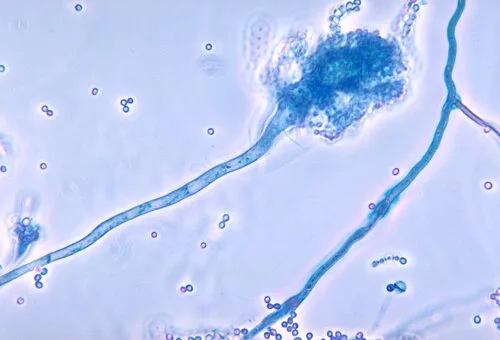
Allergic bronchopulmonary aspergillosis (ABPA) is a hypersensitivity lung disease in which Aspergillus fumigatus colonises the airways of people with asthma or cystic fibrosis and drives an exaggerated type 2 immune response. Fungal hyphae persist in thick mucus, releasing antigens that trigger IgE- and IgG-mediated inflammation, eosinophilia and mucus plugging; untreated, repeated flares cause central bronchiectasis and eventually fibrosis. Patients present with poorly controlled asthma, brownish mucus plugs, fleeting infiltrates on chest X-ray and very high total IgE. The revised 2024 ISHAM-AWG criteria require a predisposing condition or compatible picture, proof of fungal sensitisation (A. fumigatus-specific IgE at least 0.35 kUA/L), total IgE of 500 IU/mL or more, and two of: Aspergillus-specific IgG, blood eosinophils of 500/µL or more, or suggestive imaging such as central bronchiectasis or high-attenuation mucus. Acute ABPA is treated with oral prednisolone or itraconazole alone; combinations are kept for recurrent exacerbations, and biologics are options for steroid-dependent disease. Follow total IgE, symptoms and imaging to detect relapse early.
Patient case, mechanism, investigations, management, flashcards and exam-style questions.Open the lesson →
Key facts
- ABPA is a type 1 (IgE) and type 3 (IgG immune complex) hypersensitivity to Aspergillus fumigatus in the airways of people with asthma or cystic fibrosis
- Screen adults with newly diagnosed asthma in tertiary care (and children with difficult asthma) with A. fumigatus-specific IgE
- ISHAM-AWG 2024: fungal sensitisation plus total IgE ≥ 500 IU/mL plus two of Aspergillus IgG, eosinophils ≥ 500/µL or suggestive imaging
- Central (proximal) bronchiectasis and high-attenuation mucus on CT are the hallmark imaging findings; HAM is almost pathognomonic
- Finger-in-glove opacities and fleeting infiltrates on chest X-ray reflect mucus-filled bronchi
- Acute ABPA: oral prednisolone (about 0.5 mg/kg/day, tapered over 3–4 months) or itraconazole monotherapy; combine only for recurrent exacerbations
- Monitor total IgE: a fall of 20% or more with clinical and radiological improvement indicates response; a 50% rise from baseline suggests exacerbation
- Untreated disease progresses to bronchiectasis, chronic pulmonary aspergillosis, fibrosis and respiratory failure
Differential diagnosis
| Condition | Clues | Key test |
|---|---|---|
| Severe asthma with fungal sensitisation (SAFS) | Severe asthma with fungal IgE but total IgE below 500 and no bronchiectasis | Total IgE, CT chest |
| Eosinophilic granulomatosis with polyangiitis | Asthma, eosinophilia plus neuropathy, sinusitis, skin or renal vasculitis; ANCA in some | ANCA, urinalysis, nerve conduction, biopsy |
| Chronic eosinophilic pneumonia | Peripheral 'photographic negative' infiltrates, very high BAL eosinophils, no central bronchiectasis | CT and BAL eosinophil count |
| Bronchiectasis of other cause | Lower-lobe or diffuse bronchiectasis, normal IgE | HRCT pattern, aetiology screen |
| Pulmonary tuberculosis | Upper-lobe infiltrates, constitutional symptoms; often misdiagnosed in South Asia | Sputum NAAT and culture |
| Chronic pulmonary aspergillosis | Cavities with pleural thickening or aspergilloma, high Aspergillus IgG, modest IgE | CT and Aspergillus IgG |
| Allergic bronchopulmonary mycosis (non-Aspergillus) | ABPA-like illness with negative Aspergillus serology | Repeated sputum culture of other fungi; fungus-specific IgE |
Exam pearls
Guideline
Revised ISHAM-ABPA working group clinical practice guidelines (2024), with IDSA aspergillosis guideline (2016) and ERS bronchiectasis guideline (2025)
References
- Agarwal R, Sehgal IS, Muthu V, et al.. Revised ISHAM-ABPA working group clinical practice guidelines for diagnosing, classifying and treating allergic bronchopulmonary aspergillosis/mycoses. Eur Respir J 2024.
- Agarwal R, Chakrabarti A, Shah A, et al.. Allergic bronchopulmonary aspergillosis: review of literature and proposal of new diagnostic and classification criteria. Clin Exp Allergy 2013.
- Patterson TF, Thompson GR 3rd, Denning DW, et al.. Practice Guidelines for the Diagnosis and Management of Aspergillosis: 2016 Update by the Infectious Diseases Society of America. Clin Infect Dis 2016.
- Chalmers JD, Haworth CS, Flume P, et al.. European Respiratory Society clinical practice guideline for the management of adult bronchiectasis. Eur Respir J 2025.
- Agarwal R, Aggarwal AN, Dhooria S, et al.. A randomised trial of glucocorticoids in acute-stage allergic bronchopulmonary aspergillosis complicating asthma. Eur Respir J 2016.
- Agarwal R, Dhooria S, Singh Sehgal I, et al.. A Randomized Trial of Itraconazole vs Prednisolone in Acute-Stage Allergic Bronchopulmonary Aspergillosis Complicating Asthma. Chest 2018.
Related topics
By Dr Khalid Seidi (B.Sc., M.D.) · MedEd World Clinical Knowledge library. Original teaching content checked against current guidelines (November 2026); confirm the latest local guidance before clinical use. Not a substitute for clinical judgement.