Clinical Knowledge › Neurology › Spinal cord disorders
Anterior spinal artery syndrome
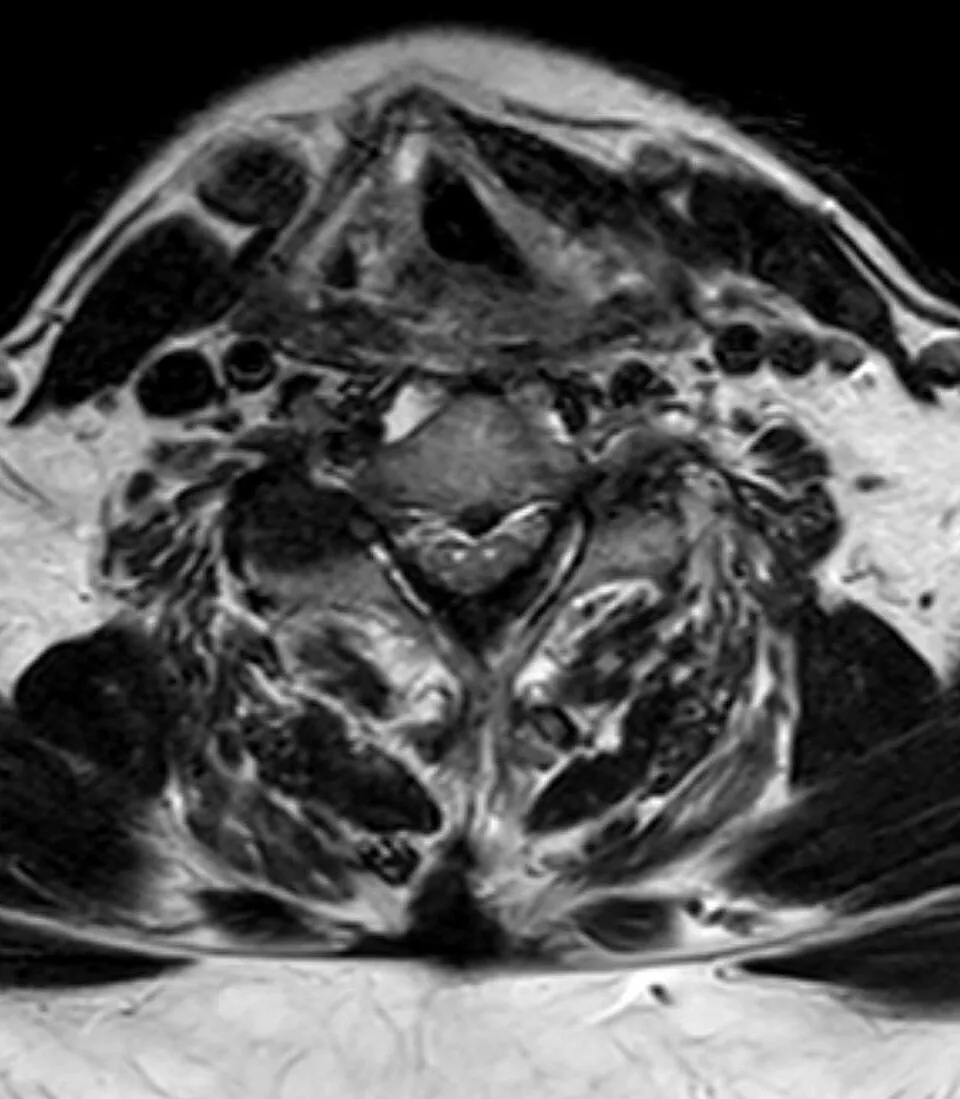
Anterior spinal artery syndrome is infarction of the anterior two-thirds of the spinal cord caused by occlusion or hypoperfusion of the anterior spinal artery or its feeding radicular arteries, most importantly the great anterior radiculomedullary artery (artery of Adamkiewicz). It typically follows thoracoabdominal aortic repair, aortic dissection or profound hypotension; embolism, vasculitis and sickle cell disease are rarer causes. Onset is sudden, often with severe back or girdle pain, followed within minutes to hours by bilateral flaccid paralysis below the level (later spastic), bilateral loss of pain and temperature sensation, and urinary retention, with preservation of vibration and joint position sense because the dorsal columns are supplied by the posterior spinal arteries. MRI with diffusion-weighted imaging confirms infarction ('owl's eyes') and excludes compression. There is no proven acute therapy; management includes blood pressure support, antiplatelet therapy for atherothrombotic causes, treatment of the cause and rehabilitation. CSF drainage and perfusion support protect the cord during aortic repair. Prognosis for walking is poor compared with other incomplete cord syndromes.
Patient case, mechanism, investigations, management, flashcards and exam-style questions.Open the lesson →
Key facts
- Anterior spinal artery supplies the anterior two-thirds of the cord: corticospinal tracts, spinothalamic tracts and anterior horns
- Posterior spinal arteries supply the dorsal columns, so vibration and proprioception are spared
- Sudden bilateral paralysis, bilateral pain and temperature loss and sphincter dysfunction, often with severe back pain at onset
- Classic setting: thoracoabdominal aortic aneurysm repair, aortic dissection or hypotension (cardiac arrest, shock)
- Artery of Adamkiewicz usually arises on the left between T9 and T12; the mid-thoracic cord (T4–T8) is a watershed
- MRI with DWI: pencil-like T2 hyperintensity, 'owl's eyes' on axial images, sometimes vertebral body infarction
- Lumbar CSF drainage (CSF pressure about 10 mmHg or less) and MAP augmentation protect the cord during high-risk aortic repair
- Worst functional prognosis of the incomplete spinal cord syndromes; early mortality is substantial
Differential diagnosis
| Condition | Clues | Key test |
|---|---|---|
| Acute spinal cord compression (disc, haematoma, abscess, metastasis) | Progressive over hours to days, local spinal tenderness, fever or cancer history | Urgent MRI whole spine |
| Transverse myelitis | Evolves over hours to days, all modalities often affected, CSF pleocytosis | MRI with gadolinium; CSF; AQP4 and MOG antibodies |
| Aortic dissection with paraplegia | Tearing chest or back pain, pulse or BP differential | CT aortogram |
| Guillain–Barré syndrome | Ascending weakness with areflexia, no sensory level, sphincters usually spared | Nerve conduction studies; CSF protein |
| Spinal dural arteriovenous fistula | Older man, stepwise progressive myelopathy worse with exercise | MRI flow voids; spinal angiography |
| Functional neurological disorder | Inconsistent signs, normal reflexes and tone | Positive signs (Hoover), normal MRI |
Exam pearls
Guideline
ACC/AHA 2022 Guideline for the diagnosis and management of aortic disease and ESC 2024 Guidelines for peripheral arterial and aortic diseases (spinal cord protection), with AHA/ASA 2021 secondary stroke prevention principles
References
- Isselbacher EM, Preventza O, Hamilton Black J 3rd, et al.. 2022 ACC/AHA guideline for the diagnosis and management of aortic disease. Circulation 2022.
- Mazzolai L, Teixido-Tura G, Lanzi S, et al.. 2024 ESC Guidelines for the management of peripheral arterial and aortic diseases. Eur Heart J 2024.
- Kleindorfer DO, Towfighi A, Chaturvedi S, et al.. 2021 Guideline for the prevention of stroke in patients with stroke and transient ischemic attack. Stroke 2021.
- Ropper AH, Samuels MA, Klein JP, Prasad S.. Adams and Victor's Principles of Neurology. 2023.
- Zalewski NL, Rabinstein AA, Krecke KN, et al.. Characteristics of spontaneous spinal cord infarction and proposed diagnostic criteria. JAMA Neurol 2019.
- Papadakis MA, Rabow MW, McQuaid KR, eds.. CURRENT Medical Diagnosis & Treatment 2026. 2026.
Related topics
By Dr Khalid Seidi (B.Sc., M.D.) · MedEd World Clinical Knowledge library. Original teaching content checked against current guidelines (November 2026); confirm the latest local guidance before clinical use. Not a substitute for clinical judgement.