Clinical Knowledge › Internal medicine › Infectious diseases › Fungal infections
Aspergillosis
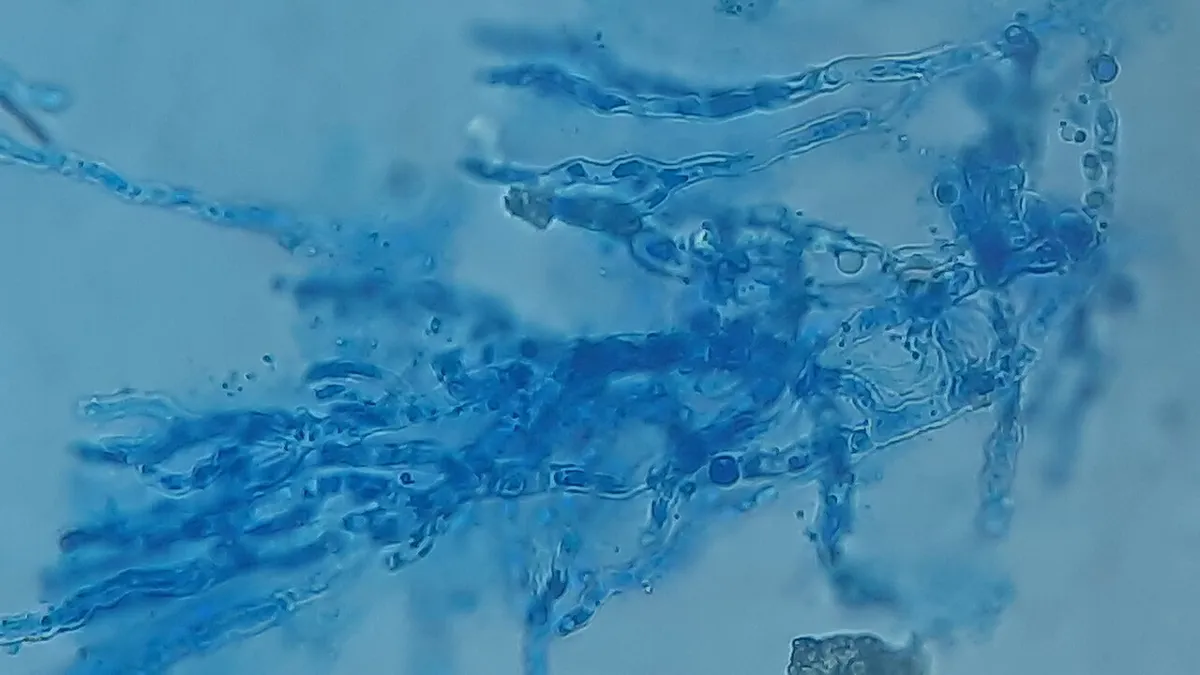
Aspergillosis is the group of diseases caused by Aspergillus moulds, mainly A. fumigatus, with A. flavus, A. niger and A. terreus also important. Everyone inhales the small conidia daily; disease depends on the host and the site. Hypersensitivity causes allergic bronchopulmonary aspergillosis, severe asthma with fungal sensitisation and allergic fungal rhinosinusitis. Colonisation of cavities causes aspergillomas, sinus fungal balls and otomycosis. Mild immune defects with structural lung disease allow chronic pulmonary aspergillosis, while profound immunosuppression (prolonged neutropenia, stem cell or organ transplantation, high-dose corticosteroids, severe influenza or COVID-19 in intensive care) allows angioinvasive disease of the lungs, sinuses, brain and other organs, with high mortality. Direct inoculation causes keratitis, wound and burn infections and endophthalmitis. Diagnosis combines host factors, CT findings, galactomannan, β-D-glucan and PCR tests, culture with susceptibility testing and histology showing acute-angle branching septate hyphae. Voriconazole, isavuconazole or posaconazole are first-line for invasive disease, with liposomal amphotericin B for azole resistance, which is rising. Prophylaxis and HEPA-filtered air protect the highest-risk patients.
Patient case, mechanism, investigations, management, flashcards and exam-style questions.Open the lesson →
Key facts
- A. fumigatus causes most disease; A. flavus is common in sinusitis and keratitis in hot climates; A. terreus is intrinsically resistant to amphotericin B
- The form of disease reflects host immunity: allergic, saprophytic (colonising), chronic or invasive
- Major invasive risk factors: neutrophils below 0.5 × 10⁹/L for over 10 days, allogeneic HSCT with GVHD, lung transplant, high-dose corticosteroids, severe influenza or COVID-19 in ICU
- Histology shows narrow septate hyphae branching at acute (about 45°) angles; Mucorales have broad, pauci-septate hyphae branching at right angles
- Galactomannan (serum and BAL), β-D-glucan and Aspergillus PCR support diagnosis; sensitivity falls in non-neutropenic patients and on mould-active prophylaxis
- First-line for invasive aspergillosis: voriconazole, isavuconazole or posaconazole; liposomal amphotericin B as alternative or for azole resistance
- Environmental azole resistance (cyp51A TR34/L98H, TR46/Y121F/T289A) threatens azole therapy; WHO lists A. fumigatus as a critical priority pathogen
- Posaconazole prophylaxis reduces invasive fungal infection in AML/MDS induction and in HSCT recipients with GVHD
Differential diagnosis
| Condition | Clues | Key test |
|---|---|---|
| Mucormycosis | Diabetic ketoacidosis, iron overload, sinus and palatal necrosis, reverse halo sign | Histology: broad ribbon-like hyphae; galactomannan negative |
| Fusariosis | Neutropenia with painful skin nodules and positive blood cultures | Culture; skin biopsy |
| Pneumocystis pneumonia | Diffuse ground-glass in HIV or steroid-treated patients | PCR on BAL; β-D-glucan very high |
| Bacterial pneumonia or lung abscess | Acute onset, purulent sputum, response to antibiotics | Cultures; no halo sign |
| Pulmonary tuberculosis | Cavity in endemic setting, sputum AFB | Xpert MTB/RIF and culture |
| Lung cancer or metastasis | Mass or nodule in a smoker, no immunosuppression | CT, PET and biopsy |
| Granulomatosis with polyangiitis | Nodules, cavities, sinus disease, nephritis | ANCA; biopsy |
Exam pearls
Guideline
IDSA aspergillosis guideline (2016), ESCMID–ECMM–ERS Aspergillus diseases guideline (2017), ESCMID/ERS chronic pulmonary aspergillosis guideline (2016), EORTC/MSGERC invasive fungal disease definitions (2020) and ECMM/ISHAM CAPA criteria (2020)
References
- Patterson TF, Thompson GR 3rd, Denning DW, et al.. Practice guidelines for the diagnosis and management of aspergillosis: 2016 update by the Infectious Diseases Society of America. Clin Infect Dis 2016.
- Ullmann AJ, Aguado JM, Arikan-Akdagli S, et al.. Diagnosis and management of Aspergillus diseases: executive summary of the 2017 ESCMID-ECMM-ERS guideline. Clin Microbiol Infect 2018.
- Denning DW, Cadranel J, Beigelman-Aubry C, et al.. Chronic pulmonary aspergillosis: rationale and clinical guidelines for diagnosis and management. Eur Respir J 2016.
- Donnelly JP, Chen SC, Kauffman CA, et al.. Revision and update of the consensus definitions of invasive fungal disease from the European Organization for Research and Treatment of Cancer and the Mycoses Study Group Education and Research Consortium. Clin Infect Dis 2020.
- Koehler P, Bassetti M, Chakrabarti A, et al.. Defining and managing COVID-19-associated pulmonary aspergillosis: the 2020 ECMM/ISHAM consensus criteria for research and clinical guidance. Lancet Infect Dis 2021.
- World Health Organization. WHO fungal priority pathogens list to guide research, development and public health action. WHO, Geneva 2022.
Related topics
By Dr Khalid Seidi (B.Sc., M.D.) · MedEd World Clinical Knowledge library. Original teaching content checked against current guidelines (November 2026); confirm the latest local guidance before clinical use. Not a substitute for clinical judgement.