Clinical Knowledge › Internal medicine › Infectious diseases › Fungal infections
Sporotrichosis
Sporotrichosis is a subacute or chronic infection by thermally dimorphic fungi of the Sporothrix schenckii complex. Classic sapronotic infection follows inoculation of soil or plant material (rose thorns, sphagnum moss, hay, splinters) in gardeners, farmers and foresters. Since the late 1990s, Sporothrix brasiliensis has caused a large zoonotic epidemic in Brazil, spread by scratches and bites of infected cats, and has spread to neighbouring countries. About 1–3 weeks after inoculation a papule or nodule appears and ulcerates; in the lymphocutaneous form, further nodules follow the draining lymphatics up the limb (sporotrichoid spread). Fixed cutaneous, disseminated cutaneous, osteoarticular, pulmonary, ocular and meningeal forms also occur, the latter mainly with alcohol use disorder, COPD or advanced HIV. Diagnosis is by culture of pus or biopsy; histology shows few cigar-shaped yeasts and asteroid bodies. Itraconazole is first-line for cutaneous disease, continued 2–4 weeks after healing; terbinafine or potassium iodide are alternatives, and amphotericin B treats severe disease.
Patient case, mechanism, investigations, management, flashcards and exam-style questions.Open the lesson →
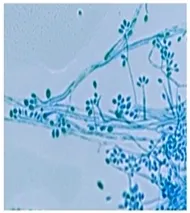
Key facts
- Sporothrix schenckii complex is thermally dimorphic: hyaline mould with flower-like conidia at 25 °C, small cigar-shaped yeasts at 37 °C and in tissue
- Sapronotic infection follows inoculation by rose thorns, sphagnum moss, hay or wood splinters ('rose gardener's disease')
- Sporothrix brasiliensis causes zoonotic sporotrichosis transmitted by cat scratches and bites; cats carry very high fungal loads
- Lymphocutaneous sporotrichosis (most common): ulcerating nodule at the inoculation site with a chain of nodules along the lymphatics
- Differential of nodular lymphangitis includes Mycobacterium marinum, Nocardia, cutaneous leishmaniasis and tularaemia
- Culture of pus or tissue is the gold standard; histology often shows few organisms, with asteroid bodies
- Itraconazole 200 mg daily for cutaneous disease until 2–4 weeks after lesions heal, usually 3–6 months (teaching dose; check local formulary)
- Pulmonary, osteoarticular, meningeal and disseminated disease need longer therapy; severe forms start with amphotericin B
Differential diagnosis
| Condition | Clues | Key test |
|---|---|---|
| Mycobacterium marinum infection | Fish tank or swimming pool exposure, nodular lymphangitis | Biopsy culture at 30 °C; acid-fast bacilli |
| Nocardiosis (lymphocutaneous) | Soil injury, faster course, purulent | Gram stain: branching Gram-positive filaments, modified acid-fast |
| Cutaneous leishmaniasis | Travel to endemic area, ulcer with raised border, sporotrichoid nodules (L. braziliensis) | Slit-skin smear, biopsy, PCR |
| Tularaemia (ulceroglandular) | Rabbit or tick exposure, fever, painful lymphadenopathy | Serology, PCR |
| Cat scratch disease | Cat scratch with regional lymphadenopathy but no nodule chain | Bartonella serology |
| Bacterial cellulitis or abscess | Acute, hot, rapidly spreading | Response to antibiotics; bacterial culture |
| Squamous cell carcinoma or pyoderma gangrenosum | Chronic ulcer | Biopsy with fungal stains and culture |
Exam pearls
Guideline
IDSA clinical practice guidelines for the management of sporotrichosis (2007), with the ECMM/ISHAM/ASM global guideline for the endemic mycoses (2021) and the Brazilian Society of Dermatology recommendations on human sporotrichosis (2022)
References
- Kauffman CA, Bustamante B, Chapman SW, Pappas PG. Clinical practice guidelines for the management of sporotrichosis: 2007 update by the Infectious Diseases Society of America. Clin Infect Dis 2007.
- Thompson GR 3rd, Le T, Chindamporn A, et al.. Global guideline for the diagnosis and management of the endemic mycoses: an initiative of the European Confederation of Medical Mycology in cooperation with the International Society for Human and Animal Mycology. Lancet Infect Dis 2021.
- Orofino-Costa R, Freitas DFS, Bernardes-Engemann AR, et al.. Human sporotrichosis: recommendations from the Brazilian Society of Dermatology for the clinical, diagnostic and therapeutic management. An Bras Dermatol 2022.
- Ramírez-Soto MC. Extracutaneous sporotrichosis. Clin Microbiol Rev 2025.
- Xavier MO, Poester VR, Trápaga MR, Stevens DA. Sporothrix brasiliensis: epidemiology, therapy, and recent developments. J Fungi (Basel) 2023.
- Bennett JE, Dolin R, Blaser MJ, eds.. Mandell, Douglas, and Bennett's Principles and Practice of Infectious Diseases. 2020.
Related topics
By Dr Khalid Seidi (B.Sc., M.D.) · MedEd World Clinical Knowledge library. Original teaching content checked against current guidelines (November 2026); confirm the latest local guidance before clinical use. Not a substitute for clinical judgement.