Clinical Knowledge › Internal medicine › Haematology and oncology › Haemolytic anaemias
Autoimmune haemolytic anaemia (warm and cold)
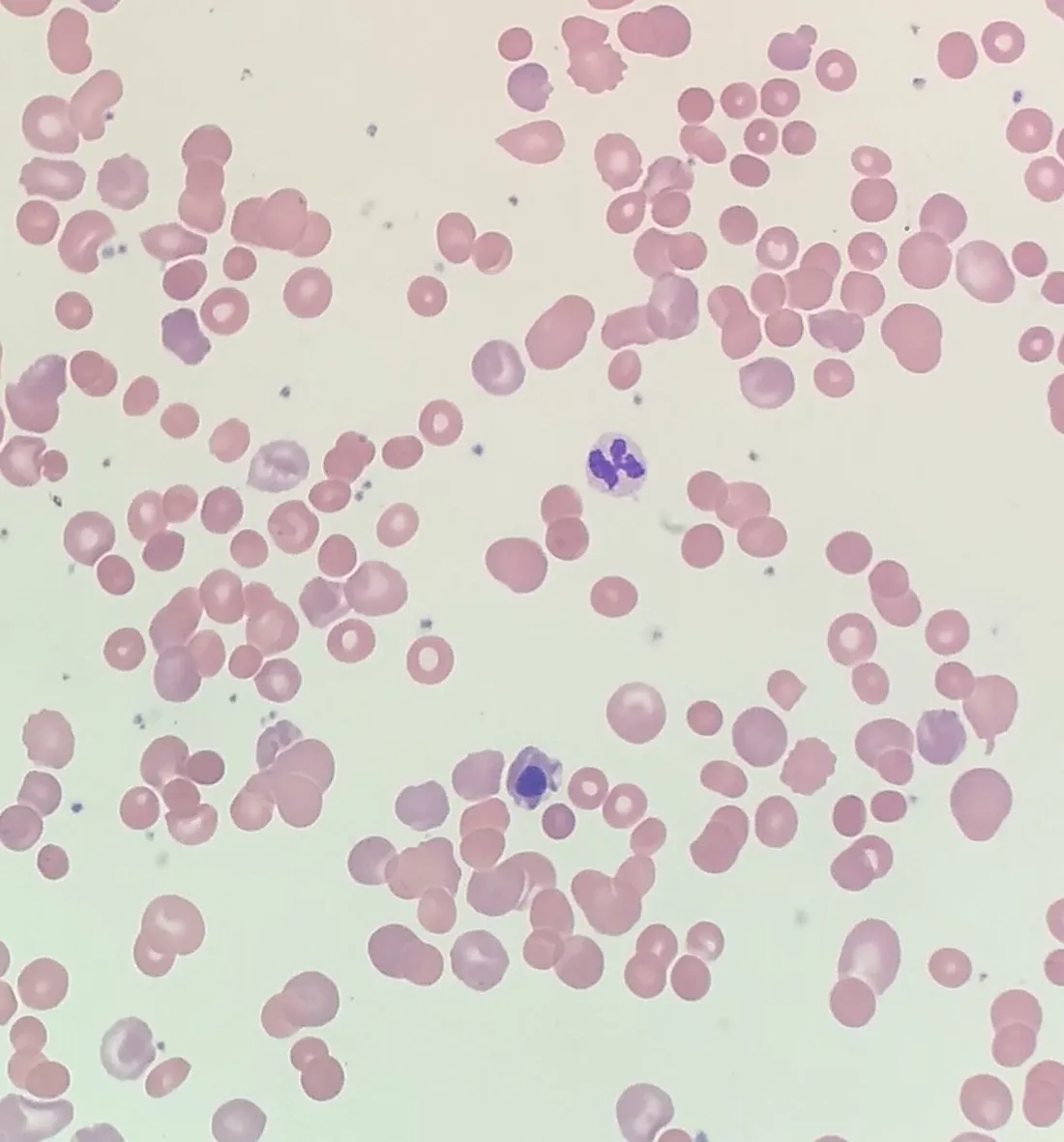
Autoimmune haemolytic anaemia (AIHA) is the destruction of red cells by autoantibodies, shown by a positive direct antiglobulin test (DAT). Warm AIHA, the commonest form, is caused by IgG antibodies that bind best at 37 °C; coated cells are removed by splenic macrophages, producing spherocytes. Cold agglutinin disease is caused by IgM antibodies, usually anti-I, that bind in cooler peripheral tissues and fix complement, giving C3d on the DAT, red cell agglutination, acrocyanosis and haemolysis made worse by cold; it is usually driven by a small clonal B-cell disorder. Mixed AIHA, paroxysmal cold haemoglobinuria and drug-induced forms are rarer. AIHA may be primary or secondary to lymphoproliferative disease (especially CLL), autoimmune disease, infection (Mycoplasma, EBV), immunodeficiency, checkpoint inhibitors or transplantation. Patients present with anaemia, jaundice and dark urine. Warm AIHA is treated with corticosteroids, with rituximab increasingly used early; cold agglutinin disease needs cold avoidance, B-cell-directed therapy and complement inhibition. Thrombosis and infection cause much of the mortality.
Patient case, mechanism, investigations, management, flashcards and exam-style questions.Open the lesson →
Key facts
- AIHA = haemolysis (anaemia, reticulocytosis, raised unconjugated bilirubin and LDH, low haptoglobin) plus a positive DAT
- Warm AIHA (about 60–70%): IgG ± C3d on the DAT, spherocytes, extravascular splenic destruction
- Cold agglutinin disease (about 15–25%): C3d-only DAT, IgM anti-I cold agglutinin titre usually 64 or more at 4 °C, red cell agglutination on the film
- About half of warm AIHA is secondary: CLL and other lymphomas, SLE, immunodeficiency, drugs, checkpoint inhibitors, post-transplant
- Cold agglutinins falsely raise MCV and MCHC and lower the RBC count: rewarm the sample to 37 °C
- First-line warm AIHA: prednisolone about 1 mg/kg/day for 3–4 weeks then slow taper; add rituximab early in severe disease or relapse
- Corticosteroids rarely work in cold agglutinin disease; use rituximab-based therapy or complement C1s inhibition (sutimlimab) for symptomatic disease
- Never withhold transfusion in life-threatening anaemia because of incompatible crossmatch; use the least incompatible units and warm blood in cold AIHA
Differential diagnosis
| Condition | Clues | Key test |
|---|---|---|
| Hereditary spherocytosis | Lifelong, family history, splenomegaly | DAT negative; reduced EMA binding |
| G6PD deficiency | Acute haemolysis after drugs, infection or fava beans | Bite cells, Heinz bodies; DAT negative; G6PD assay |
| Thrombotic microangiopathy (TTP, HUS) | Thrombocytopenia, renal or neurological features | Schistocytes; DAT negative; ADAMTS13 |
| Paroxysmal nocturnal haemoglobinuria | Haemoglobinuria, thrombosis in unusual sites, cytopenias | Flow cytometry for CD55/CD59 (FLAER) loss; DAT negative |
| Delayed haemolytic transfusion reaction | Haemolysis 3–14 days after transfusion | New alloantibody; DAT positive on donor cells |
| Drug-induced immune haemolysis | New drug (ceftriaxone, piperacillin, cefotetan) | Drug-dependent antibody testing |
| Megaloblastic anaemia | Raised LDH and bilirubin from ineffective erythropoiesis | Macrocytosis, low reticulocytes, low B12 or folate |
Exam pearls
Guideline
BSH guideline on the diagnosis and management of primary autoimmune haemolytic anaemia (2017), BSH guideline on drug-induced and secondary AIHA (2017) and First International Consensus Meeting recommendations on AIHA in adults (2020)
References
- Hill QA, Stamps R, Massey E, et al.. The diagnosis and management of primary autoimmune haemolytic anaemia. Br J Haematol 2017.
- Hill QA, Stamps R, Massey E, et al.. Guidelines on the management of drug-induced immune and secondary autoimmune, haemolytic anaemia. Br J Haematol 2017.
- Jäger U, Barcellini W, Broome CM, et al.. Diagnosis and treatment of autoimmune hemolytic anemia in adults: recommendations from the First International Consensus Meeting. Blood Rev 2020.
- Berentsen S, Barcellini W. Autoimmune hemolytic anemias. N Engl J Med 2021.
- Röth A, Barcellini W, D'Sa S, et al.. Sutimlimab in cold agglutinin disease. N Engl J Med 2021.
- Barcellini W, Fattizzo B. How I treat warm autoimmune hemolytic anemia. Blood 2021.
Related topics
By Dr Khalid Seidi (B.Sc., M.D.) · MedEd World Clinical Knowledge library. Original teaching content checked against current guidelines (November 2026); confirm the latest local guidance before clinical use. Not a substitute for clinical judgement.