Clinical Knowledge › Internal medicine › Basics of internal medicine › Clinical assessment
Clinical reasoning and diagnostic error
Clinical reasoning is the thinking process by which doctors gather and interpret information, generate and test hypotheses, and reach decisions about diagnosis and management. Experts use two interacting modes: fast, intuitive pattern recognition (system 1) built from stored 'illness scripts', and slow, analytical reasoning (system 2) that applies probability, physiology and deliberate comparison of alternatives. Both are vulnerable. Diagnostic error – the failure to establish an accurate and timely explanation of the patient's problem or to communicate it – is common: it affects about 1 in 20 US outpatients, and dangerous diseases such as stroke, sepsis, pneumonia, venous thromboembolism and lung cancer account for a large share of an estimated 795 000 serious harms a year in the USA. Most errors combine cognitive factors (premature closure, anchoring, faulty synthesis) with system factors (communication failures, lost results, workload). Safer diagnosis comes from structured problem representation, Bayesian thinking, deliberate 'what else could it be?' pauses, closed-loop follow-up of tests, involving patients, safety-netting, and learning from feedback.
Patient case, mechanism, investigations, management, flashcards and exam-style questions.Open the lesson →
Key facts
- Diagnostic error (NASEM 2015): failure to establish an accurate and timely explanation of the patient's health problem, or to communicate that explanation to the patient
- Diagnostic errors affect about 5% of US adult outpatients each year (Singh 2014)
- An estimated 795 000 Americans a year die or are permanently disabled by diagnostic error; stroke, sepsis, pneumonia, VTE and lung cancer cause almost 40% (Newman-Toker 2024)
- Most diagnostic errors are multifactorial: system factors contributed in 65% and cognitive factors in 74% of cases in a classic internal-medicine series (Graber 2005)
- Premature closure – stopping the search once a plausible diagnosis is found – is the single most common cognitive error
- System 1 (intuitive, fast) and system 2 (analytical, slow) reasoning are complementary; experts switch between them
- Post-test odds = pre-test odds × likelihood ratio; LR+ above 10 or LR− below 0.1 produce large shifts in probability
- Reflective reasoning improves accuracy in complex or atypical cases but adds little in simple, typical ones (Mamede 2008)
Differential diagnosis
| Condition | Clues | Key test |
|---|---|---|
| Anchoring | Initial impression persists despite new contradicting data | Re-state the problem representation after each new result |
| Premature closure | Search stops at the first plausible diagnosis | Ask 'What else could this be?' and 'What doesn't fit?' |
| Availability bias | Recent or memorable cases inflate perceived probability | Use base rates and explicit pre-test probability |
| Confirmation bias | Only confirming evidence is sought or weighted | Look actively for disconfirming findings |
| Diagnosis momentum | A label passed on through handovers becomes 'fact' | Verify inherited diagnoses independently |
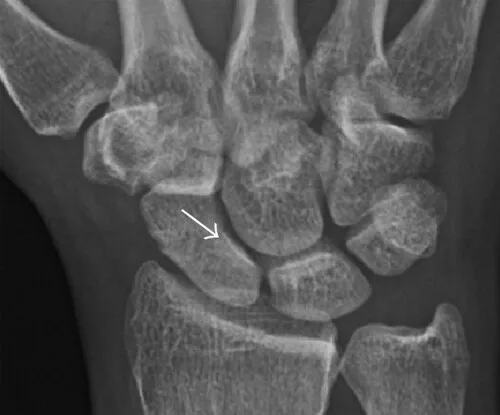
| Search satisficing | Stopping after one abnormality is found (e.g. one fracture) | Systematic review of all images and data |
| System-related error | Results not followed up, poor handover, fatigue | Closed-loop result tracking, structured handover, workload management |
Exam pearls
Guideline
National Academies of Sciences, Engineering, and Medicine: Improving Diagnosis in Health Care (2015); WHO Diagnostic errors technical series on safer primary care (2016) and World Patient Safety Day 2024 'Improving diagnosis for patient safety'
References
- National Academies of Sciences, Engineering, and Medicine. Improving Diagnosis in Health Care. The National Academies Press, Washington DC 2015.
- Graber ML, Franklin N, Gordon R.. Diagnostic error in internal medicine. Arch Intern Med 2005.
- Croskerry P.. The importance of cognitive errors in diagnosis and strategies to minimize them. Acad Med 2003.
- Newman-Toker DE, Nassery N, Schaffer AC, et al.. Burden of serious harms from diagnostic error in the USA. BMJ Qual Saf 2024.
- Singh H, Meyer AND, Thomas EJ.. The frequency of diagnostic errors in outpatient care: estimations from three large observational studies involving US adult populations. BMJ Qual Saf 2014.
- Mamede S, Schmidt HG, Penaforte JC.. Effects of reflective practice on the accuracy of medical diagnoses. Med Educ 2008.
Related topics
By Dr Khalid Seidi (B.Sc., M.D.) · MedEd World Clinical Knowledge library. Original teaching content checked against current guidelines (November 2026); confirm the latest local guidance before clinical use. Not a substitute for clinical judgement.