Clinical Knowledge › Internal medicine › Basics of internal medicine › Clinical assessment
History taking in internal medicine
The history is the single most powerful diagnostic tool in internal medicine: classic outpatient studies found that it alone pointed to the final diagnosis in roughly three quarters of patients, before any examination or test. A good medical history is both a structured data-gathering exercise and a relationship. The usual framework covers the presenting complaint, history of the presenting complaint (characterised with a tool such as SOCRATES and actively searching for red flags), past medical and surgical history, drug history with allergies, family history, social and functional history and a systems review, then a summary and a differential diagnosis. Patient-centred models such as the Calgary–Cambridge guide add an open opening, the 'golden minute' of uninterrupted talk, and the patient's ideas, concerns and expectations. Ward doctors must adapt the history to acute illness, cognitive impairment, language barriers and multimorbidity, use collateral sources and professional interpreters, reconcile medicines on admission, and document clearly so that the next clinician can act on it.
Patient case, mechanism, investigations, management, flashcards and exam-style questions.Open the lesson →
Key facts
- History alone suggests the final diagnosis in about 70–80% of medical outpatients (Hampton 1975; Peterson 1992)
- Open the consultation with an open question and allow the patient to finish: in recorded consultations doctors interrupted after only about 11–23 seconds (median 11 s in 2019; mean 23 s in 1999)
- Characterise pain with SOCRATES: Site, Onset, Character, Radiation, Associations, Time course, Exacerbating/relieving factors, Severity
- Always explore ideas, concerns and expectations (ICE) and the impact on daily life
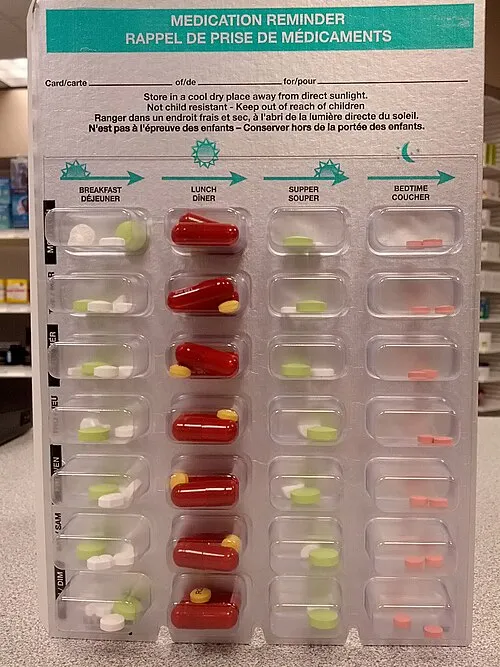
- Record allergies with the type of reaction (true allergy versus intolerance) and reconcile all medicines, including over-the-counter and herbal products, within 24 hours of admission
- Smoking is quantified in pack-years: packs (20 cigarettes) per day × years smoked
- Use a professional interpreter, not family members, for clinical consultations
- A collateral history from relatives, carers, records or the GP is essential when the patient is confused, drowsy or unable to communicate
Differential diagnosis
| Condition | Clues | Key test |
|---|---|---|
| Chest pain history: acute coronary syndrome | Central pressure radiating to arm or jaw, exertional, with sweating | 12-lead ECG within 10 minutes and serial high-sensitivity troponin |
| Chest pain history: pulmonary embolism | Pleuritic pain with sudden breathlessness, recent immobility or surgery | Wells score, D-dimer or CTPA |
| Breathlessness history: heart failure | Orthopnoea, paroxysmal nocturnal dyspnoea, ankle swelling | NT-proBNP and echocardiography |
| Weight loss history: malignancy | Unintentional loss >5% in 6–12 months with night sweats or focal symptoms | Targeted imaging, FBC, ESR, endoscopy as indicated |
| Collapse history: cardiac syncope | Exertional or no warning, palpitations, family history of sudden death | ECG, telemetry, echocardiography |
| Collapse history: seizure | Prolonged confusion afterwards, tongue biting, witnessed jerking | Witness account, EEG, neuroimaging |
| Fatigue history: depression | Low mood, anhedonia, early waking, onset with life events | PHQ-9 and exclusion of organic causes |
Exam pearls
Guideline
Calgary–Cambridge guide to the medical interview (3rd edition, 2013); GMC Good Medical Practice (2024); NICE CG138 Patient experience in adult NHS services (2012, updated 2021); NICE NG5 Medicines optimisation (2015)
References
- Kurtz S, Silverman J, Draper J.. Skills for Communicating with Patients. 3rd ed. CRC Press 2013.
- Hampton JR, Harrison MJ, Mitchell JR, Prichard JS, Seymour C.. Relative contributions of history-taking, physical examination, and laboratory investigation to diagnosis and management of medical outpatients. Br Med J 1975.
- Peterson MC, Holbrook JH, Von Hales D, Smith NL, Staker LV.. Contributions of the history, physical examination, and laboratory investigation in making medical diagnoses. West J Med 1992.
- Marvel MK, Epstein RM, Flowers K, Beckman HB.. Soliciting the patient's agenda: have we improved?. JAMA 1999.
- Singh Ospina N, Phillips KA, Rodriguez-Gutierrez R, et al.. Eliciting the patient's agenda – secondary analysis of recorded clinical encounters. J Gen Intern Med 2019.
- General Medical Council (GMC). Good medical practice. GMC, London 2024.
Related topics
By Dr Khalid Seidi (B.Sc., M.D.) · MedEd World Clinical Knowledge library. Original teaching content checked against current guidelines (November 2026); confirm the latest local guidance before clinical use. Not a substitute for clinical judgement.