Clinical Knowledge › Internal medicine › Endocrinology › Adrenal disorders
Cushing syndrome
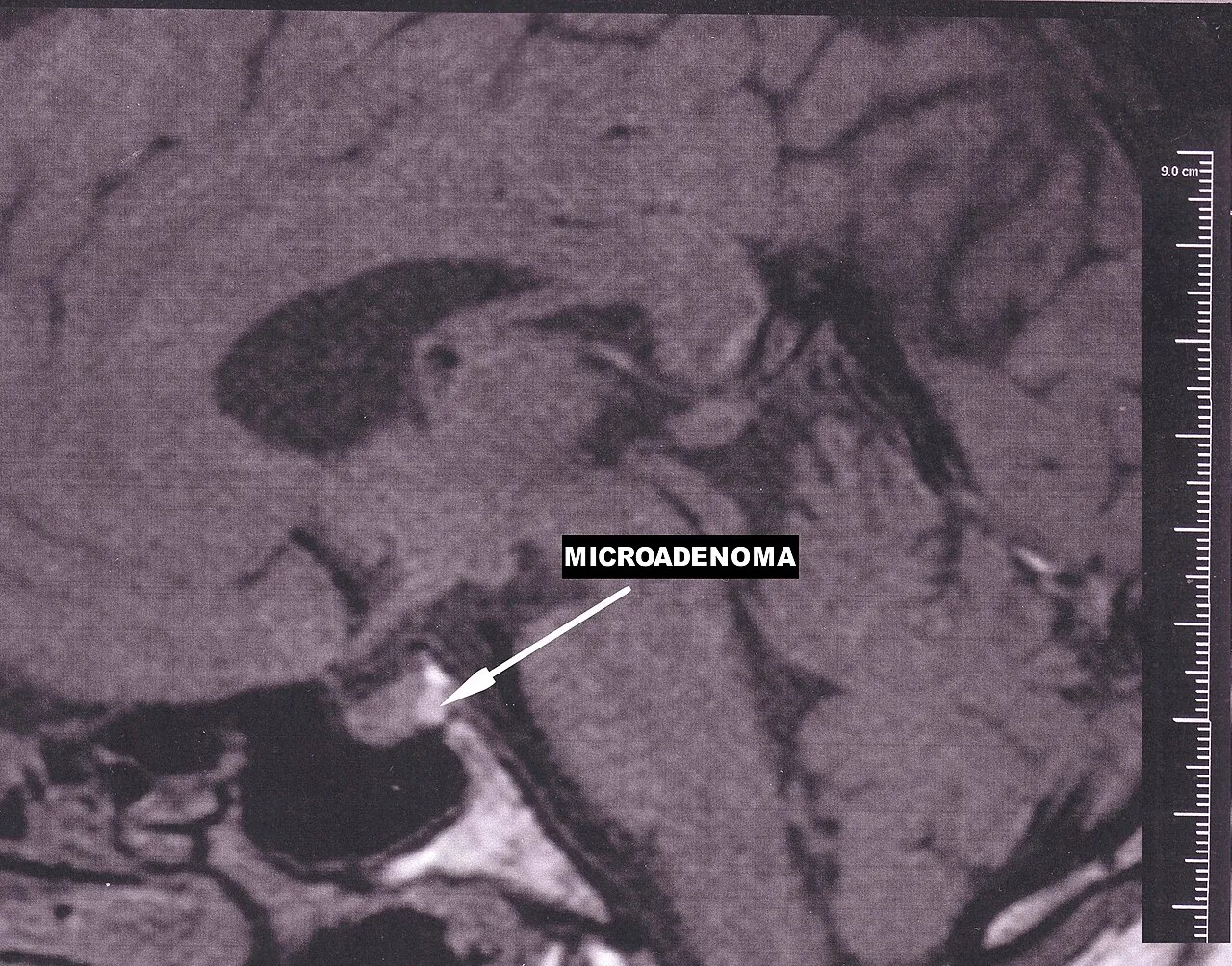
Cushing syndrome is the clinical result of prolonged exposure to excess glucocorticoid. The commonest cause overall is prescribed glucocorticoids. Endogenous Cushing syndrome is rare and is either ACTH-dependent, usually from a pituitary corticotroph adenoma (Cushing disease, about 70%) or ectopic ACTH from a neuroendocrine tumour, or ACTH-independent, from an adrenal adenoma, carcinoma or bilateral adrenal hyperplasia. Many features such as weight gain, hypertension and diabetes are common in the general population; the most discriminating are easy bruising, facial plethora, proximal myopathy and wide purple striae. Diagnosis follows a strict order: exclude exogenous steroids, confirm hypercortisolism with two different first-line tests (1 mg overnight dexamethasone suppression, late-night salivary cortisol or 24-hour urinary free cortisol), then measure ACTH to locate the source with pituitary MRI, adrenal CT or inferior petrosal sinus sampling. First-line treatment is surgery: transsphenoidal adenomectomy, adrenalectomy or removal of the ectopic tumour. Steroidogenesis inhibitors, pituitary-directed drugs, radiotherapy or bilateral adrenalectomy are used when surgery fails or is not possible. Untreated disease substantially increases mortality.
Patient case, mechanism, investigations, management, flashcards and exam-style questions.Open the lesson →
Key facts
- Commonest cause is exogenous glucocorticoid; commonest endogenous cause is Cushing disease (pituitary ACTH adenoma, about 70%)
- Most discriminating signs: easy bruising, facial plethora, proximal myopathy and purple striae wider than 1 cm
- First-line tests: 1 mg overnight dexamethasone suppression (cortisol above 50 nmol/L, 1.8 µg/dL, is abnormal), late-night salivary cortisol, 24-hour urinary free cortisol
- Confirm with at least two different abnormal tests; beware pseudo-Cushing states (alcohol, depression, severe obesity) and oestrogen or enzyme-inducing drugs
- Low or suppressed ACTH = adrenal cause (adrenal CT); normal or high ACTH = ACTH-dependent (pituitary MRI, then IPSS if needed)
- Ectopic ACTH: rapid onset, severe hypokalaemia, hyperpigmentation, weight loss rather than gain; sources include small cell lung cancer and carcinoid tumours
- Treatment of choice is surgery; medical options include metyrapone, osilodrostat, ketoconazole (steroidogenesis inhibitors), pasireotide, cabergoline and mifepristone
- After successful surgery, expect adrenal insufficiency: give glucocorticoid replacement and steroid emergency advice until the axis recovers
Differential diagnosis
| Condition | Clues | Key test |
|---|---|---|
| Metabolic syndrome with obesity | Central obesity, hypertension, diabetes without bruising or myopathy | Normal 1 mg dexamethasone suppression test |
| Pseudo-Cushing (alcohol excess, severe depression) | Mild hypercortisolism that resolves when the cause is treated | Repeat tests after abstinence; dexamethasone–CRH or desmopressin testing |
| Polycystic ovary syndrome | Hirsutism, oligomenorrhoea, acne, obesity | Normal cortisol tests; raised androgens, polycystic ovaries |
| Exogenous glucocorticoid use (including creams, inhalers, injections, herbal remedies) | Cushingoid features with low cortisol and low ACTH | Careful drug history; synthetic steroid screen |
| Primary aldosteronism | Hypertension with hypokalaemia | Aldosterone-to-renin ratio; cortisol tests normal |
| Hypothyroidism | Weight gain, fatigue, depression | TSH raised; no bruising or striae |
| Adrenocortical carcinoma | Rapid cortisol and androgen excess, large adrenal mass | CT density and size, DHEAS, urine steroid profile |
Exam pearls
Guideline
Endocrine Society guidelines on diagnosis (2008) and treatment (2015) of Cushing syndrome, the Pituitary Society 2021 consensus on Cushing disease and the ESE 2023 adrenal incidentaloma guideline
References
- Nieman LK, Biller BMK, Findling JW, et al.. The diagnosis of Cushing's syndrome: an Endocrine Society Clinical Practice Guideline. J Clin Endocrinol Metab 2008.
- Nieman LK, Biller BMK, Findling JW, et al.. Treatment of Cushing's Syndrome: An Endocrine Society Clinical Practice Guideline. J Clin Endocrinol Metab 2015.
- Fleseriu M, Auchus R, Bancos I, et al.. Consensus on diagnosis and management of Cushing's disease: a guideline update. Lancet Diabetes Endocrinol 2021.
- Fassnacht M, Tsagarakis S, Terzolo M, et al.. European Society of Endocrinology clinical practice guidelines on the management of adrenal incidentalomas, in collaboration with the European Network for the Study of Adrenal Tumors. Eur J Endocrinol 2023.
- Beuschlein F, Else T, Bancos I, et al.. European Society of Endocrinology and Endocrine Society Joint Clinical Guideline: Diagnosis and Therapy of Glucocorticoid-induced Adrenal Insufficiency. J Clin Endocrinol Metab 2024.
- Melmed S, Auchus RJ, Goldfine AB, Rosen CJ, Kopp PA, eds.. Williams Textbook of Endocrinology. 2024.
Related topics
By Dr Khalid Seidi (B.Sc., M.D.) · MedEd World Clinical Knowledge library. Original teaching content checked against current guidelines (November 2026); confirm the latest local guidance before clinical use. Not a substitute for clinical judgement.