Clinical Knowledge › Internal medicine › Endocrinology › Adrenal disorders
Primary hyperaldosteronism (Conn syndrome)
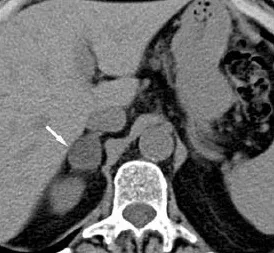
Primary aldosteronism (PA) is autonomous aldosterone secretion that is independent of renin and not suppressed by sodium loading. It is the commonest curable cause of hypertension, present in about 5–10% of all people with hypertension and in up to 20% of those with resistant hypertension, yet most cases are never diagnosed. The two main subtypes are a unilateral aldosterone-producing adenoma (Conn syndrome), often driven by somatic KCNJ5 mutations, and bilateral adrenal hyperplasia. Excess aldosterone causes sodium retention, hypertension, renal potassium and hydrogen ion loss, and direct cardiovascular, renal and metabolic injury; stroke, atrial fibrillation and heart failure are more common than in essential hypertension with the same blood pressure. Hypokalaemia is present in only a minority. Screening uses the aldosterone-to-renin ratio (ARR); a suppressed renin with non-suppressed aldosterone is the key pattern. The 2025 Endocrine Society guideline recommends screening everyone with hypertension. Confirmatory testing, adrenal CT and adrenal vein sampling (AVS) then separate unilateral disease, treated by laparoscopic adrenalectomy, from bilateral disease, treated with a mineralocorticoid receptor antagonist (MRA) titrated until renin rises.
Patient case, mechanism, investigations, management, flashcards and exam-style questions.Open the lesson →
Key facts
- PA is the commonest specific, curable cause of secondary hypertension: about 5–10% of hypertensive adults and up to 20% with resistant hypertension
- Hypokalaemia occurs in only about a quarter to a third of patients; normal potassium never excludes PA
- Screen with the aldosterone-to-renin ratio (ARR) on a morning sample after correcting potassium; suppressed renin plus non-suppressed aldosterone is the hallmark
- The Endocrine Society 2025 guideline recommends screening all adults with hypertension, and screening can usually be done without stopping most antihypertensives
- Confirm autonomy with a saline infusion, oral salt loading, captopril challenge or fludrocortisone suppression test (unless the picture is unequivocal)
- Subtype with adrenal CT, then adrenal vein sampling in surgical candidates, because CT misclassifies many patients (non-functioning incidentalomas are common after 40)
- Unilateral disease: laparoscopic adrenalectomy cures hypokalaemia in nearly all and normalises blood pressure in about a third to a half
- Bilateral disease: spironolactone or eplerenone, titrated until renin is no longer suppressed; excess cardiovascular risk falls when renin rises
Differential diagnosis
| Condition | Clues | Key test |
|---|---|---|
| Essential hypertension | Normal renin and normal aldosterone-to-renin ratio | ARR with renin measurement |
| Renovascular hypertension | High renin and high aldosterone (secondary aldosteronism), asymmetric kidneys, creatinine rise on ACE inhibitor | Duplex ultrasound or CT/MR angiography |
| Diuretic-induced hypokalaemia | Thiazide or loop diuretic use; renin raised | Drug history; renin and aldosterone off diuretic |
| Cushing syndrome | Hypokalaemia with central obesity, striae, bruising; cortisol acts on the MR | Overnight dexamethasone suppression test |
| Liquorice ingestion or apparent mineralocorticoid excess | Low renin and LOW aldosterone with hypertension and hypokalaemia | History of liquorice; urinary cortisol:cortisone ratio |
| Liddle syndrome | Young patient, family history, low renin and low aldosterone; responds to amiloride not spironolactone | Genetic testing for ENaC (SCNN1B/SCNN1G) variants |
| Congenital adrenal hyperplasia (11β-hydroxylase or 17α-hydroxylase deficiency) | Low renin, low aldosterone, abnormal puberty or virilisation | Steroid precursor profile (11-deoxycortisol, DOC) |
| Phaeochromocytoma | Paroxysmal hypertension, headache, sweating, palpitations | Plasma free metanephrines |
Exam pearls
Guideline
Endocrine Society Clinical Practice Guideline: Primary Aldosteronism (2025), updating the 2016 guideline; ESH 2023 hypertension guideline
References
- Adler GK, Stowasser M, Correa RR, et al.. Primary Aldosteronism: An Endocrine Society Clinical Practice Guideline. J Clin Endocrinol Metab 2025.
- Funder JW, Carey RM, Mantero F, et al.. The Management of Primary Aldosteronism: Case Detection, Diagnosis, and Treatment: An Endocrine Society Clinical Practice Guideline. J Clin Endocrinol Metab 2016.
- Mancia G, Kreutz R, Brunström M, et al.. 2023 ESH Guidelines for the management of arterial hypertension. J Hypertens 2023.
- Monticone S, D'Ascenzo F, Moretti C, et al.. Cardiovascular events and target organ damage in primary aldosteronism compared with essential hypertension: a systematic review and meta-analysis. Lancet Diabetes Endocrinol 2018.
- Rossi GP, Bernini G, Caliumi C, et al.. A prospective study of the prevalence of primary aldosteronism in 1,125 hypertensive patients. J Am Coll Cardiol 2006.
- Williams TA, Lenders JWM, Mulatero P, et al.. Outcomes after adrenalectomy for unilateral primary aldosteronism: an international consensus on outcome measures and analysis of remission rates in an international cohort. Lancet Diabetes Endocrinol 2017.
Related topics
By Dr Khalid Seidi (B.Sc., M.D.) · MedEd World Clinical Knowledge library. Original teaching content checked against current guidelines (November 2026); confirm the latest local guidance before clinical use. Not a substitute for clinical judgement.