Clinical Knowledge › Internal medicine › Endocrinology › Adrenal disorders
Secondary adrenal insufficiency and glucocorticoid withdrawal
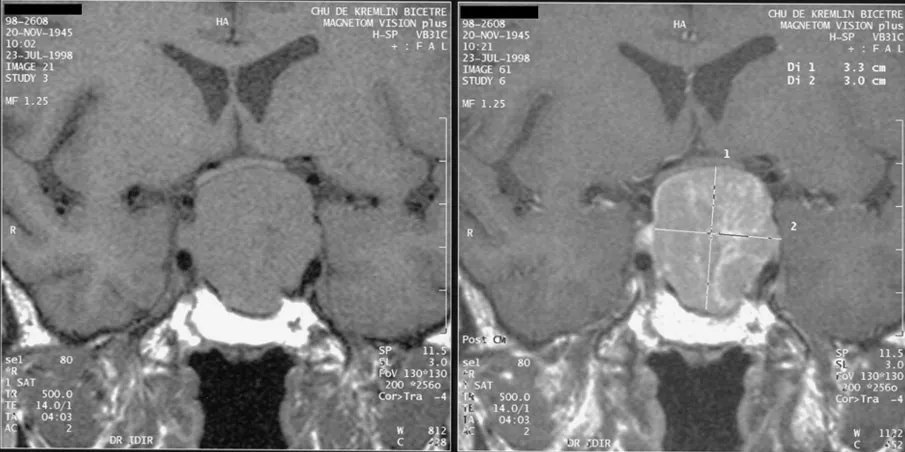
Secondary adrenal insufficiency is cortisol deficiency caused by too little ACTH from the pituitary; tertiary insufficiency results from reduced hypothalamic CRH. By far the commonest cause of both is suppression of the hypothalamic–pituitary–adrenal axis by therapeutic glucocorticoids, given orally, by injection, by inhalation or even on the skin, making glucocorticoid-induced adrenal insufficiency the most frequent form. Other causes include pituitary tumours and surgery, radiotherapy, apoplexy, Sheehan syndrome, hypophysitis (including immune checkpoint inhibitor hypophysitis) and opioids. Because the renin–angiotensin–aldosterone system is intact, there is no hyperkalaemia, salt craving or hyperpigmentation; fatigue, weight loss, hypoglycaemia and dilutional hyponatraemia dominate, and crisis is triggered by illness or surgery. Diagnosis rests on a morning cortisol, with the short Synacthen test, insulin tolerance test or metyrapone test when results are equivocal. Treatment is hydrocortisone or low-dose prednisolone without fludrocortisone, with sick-day rules and an emergency card. The 2024 ESE/Endocrine Society guideline describes how to taper long-term glucocorticoids safely, when to test axis recovery and how to recognise glucocorticoid withdrawal syndrome.
Patient case, mechanism, investigations, management, flashcards and exam-style questions.Open the lesson →
Key facts
- Secondary = pituitary ACTH deficiency; tertiary = hypothalamic CRH deficiency; exogenous glucocorticoids cause the commonest (tertiary) form
- Aldosterone is preserved (renin–angiotensin control), so there is no hyperkalaemia, salt craving or need for fludrocortisone
- No hyperpigmentation because ACTH and POMC are low; pallor is more typical
- Hyponatraemia results from loss of cortisol's inhibition of ADH (SIADH-like, euvolaemic) and improves with hydrocortisone
- Any route (oral, inhaled, intra-articular, epidural, potent topical) can suppress the axis; ritonavir or itraconazole with fluticasone or budesonide greatly increases risk
- Courses shorter than about 3–4 weeks can usually stop without taper; longer supraphysiological courses need a taper to physiological dose, then gradual withdrawal or testing
- Morning cortisol (taken 24 h after last hydrocortisone dose) above about 300 nmol/L (10 µg/dL) suggests recovery; below about 150 nmol/L (5 µg/dL) suggests continuing insufficiency (ESE/ES 2024)
- Replacement: hydrocortisone 15–25 mg/day in divided doses or prednisolone 3–5 mg daily; double oral dose in febrile illness; parenteral hydrocortisone if vomiting
Differential diagnosis
| Condition | Clues | Key test |
|---|---|---|
| Primary adrenal insufficiency (Addison disease) | Hyperpigmentation, hyperkalaemia, salt craving, postural hypotension | High ACTH, high renin, low aldosterone |
| Glucocorticoid withdrawal syndrome | Fatigue, myalgia, low mood during taper despite recovered axis | Morning cortisol adequate or on physiological replacement |
| Hypothyroidism | Fatigue, weight gain, bradycardia | TSH and free T4 (low free T4 with low TSH suggests central) |
| Depression or chronic fatigue | Fatigue without hyponatraemia or hypoglycaemia | Normal morning cortisol |
| Recurrence of the treated inflammatory disease | Arthralgia or myalgia after steroid reduction, raised CRP | Inflammatory markers; clinical review |
| SIADH from another cause | Euvolaemic hyponatraemia | Normal cortisol; drug, lung or CNS cause |
| Sepsis or hypovolaemia | Hypotension and tachycardia | Response to fluids, cultures; random cortisol in context |
Exam pearls
Guideline
European Society of Endocrinology and Endocrine Society 2024 Joint Clinical Guideline: Diagnosis and Therapy of Glucocorticoid-induced Adrenal Insufficiency, with the Endocrine Society 2016 hypopituitarism hormone replacement guideline
References
- Beuschlein F, Else T, Bancos I, et al.. European Society of Endocrinology and Endocrine Society Joint Clinical Guideline: Diagnosis and Therapy of Glucocorticoid-induced Adrenal Insufficiency. J Clin Endocrinol Metab 2024.
- Fleseriu M, Hashim IA, Karavitaki N, et al.. Hormonal replacement in hypopituitarism in adults: an Endocrine Society clinical practice guideline. J Clin Endocrinol Metab 2016.
- Bornstein SR, Allolio B, Arlt W, et al.. Diagnosis and treatment of primary adrenal insufficiency: an Endocrine Society clinical practice guideline. J Clin Endocrinol Metab 2016.
- Woodcock T, Barker P, Daniel S, et al.. Guidelines for the management of glucocorticoids during the peri-operative period for patients with adrenal insufficiency. Anaesthesia 2020.
- Rushworth RL, Torpy DJ, Falhammar H.. Adrenal crisis. N Engl J Med 2019.
- Melmed S, Auchus RJ, Goldfine AB, Rosen CJ, Kopp PA, eds.. Williams Textbook of Endocrinology. 2024.
Related topics
By Dr Khalid Seidi (B.Sc., M.D.) · MedEd World Clinical Knowledge library. Original teaching content checked against current guidelines (November 2026); confirm the latest local guidance before clinical use. Not a substitute for clinical judgement.