Clinical Knowledge › Ear, nose and throat › Neck and salivary glands
Deep neck space infections
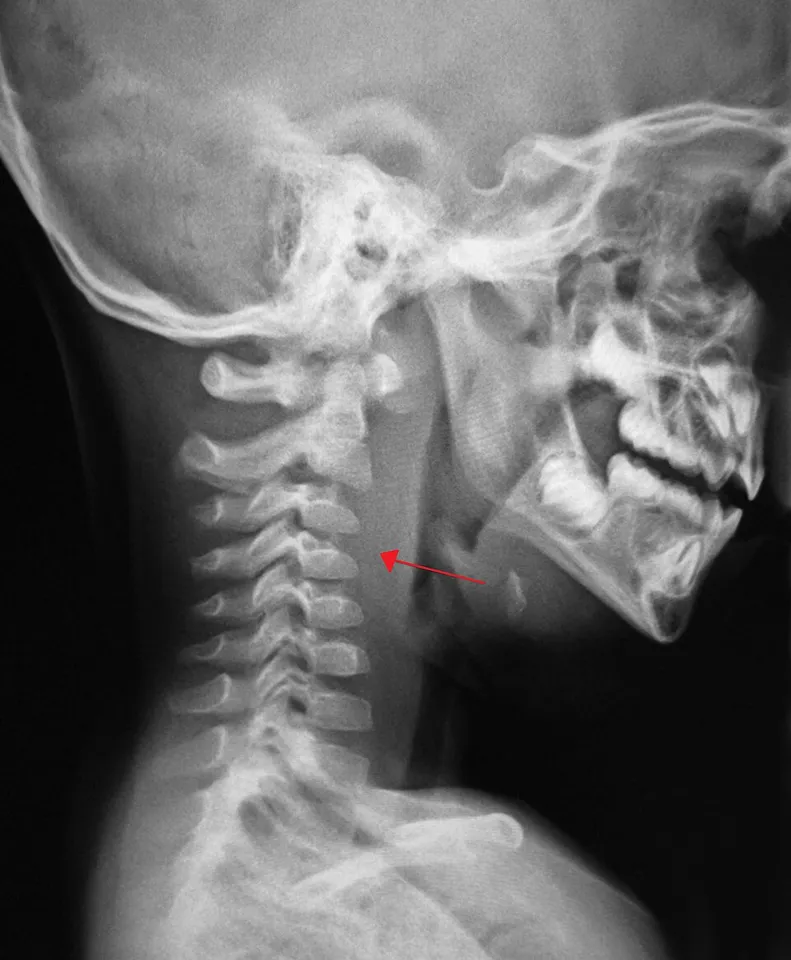
Deep neck space infections are cellulitis or abscesses within the potential spaces between the layers of deep cervical fascia. They usually start from teeth in adults and from the tonsils, pharynx or nodes in children; other sources include injecting drug use, foreign bodies, salivary infection and infected congenital cysts. Infection is polymicrobial (streptococci including the anginosus group, Staphylococcus aureus and oral anaerobes); Klebsiella pneumoniae is common in diabetes. Patients have fever, neck pain and swelling, sore throat, odynophagia and dysphagia; trismus, drooling, torticollis, a muffled voice or stridor signal deep spread and airway danger. The retropharyngeal and 'danger' spaces lead to the mediastinum. Management is airway first, then contrast CT of the neck (and chest if mediastinitis is possible), intravenous antibiotics, source control and drainage of established abscesses. Complications include airway obstruction, descending necrotising mediastinitis, Lemierre syndrome, carotid artery erosion, necrotising fasciitis and sepsis.
Patient case, mechanism, investigations, management, flashcards and exam-style questions.Open the lesson →
Key facts
- Deep neck spaces lie between layers of the deep cervical fascia: superficial (investing), middle (pretracheal/visceral) and deep (alar and prevertebral)
- Adults: odontogenic source is commonest (especially lower second and third molars); children: tonsillopharyngitis and suppurative lymphadenitis
- Polymicrobial flora: viridans and anginosus-group streptococci, S. aureus (including MRSA) and anaerobes (Prevotella, Fusobacterium, Peptostreptococcus)
- Diabetes predicts multi-space spread, more complications and Klebsiella pneumoniae infection
- Trismus = masticator or parapharyngeal involvement; medial bulge of the lateral pharyngeal wall = parapharyngeal abscess
- The danger space (between alar and prevertebral fascia) runs from skull base to the diaphragm: route to descending necrotising mediastinitis
- Contrast-enhanced CT neck is the key test; extend to chest for chest pain, dyspnoea or neck infection below the hyoid
- Airway first: awake fibreoptic intubation or awake tracheostomy under local anaesthetic by senior staff
Differential diagnosis
| Condition | Clues | Key test |
|---|---|---|
| Peritonsillar abscess (quinsy) | Unilateral tonsil bulge, uvula deviated away, trismus, hot potato voice | Clinical; needle aspiration; CT if extension suspected |
| Epiglottitis / supraglottitis | Rapid sore throat, drooling, stridor, tender larynx, normal oropharynx | Flexible nasendoscopy in theatre-ready setting |
| Infected branchial or thyroglossal cyst | Recurrent swelling in a typical site | Ultrasound/CT; excise when settled |
| Acute suppurative thyroiditis | Tender anterior neck, left-sided, piriform sinus fistula in children | Ultrasound; barium swallow later |
| Calcific tendinitis of longus colli | Neck pain, odynophagia, retropharyngeal fluid without rim enhancement | CT: calcification at C1–C2 |
| Cervical necrotising fasciitis | Rapidly spreading cellulitis, crepitus, skin necrosis, toxic | CT: gas along fascial planes; surgical exploration |
| Necrotic metastatic node | Older smoker, slow course, little fever | FNA; nasendoscopy |
Exam pearls
Guideline
No single international guideline: consensus practice from ENT/head and neck reviews (Vieira 2008; Bhardwaj 2022), Difficult Airway Society principles and mediastinitis reviews (2025)
References
- Vieira F, Allen SM, Stocks RM, Thompson JW. Deep neck infection. Otolaryngol Clin North Am 2008.
- Bhardwaj R, Makkar S, Gupta A, et al.. Deep Neck Space Infections: Current Trends and Intricacies of Management?. Indian J Otolaryngol Head Neck Surg 2022.
- Hidaka H, Yamaguchi T, Hasegawa J, et al.. Clinical and bacteriological influence of diabetes mellitus on deep neck infection: Systematic review and meta-analysis. Head Neck 2015.
- Chaulk RC, Sahai D, Raj L, Nayak R. Etiology, diagnosis, and management of descending necrotizing mediastinitis: a narrative review. Mediastinum 2025.
- Delcò AA, Montorfani SMMA, Gualtieri R, et al.. Epstein-Barr virus as promoter of Lemierre syndrome: systematic literature review. Eur Arch Otorhinolaryngol 2024.
- Papadakis MA, Rabow MW, McQuaid KR, eds.. CURRENT Medical Diagnosis & Treatment 2026 (chapter 8: Otolaryngology disorders). McGraw Hill 2026.
Related topics
By Dr Khalid Seidi (B.Sc., M.D.) · MedEd World Clinical Knowledge library. Original teaching content checked against current guidelines (November 2026); confirm the latest local guidance before clinical use. Not a substitute for clinical judgement.