Clinical Knowledge › Dermatology › Eczema and dermatitis
Eczema herpeticum
Eczema herpeticum (Kaposi varicelliform eruption) is a disseminated herpes simplex virus infection, usually HSV-1, spreading across skin whose barrier is already damaged, most often by atopic dermatitis. It is a dermatological emergency because the virus can reach the eye, the bloodstream and, rarely, the brain. Typical features are a sudden, painful worsening of eczema with clusters of monomorphic, 1-3 mm umbilicated vesicles and pustules that rupture into uniform 'punched-out' erosions with haemorrhagic crusts. The lesions coalesce into larger raw areas, often on the face, neck and upper trunk, and the patient may have fever, malaise and tender lymph nodes. Failure of 'infected eczema' to respond to antibiotics is a classic clue. A swab of the vesicle base for HSV PCR confirms the diagnosis, and a bacterial swab looks for secondary Staphylococcus aureus. Systemic aciclovir or valaciclovir should start immediately without waiting for results, with same-day dermatology review and urgent ophthalmology if lesions are near the eye. Recurrence is common, so long-term eczema control matters.
Patient case, mechanism, investigations, management, flashcards and exam-style questions.Open the lesson →
Key facts
- Disseminated HSV (mostly HSV-1) on skin with a damaged barrier - usually atopic dermatitis; also Darier disease, burns, pemphigus and cutaneous T-cell lymphoma
- Morphology: monomorphic, 1-3 mm umbilicated vesicles and pustules evolving into uniform, punched-out erosions with haemorrhagic crusts that coalesce
- Painful rather than itchy; sudden worsening of eczema with fever, malaise and lymphadenopathy
- Clue: 'infected eczema' that fails to improve on antibiotics or topical steroids
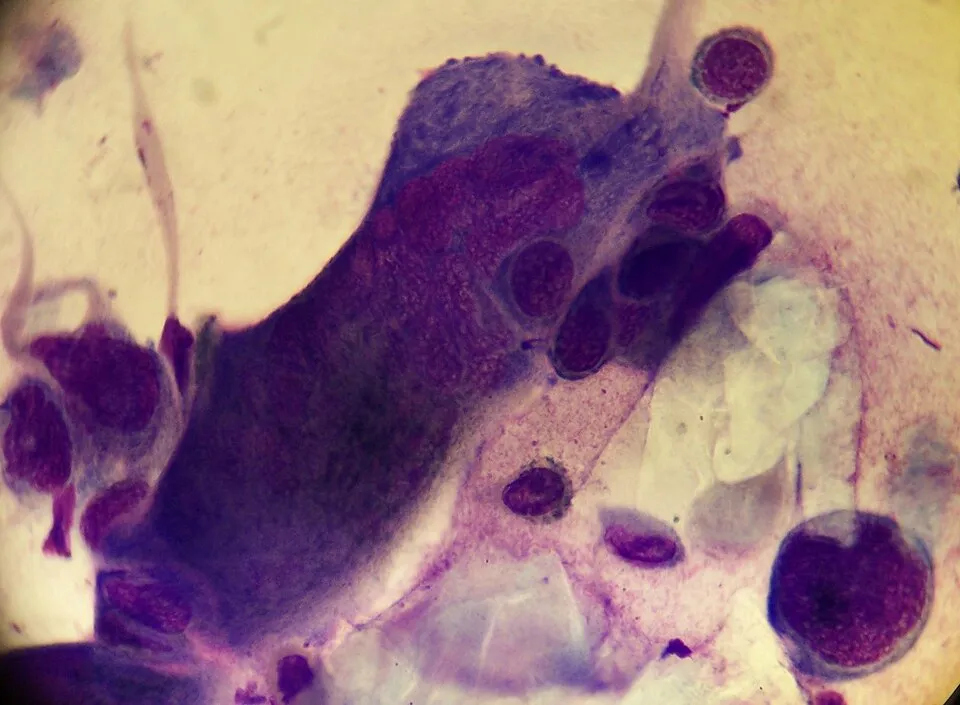
- Best test: swab of an unroofed vesicle or erosion base for HSV PCR; Tzanck smear is obsolete but shows multinucleated giant cells
- Treat immediately with systemic aciclovir (or valaciclovir); do not wait for PCR results
- Periocular lesions need same-day ophthalmology to exclude herpetic keratitis
- Secondary S. aureus infection occurs in about a third; add an anti-staphylococcal antibiotic if impetiginised
Differential diagnosis
| Condition | Clues | Key test |
|---|---|---|
| Impetiginised (bacterially infected) eczema | Weeping, honey-yellow crusts, pustules of varying size; no monomorphic punched-out erosions | Bacterial swab grows S. aureus; HSV PCR negative |
| Eczema coxsackium | Vesicles and erosions in eczematous areas plus hand-foot-mouth sites; child with outbreak contacts | Enterovirus PCR of vesicle swab or throat |
| Primary varicella in an atopic child | Lesions in different stages, centripetal, starting on trunk and scalp; contact with chickenpox | VZV PCR of vesicle fluid |
| Disseminated herpes zoster | Dermatomal band plus scattered vesicles in an immunosuppressed adult | VZV PCR |
| Acute flare of atopic dermatitis | Itch dominant, ill-defined papules and lichenification, no punched-out erosions, afebrile | Clinical; HSV PCR negative if swabbed |
| Bullous impetigo | Few large flaccid bullae with collarette and honey crust | Swab grows S. aureus |
| Contact dermatitis with vesiculation | Vesicles confined to site of contact, itchy, geometric edges | Patch testing after recovery |
Exam pearls
Guideline
NICE CG57 Atopic eczema in under 12s (2007, last updated 2023); EuroGuiDerm atopic eczema guideline (2022, living updates); supported by cohort evidence (Aronson 2011; Steele 2023; Liang 2025)
References
- Aronson PL, Yan AC, Mittal MK, Mohamad Z, Shah SS. Delayed acyclovir and outcomes of children hospitalized with eczema herpeticum. Pediatrics 2011.
- Traidl S, Roesner L, Zeitvogel J, Werfel T. Eczema herpeticum in atopic dermatitis. Allergy 2021.
- Damour A, Garcia M, Seneschal J, Lévêque N, Bodet C. Eczema herpeticum: clinical and pathophysiological aspects. Clin Rev Allergy Immunol 2020.
- Traidl S, Heinrich L, Siegels D, et al.; TREATgermany Study Group. High recurrence rate of eczema herpeticum in moderate/severe atopic dermatitis - TREATgermany registry analysis. J Dtsch Dermatol Ges 2023.
- Steele L, Innes S, Oldham J, et al.. Safety outcomes for topical corticosteroid use in eczema herpeticum: a single-centre retrospective cohort study. Br J Dermatol 2023.
- Liang BX, Liu K, Yamamoto LG. Outpatient and inpatient management of infants and children with eczema herpeticum diagnosed in the emergency department. Pediatr Dermatol 2025.
Related topics
By Dr Khalid Seidi (B.Sc., M.D.) · MedEd World Clinical Knowledge library. Original teaching content checked against current guidelines (November 2026); confirm the latest local guidance before clinical use. Not a substitute for clinical judgement.