Clinical Knowledge › Dermatology › Eczema and dermatitis
Lichen simplex chronicus
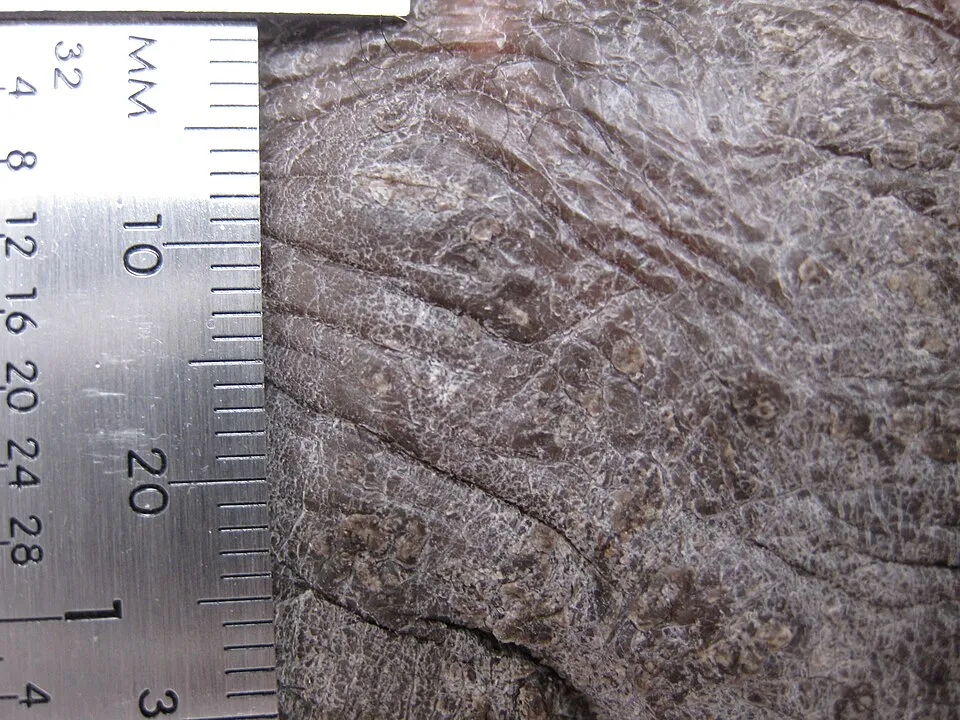
Lichen simplex chronicus (LSC, neurodermatitis circumscripta) is a localised, thickened, intensely itchy plaque produced by repeated rubbing and scratching of skin that may have been normal at first. The itch-scratch cycle causes lichenification: a well-defined plaque with exaggerated skin markings, scale, excoriations and hyperpigmentation, often grey-brown or violaceous in darker skin. Typical sites are those within easy reach: the nape of the neck, scalp, outer forearms, shins and ankles, and the vulva, scrotum and perianal skin. LSC can be primary, often linked to anxiety, stress or obsessive-compulsive traits, or secondary to an underlying itchy condition such as atopic dermatitis, contact dermatitis, psoriasis, lichen sclerosus, tinea, insect bites or neuropathic itch. The diagnosis is clinical; biopsy excludes mimics such as lichen planus, lichen sclerosus and Bowen disease. Treatment breaks the cycle: very potent topical steroid under occlusion, intralesional triamcinolone, night sedation, habit reversal and treatment of the cause.
Patient case, mechanism, investigations, management, flashcards and exam-style questions.Open the lesson →
Key facts
- Lichenification from chronic rubbing and scratching: thick plaque with accentuated skin lines
- Itch-scratch cycle: scratching relieves itch briefly but increases nerve sensitivity and itch
- Common sites: nape of neck, scalp, outer forearms, shins and ankles, vulva, scrotum, perianal skin
- Primary (stress, anxiety, OCD traits) or secondary to atopy, contact dermatitis, psoriasis, lichen sclerosus, neuropathy
- Histology: compact hyperkeratosis, irregular acanthosis, vertical collagen streaks in papillary dermis
- First-line: very potent topical steroid (e.g. clobetasol 0.05%), often under occlusion or steroid tape
- Refractory: intralesional triamcinolone, tacrolimus, capsaicin, gabapentinoids, SSRIs, habit reversal
- Anogenital LSC needs exclusion of lichen sclerosus, VIN or extramammary Paget disease if atypical
Differential diagnosis
| Condition | Clues | Key test |
|---|---|---|
| Psoriasis | Silvery scale, sharp edges, extensor elbows and knees, nail pitting | Clinical; biopsy if unclear |
| Lichen planus (hypertrophic) | Violaceous thick plaques on shins, Wickham striae, oral lesions | Biopsy: interface dermatitis |
| Lichen sclerosus (genital) | White atrophic or sclerotic plaques, scarring, loss of architecture | Biopsy |
| Tinea | Annular scaly edge; tinea cruris in groin | KOH microscopy |
| Prurigo nodularis | Multiple firm itchy nodules rather than one plaque | Clinical; biopsy |
| Bowen disease / extramammary Paget disease | Persistent plaque not responding to steroids; anogenital in older adults | Biopsy |
| Mycosis fungoides | Patches and plaques in sun-protected sites, variable shape | Biopsy with immunohistochemistry |
Exam pearls
Guideline
European S2k guideline on chronic pruritus (EADV/EDF, 2025 update); BAD lichen sclerosus guideline (2018) for anogenital mimics; Juarez and Kwatra systematic review of LSC treatments (2021) and 2025 expert review
References
- European Academy of Dermatology and Venereology / European Dermatology Forum (Weisshaar E, Müller S, Szepietowski JC, et al.). European S2k guideline on chronic pruritus (2025 update). Acta Derm Venereol 2025.
- Moshkovich M, Andrade LF, Anderson M, Yosipovitch G. Lichen simplex chronicus: clinical perspectives and emerging therapeutic strategies. Am J Clin Dermatol 2025.
- Juarez MC, Kwatra SG. A systematic review of evidence based treatments for lichen simplex chronicus. J Dermatolog Treat 2021.
- Starace M, Iorizzo M, Mandel VD, et al.. Scalp dysaesthesia and lichen simplex chronicus: diagnostic and therapeutic update with literature review. Clin Exp Dermatol 2022.
- British Association of Dermatologists (Lewis FM, Tatnall FM, Velangi SS, et al.). British Association of Dermatologists guidelines for the management of lichen sclerosus, 2018. Br J Dermatol 2018.
- Brägelmann C, Wölber L, Susok L, et al.. Update vulval dermatology - diagnostics and therapy. J Dtsch Dermatol Ges 2025.
Related topics
By Dr Khalid Seidi (B.Sc., M.D.) · MedEd World Clinical Knowledge library. Original teaching content checked against current guidelines (November 2026); confirm the latest local guidance before clinical use. Not a substitute for clinical judgement.