Clinical Knowledge › Internal medicine › Infectious diseases › Tuberculosis and mycobacterial infections
Extrapulmonary tuberculosis
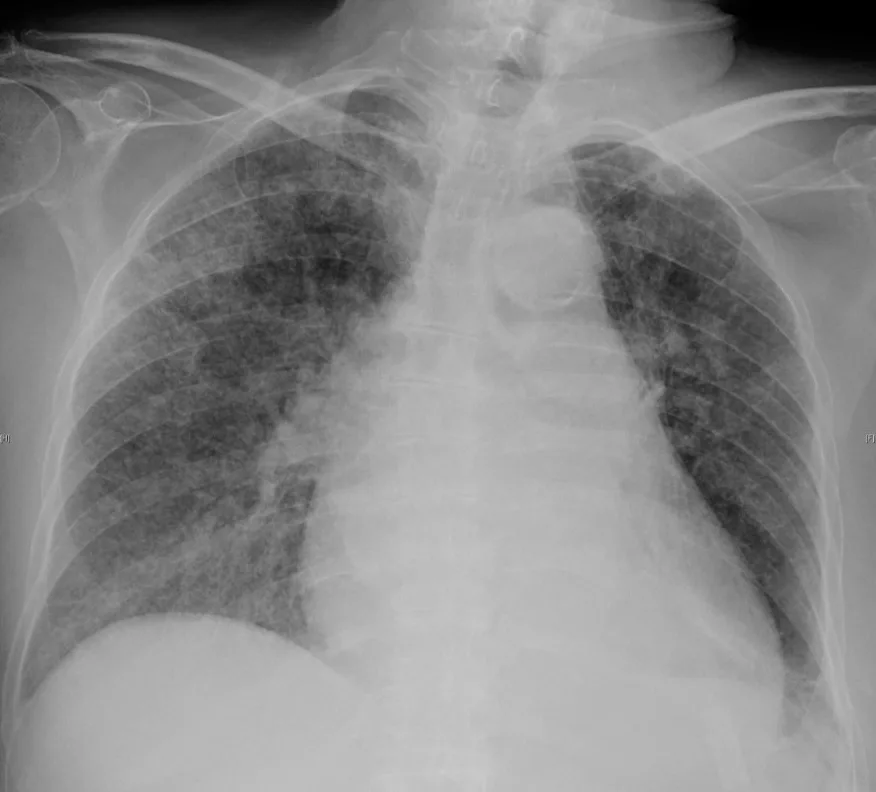
Extrapulmonary tuberculosis is disease caused by Mycobacterium tuberculosis outside the lung parenchyma; it accounts for about 15–20% of notified TB and up to half of cases in people with HIV. The commonest sites are lymph nodes (usually painless matted cervical nodes), pleura, bones and joints (spinal TB or Pott disease), the abdomen, the meninges, the pericardium and the genitourinary tract; miliary TB is haematogenous spread to many organs. Symptoms are often subacute and non-specific, with fever, sweats and weight loss plus site-specific features. Diagnosis depends on sampling the affected tissue or fluid for histology (caseating granulomas), acid-fast bacilli, mycobacterial culture and Xpert MTB/RIF Ultra, supported by imaging and, in advanced HIV, urine LAM. Most forms are treated with the standard 6-month regimen (2 months of rifampicin, isoniazid, pyrazinamide and ethambutol, then 4 months of rifampicin and isoniazid); TB meningitis needs 12 months with adjunctive corticosteroids, and spinal disease often longer treatment.
Patient case, mechanism, investigations, management, flashcards and exam-style questions.Open the lesson →
Key facts
- Extrapulmonary TB is 15–20% of all TB, more common in HIV, children, women and people from South Asia and Africa
- Lymph node TB is the commonest form: painless, matted, often cervical nodes that may form a cold abscess or sinus (scrofula)
- Tuberculous pleural effusion is a lymphocytic exudate with adenosine deaminase usually above 40 U/L; pleural biopsy has the highest yield
- TB meningitis presents subacutely with headache, cranial nerve palsies (especially VI), confusion and hyponatraemia; CSF shows lymphocytes, low glucose and high protein
- Spinal TB (Pott disease) affects the thoracolumbar vertebrae, destroys anterior vertebral bodies with a paravertebral cold abscess and can cause gibbus and cord compression
- Tissue or fluid for histology, culture and Xpert MTB/RIF Ultra is essential; culture also gives drug susceptibility
- Standard therapy is 2HRZE/4HR for 6 months; CNS TB needs 12 months (2HRZE/10HR) with adjunctive dexamethasone in HIV-negative adults
- Paradoxical enlargement of nodes or new effusions during treatment is common and usually does not mean treatment failure
Differential diagnosis
| Condition | Clues | Key test |
|---|---|---|
| Lymphoma | Rubbery, non-tender nodes, B symptoms, no caseation | Excision node biopsy with histology and flow cytometry |
| Non-tuberculous mycobacterial lymphadenitis | Unilateral submandibular node in a child under 5, systemically well | Culture of excised node; IGRA often negative |
| Pyogenic vertebral osteomyelitis | Acute febrile back pain, disc space destroyed early, raised CRP | Blood cultures; CT-guided biopsy for culture |
| Malignant pleural effusion | Older smoker, bloody effusion, weight loss | Pleural cytology and biopsy; low ADA |
| Cryptococcal meningitis | Subacute meningitis in advanced HIV | CSF and serum cryptococcal antigen |
| Crohn disease | Ileocaecal inflammation, weight loss, diarrhoea | Colonoscopy biopsy: non-caseating granulomas, negative TB culture and PCR |
| Sarcoidosis | Lymphadenopathy, uveitis, granulomas | Non-caseating granulomas; negative mycobacterial culture |
| Peritoneal carcinomatosis | Ascites, weight loss, omental thickening | Ascitic cytology; laparoscopic peritoneal biopsy |
Exam pearls
Guideline
WHO consolidated guidelines on tuberculosis, Module 4: treatment and care (2025); NICE NG33 Tuberculosis (2016, with later updates); ATS/CDC/IDSA treatment of drug-susceptible tuberculosis (2016); WHO consolidated guidelines Module 3: diagnosis – rapid diagnostics (2024)
References
- World Health Organization. WHO consolidated guidelines on tuberculosis. Module 4: treatment and care. WHO, Geneva 2025.
- National Institute for Health and Care Excellence. Tuberculosis (NG33). NICE 2016.
- Nahid P, Dorman SE, Alipanah N, et al.. Official American Thoracic Society/Centers for Disease Control and Prevention/Infectious Diseases Society of America clinical practice guidelines: treatment of drug-susceptible tuberculosis. Clin Infect Dis 2016.
- World Health Organization. WHO consolidated guidelines on tuberculosis. Module 3: diagnosis – rapid diagnostics for tuberculosis detection. WHO, Geneva 2024.
- Thwaites GE, Nguyen DB, Nguyen HD, et al.. Dexamethasone for the treatment of tuberculous meningitis in adolescents and adults. N Engl J Med 2004.
- Mayosi BM, Ntsekhe M, Bosch J, et al.. Prednisolone and Mycobacterium indicus pranii in tuberculous pericarditis. N Engl J Med 2014.
Related topics
By Dr Khalid Seidi (B.Sc., M.D.) · MedEd World Clinical Knowledge library. Original teaching content checked against current guidelines (November 2026); confirm the latest local guidance before clinical use. Not a substitute for clinical judgement.