Clinical Knowledge › Internal medicine › Infectious diseases › Tuberculosis and mycobacterial infections
Latent tuberculosis infection
Latent tuberculosis infection (LTBI; WHO now uses 'TB infection') is a persistent immune response to Mycobacterium tuberculosis antigens without clinical, radiological or microbiological evidence of active disease. About a quarter of the world's population is infected. People with LTBI are asymptomatic and not infectious, but 5–10% develop active TB in their lifetime, half within 2 years of infection, and the risk is far higher with HIV, recent household contact, young age, anti-TNF and other immunosuppressive therapy, transplantation, silicosis, dialysis and diabetes. Diagnosis uses an interferon-gamma release assay (IGRA) or tuberculin skin test, neither of which separates latent from active infection, so active TB must first be excluded by symptoms and a chest X-ray. Testing is targeted at people who would benefit from TB preventive treatment. Short rifamycin-based regimens (3 months of weekly rifapentine–isoniazid, 4 months of rifampicin or 3 months of rifampicin–isoniazid) match 6–9 months of isoniazid with better completion; levofloxacin is used for contacts of MDR-TB.
Patient case, mechanism, investigations, management, flashcards and exam-style questions.Open the lesson →
Key facts
- About one quarter of the world's population has TB infection; lifetime risk of progression is 5–10% without HIV, half within 2 years
- HIV raises the risk of progression to around 5–10% per year without ART; other major risks are recent contact, age under 5, anti-TNF therapy, transplant, silicosis and dialysis
- IGRA (QuantiFERON-TB Gold Plus, T-SPOT.TB) uses ESAT-6 and CFP-10, antigens absent from BCG and most NTM, so BCG does not cause false positives
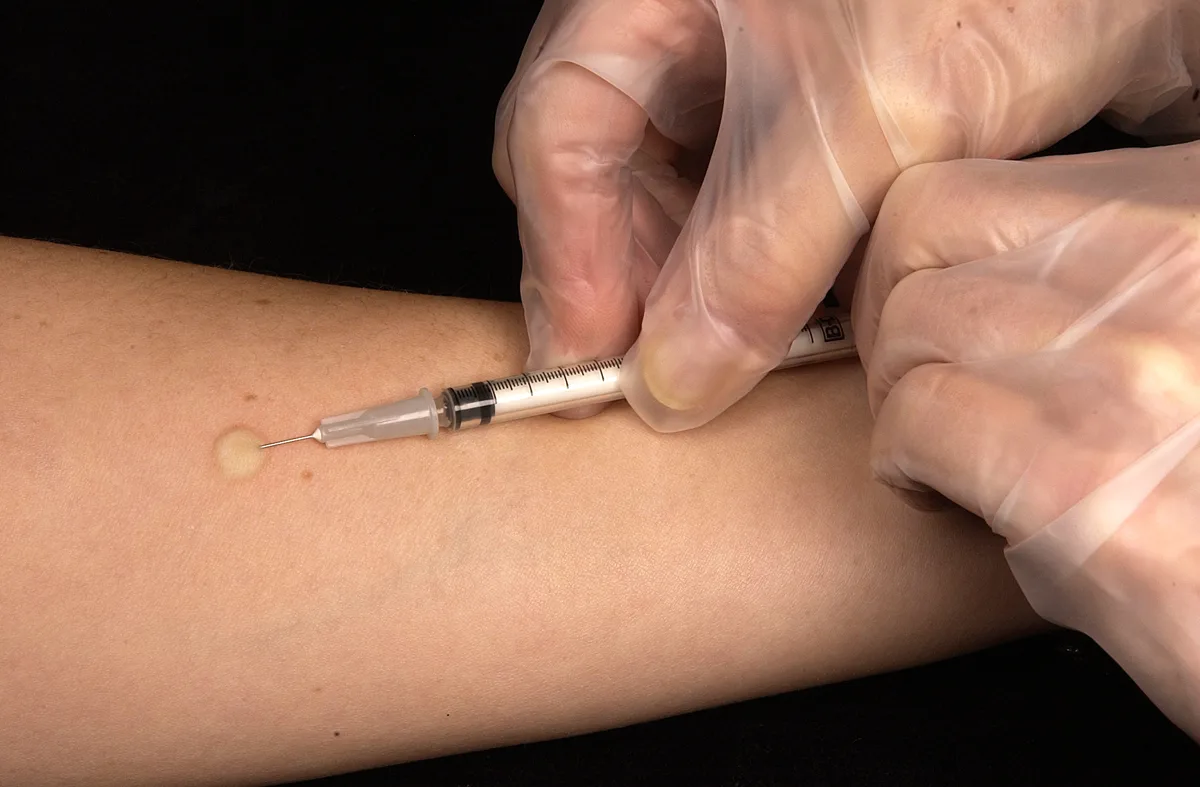
- Tuberculin skin test reading: induration at 48–72 hours, positive at 5 mm or more in HIV, contacts or immunosuppression, 10 mm in other risk groups and 15 mm with no risk (US cut-offs)
- Neither IGRA nor TST distinguishes latent from active TB: always exclude active disease with symptom review and chest X-ray before preventive treatment
- Rifamycin-based regimens: 3HP (weekly rifapentine + isoniazid × 12), 1HP (daily × 28 days), 4R (rifampicin 4 months) and 3HR (rifampicin + isoniazid 3 months)
- Isoniazid causes hepatotoxicity (risk rises with age and alcohol) and peripheral neuropathy (prevented by pyridoxine)
- WHO 2024 recommends 6 months of daily levofloxacin for household contacts of people with MDR/RR-TB
Differential diagnosis
| Condition | Clues | Key test |
|---|---|---|
| Active pulmonary TB | Cough over 2 weeks, fever, sweats, weight loss, haemoptysis | Chest X-ray; sputum Xpert MTB/RIF Ultra and culture |
| Subclinical (asymptomatic) active TB | No symptoms but abnormal chest X-ray | Sputum Xpert and culture before preventive therapy |
| Previous treated TB | History of full TB treatment; fibrotic scars | Records; usually no repeat preventive therapy unless new exposure |
| False-positive TST from BCG or NTM | BCG after infancy or repeated BCG; NTM exposure | IGRA negative |
| False-negative test (anergy) | Advanced HIV, steroids, malnutrition, miliary TB | Clinical judgement; treat high-risk contacts empirically if indicated |
| Extrapulmonary TB | Lymphadenopathy, back pain or pleural effusion in a positive IGRA | Imaging and tissue sampling |
Exam pearls
Guideline
WHO consolidated guidelines on tuberculosis, Module 1: prevention – tuberculosis preventive treatment (2nd edition, 2024); WHO Module 3 diagnosis – tests for TB infection (2022); NICE NG33 Tuberculosis (2016, with later updates); NTCA/CDC guidelines for treatment of latent TB infection (2020)
References
- World Health Organization. WHO consolidated guidelines on tuberculosis. Module 1: prevention – tuberculosis preventive treatment, second edition. WHO, Geneva 2024.
- World Health Organization. WHO consolidated guidelines on tuberculosis. Module 3: diagnosis – tests for tuberculosis infection. WHO, Geneva 2022.
- National Institute for Health and Care Excellence. Tuberculosis (NG33). NICE 2016.
- Sterling TR, Njie G, Zenner D, et al.. Guidelines for the treatment of latent tuberculosis infection: recommendations from the National Tuberculosis Controllers Association and CDC, 2020. MMWR Recomm Rep 2020.
- Lewinsohn DM, Leonard MK, LoBue PA, et al.. Official American Thoracic Society/Infectious Diseases Society of America/Centers for Disease Control and Prevention clinical practice guidelines: diagnosis of tuberculosis in adults and children. Clin Infect Dis 2017.
- Getahun H, Matteelli A, Chaisson RE, Raviglione M. Latent Mycobacterium tuberculosis infection. N Engl J Med 2015.
Related topics
By Dr Khalid Seidi (B.Sc., M.D.) · MedEd World Clinical Knowledge library. Original teaching content checked against current guidelines (November 2026); confirm the latest local guidance before clinical use. Not a substitute for clinical judgement.